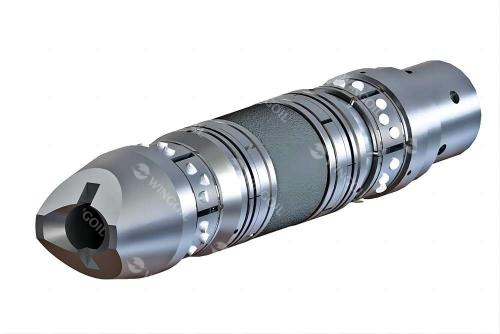
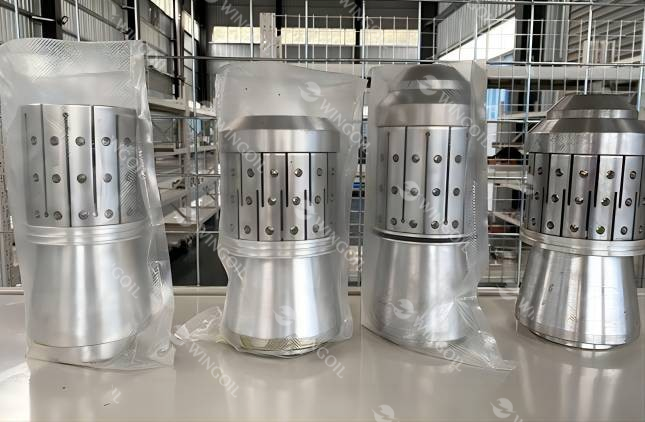
Dissolvable frac plug
In the development of unconventional oil and gas resources (especially shale gas and shale oil), horizontal well fracturing is a core technology. Bridge plugs, as a key tool for achieving staged isolation, directly impact operational efficiency, cost, and safety. Dissolvable bridge plugs are a revolutionary technology developed against this backdrop to address the inherent problems of traditional bridge plugs.
Core Problems Faced by Traditional Bridge Plugs
Traditional bridge plugs (mainly represented by composite bridge plugs) have played a crucial role in past applications, but their inherent limitations are becoming increasingly apparent under today’s large-scale, high-efficiency operational requirements:
- Complex and Costly Drilling Operations
After fracturing, the bridge plugs need to be drilled out to establish a production channel. The drilling operation itself requires equipment such as drilling rigs or coiled tubing, consuming a significant amount of time (usually drilling and grinding several bridge plugs per run), and incurring corresponding equipment rental, labor, and material costs. In horizontal sections thousands of meters long, the total time and economic cost of drilling and grinding dozens of bridge plugs are considerable.
- Wellbore Contamination Risk
The drilling process generates a large amount of metal and composite material debris. If this debris cannot be effectively returned to the surface, it easily accumulates at the bottom of the well, forming a “debris bed,” blocking production channels, reducing reservoir permeability, and severely impacting subsequent oil and gas production.
- High Operational Risk
Drilling in horizontal well sections is challenging, posing multiple risks such as stuck pipe, incomplete drilling, and tool obstruction. Furthermore, the debris generated during drilling can cause wear and damage to downhole pumps, valves, and other production equipment.
- Poor Production Timeliness
From completing fracturing to drilling through all bridge plugs, a lengthy operational cycle is required, delaying the commissioning time of oil and gas wells and impacting the speed of return on investment.
Solution for Soluble Bridge Plugs
The soluble bridge plug, based on the design concepts of “smart materials” and “controlled dissolution,” fundamentally overturns the traditional “setting-drilling removal” working mode of bridge plugs. Its core solution is:
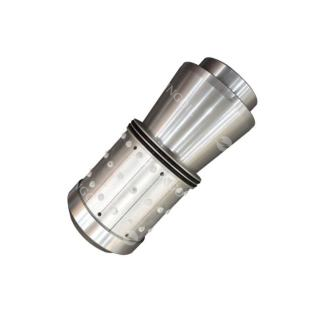
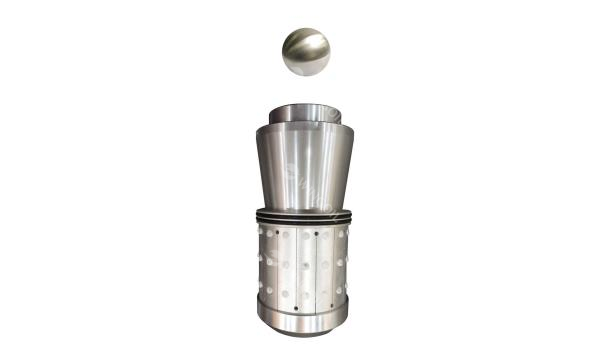
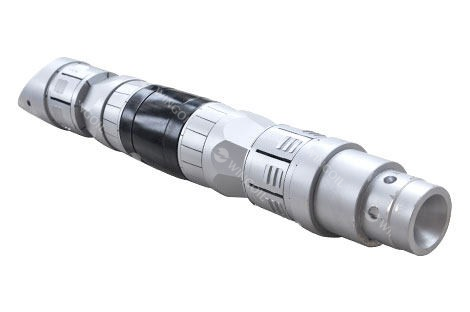
By employing special alloy materials that can self-dissolve in the formation fluid environment, the “setting-temporary plugging-self-dissolution-full-bore” process of the bridge plug is automated.
The specific solution path is as follows:
- Addressing drilling issues
After fulfilling its temporary plugging function, the soluble bridge plug gradually dissolves and disappears in the downhole environment without any intervention. This completely eliminates the drilling process, saving up to several days or even weeks of operation time and millions in related costs.
- Addressing wellbore contamination issues
The dissolution products of the soluble bridge plug are mainly metal hydroxides (such as Mg(OH)₂) and trace amounts of hydrogen. These products are soluble in water and can be smoothly discharged with the flowback fluid without forming any solid debris, thus ensuring absolute cleanliness and full-bore flow in the wellbore, providing an optimal channel for oil and gas flow.
- Regarding operational risks and production timeliness
Since no subsequent drilling or grinding operations are required, related engineering risks are completely avoided. After fracturing, the main equipment at the well site can be removed, and the oil and gas well can quickly enter the production phase, greatly shortening the well completion cycle and improving production timeliness.
Technical Characteristics of Soluble Bridge Plugs
The successful application of soluble bridge plugs relies on a series of precise materials science and engineering design features:
1. Controllable Dissolution Performance
Material Core: Primarily uses modified magnesium alloys and aluminum alloys. By adjusting the alloy element ratios, heat treatment processes, and surface treatment technologies, its dissolution rate can be precisely controlled.
Trigger Mechanism: The dissolution process depends on a specific downhole environment, typically requiring formation water or fracturing fluid (usually brine, such as KCl solution) as a catalyst. The dissolution rate is highly sensitive to temperature, salinity (chloride ion concentration), and pH value. Engineers design bridge plugs with different dissolution levels based on the bottomhole temperature profile to ensure that they maintain structural integrity during fracturing and initiate and complete dissolution at a predetermined time after completion.
2. Superior Mechanical and Sealing Performance
High-Strength Pressure Bearing: Before dissolution, soluble bridge plugs possess mechanical strength comparable to composite bridge plugs, capable of withstanding pressure differentials of 70-100 MPa or even higher during fracturing. Through optimized structural design (such as integrated slips and reinforced skeletons), they provide reliable anchoring and pressure bearing capacity throughout their service life.
High-Performance Sealing: Typically employing high-temperature, pressure-resistant soluble sealing materials (such as specially modified polymers) or sealing systems combined with metal components, they ensure flawless casing sealing under high temperature and pressure.
3. Full Bore and No Residue
This is the most significant advantage of soluble bridge plugs. The dissolution process proceeds from the outside in, from the surface to the core, ultimately resulting in complete dissolution of all components, leaving no obstructions in the wellbore. This forms an ideal full-bore production string, maximizing flow area, reducing flow resistance, and improving recovery.
4. Wide Applicability
Modern soluble bridge plugs offer a comprehensive product line, adaptable to various operational needs, including different casing sizes, bottom hole temperatures, and fracturing processes.
5. Economy and Efficiency
While the purchase cost of a single soluble bridge plug may be higher than that of a traditional bridge plug, its overall economic benefits—eliminating drilling operations, reducing equipment usage, shortening production construction time, avoiding reservoir damage, and improving ultimate recovery—make it the most cost-effective option for large-scale shale oil and gas development.
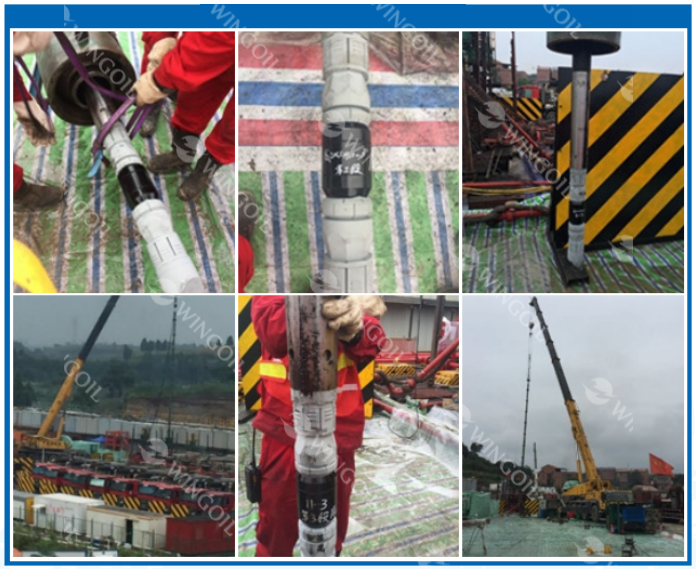
On-site service