Downhole Tool Testing: What are the Methods, Equipment, and Industrial Applications
In extreme high-pressure, high-temperature (HPHT) deepwater and unconventional oil and gas development, downhole tools are pushing unprecedented geological limits.
Thousands of meters beneath the surface, any minor mechanical failure or seal breach triggers exorbitant Non-Productive Time (NPT) and can even escalate into catastrophic well-control incidents. Therefore, surface pressure testing prior to deployment stands as an absolute, non-negotiable safety red line. However, simulating tens of thousands of PSI in high-pressure tests inherently carries immense safety risks.
How can operators achieve precise, highly efficient pressure testing while ensuring absolute personnel safety? In this post, we will deliver an in-depth analysis of the core types and hidden hazards of downhole tool testing, and explores how modern industry leverages innovative explosion-proof testing equipment to achieve a win-win for both safety and efficiency.
What is Downhole Tool Testing?
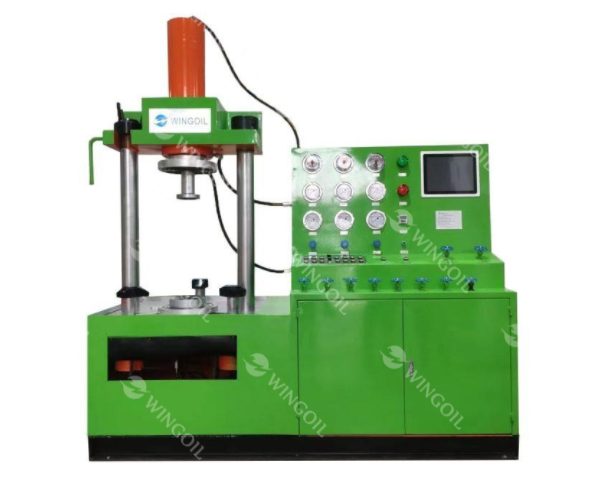
Downhole Tool Testing refers to the process of using specialized surface equipment to fully simulate extreme downhole environments (such as ultra-high temperatures, ultra-high pressures, and complex fluid media). This process comprehensively validates performance and evaluates the ultimate pressure-bearing capacity of drilling, logging, and completion tools.
The primary objective of these tests is to eliminate early-stage vulnerabilities, verify design limits, and ensure zero-failure operations under actual downhole conditions, thereby minimizing NPT and well-control risks.
Core Downhole Tool Testing Areas
High-Pressure Environment Simulation: Utilizing hydrostatic or gas tightness testing to accurately replicate subterranean formation pressures.
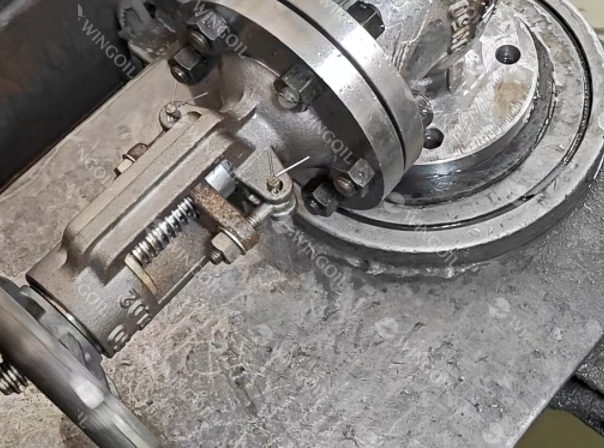
Full-Lifecycle Seal Inspection: Validating the zero-leakage performance of dynamic and static sealing elements, such as V-packing and O-rings, under high differential pressures and high shear forces.
Ultimate Pressure & Destructive Testing: Determining the yield strength limits of tool housings and threaded connections to clearly define safety factor boundaries.
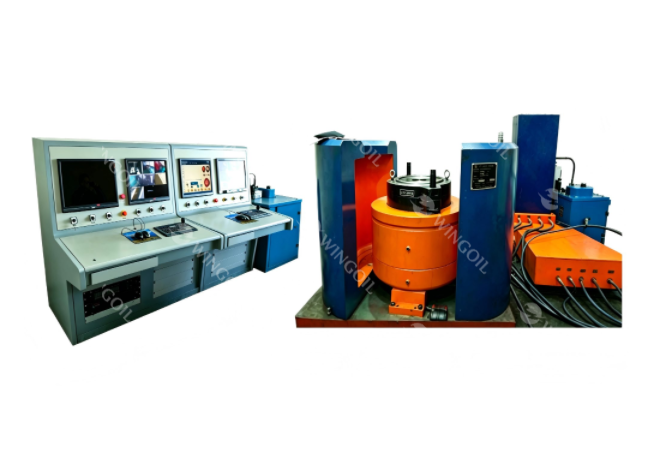
Multi-Field Coupling Functional Testing: Verifying tool operational reliability under the combined effects of high temperature, high pressure, and mechanical loads (tension, compression, and torque).
Common Downhole Tool Testing Subjects
Downhole Valves: Such as subsurface safety valves (SSSVs), circulation valves, and various sliding sleeves.
Packers & Bridge Plugs: Validating high-pressure isolation and setting/anchoring performance.
Logging & Drilling Instruments (MWD/LWD): Inspecting the sealing and protective integrity of electronic chassis sections and sensor pressure hulls.
Completion Tools & Drill String Components: Such as liners, sand control tools, drill pipe joints, and pressure control components.
Core Types of Downhole Tool Testing
To guarantee that tools perform flawlessly under complex geological conditions, manufacturers and third-party inspection agencies typically conduct surface simulation testing across several key dimensions:
Type 1. Hydrostatic & Gas Pressure Testing
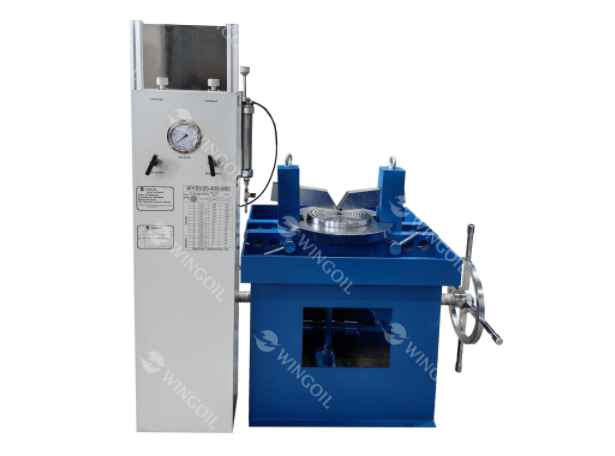
This is the most fundamental yet critical testing phase. By applying hydrostatic or gas pressure inside or outside the tool, far exceeding actual working parameters, inspectors verify the structural yield strength of the housing and the reliability of the sealing integrity. Gas testing (typically using nitrogen) imposes far stricter tightness demands on the tool because gas molecules are smaller and possess much higher expansion energy.
Type 2. HPHT Simulation
This phase replicates the thermodynamic environments of deep wells. Testing requires placing the tool in a combined heating and pressurization environment to evaluate the physical performance and degradation resistance of elastomeric seals (such as O-rings and V-packings) and electronic components after extreme thermal expansion.
Type 3. Functional Verification
This includes the opening and closing mechanics of valves, shear force testing for sliding sleeves, and signal transmission for probes. It ensures that mechanical and electronic commands are executed with pinpoint accuracy even while the tool is subjected to immense pressure load.
Industry Application Scenarios of Downhole Tool Testing
As the “quality control red line” across the oil and gas value chain, downhole tool testing is widely deployed in every high-risk, high-value stage from upstream R&D to field operations:
1. Oilfield Engineering Field Operations
Offshore & Deepwater Engineering: Offshore operations incur exorbitant daily rig rates and face extreme environments. This testing serves as a critical line of defense to prevent subsea oil spills and catastrophic equipment failures.
Oil Drilling & MWD/LWD Operations: Prior to deploying tools in complex directional wells and ultra-deep wells, surface re-checking of rotary steerable systems and MWD/LWD instruments avoids downhole signal loss or mechanical pipe sticking.
Downhole Completion & Production Services: Ensuring that long-lifecycle completion tools (such as large-bore sliding sleeves and production packers) maintain high-pressure isolation over production lifespans lasting several years.
2. Industrial Manufacturing & Engineering R&D
High-Pressure Valve & Pressure Equipment Manufacturing: Assisting manufacturers in conducting Factory Acceptance Testing (FAT) prior to shipment in accordance with international standards like API 6A and API 11D1, providing compliant data endorsement.
Wellhead & Downhole Tool R&D (Prototype Testing): Validating design limits and fatigue life through multi-field coupling tests during new product R&D and material substitution phases (such as testing novel high-temperature elastomers or corrosion-resistant alloys).
Third-Party Inspection & Maintenance/Rental Services: Performing secondary pressure rating evaluations on recovered or repaired oilfield assets to ensure the re-delivery quality of rental tools.
Core Business Value: In these scenarios where the cost of failure is extraordinarily high, surface testing is far more than just a standard procedure, it is the core method by which enterprises transform unpredictable downhole risks into predictable, quantifiable surface data.
Hidden Hazards and Safety Vulnerabilities in High-Pressure Testing
“High pressure” always goes hand-in-hand with “high risk.” When conducting pressure tests at 10,000 PSI, 20,000 PSI, or higher, the testing area essentially becomes a volatile, high-energy environment. Safety hazards typically stem from the following areas:
Shrapnel Hazards: If a tool suffers from material fatigue, casting defects, or improper threaded connections, it can experience a catastrophic burst under ultimate overpressure. Fractured metal fragments can fly out like bullets, causing fatal injuries to surrounding personnel and severe damage to equipment.
Fluid Injection: Microscopic pore leaks under high pressure can form highly destructive “liquid knives” capable of easily penetrating operators’ protective clothing and skin.
Shockwave Concussions: Particularly during gas pressure test failures, the instantaneous release of compressed gas generates a massive shockwave and deafening noise, causing irreversible damage to workshop structures and human hearing.
Limitations of Traditional Solutions: Historically, many facilities relied on building large underground concrete test pits or setting up basic steel barriers. However, both methods have obvious drawbacks: concrete pits require long construction cycles, consume massive workshop floor space, are completely non-movable, make it difficult to effectively recover test media, and fail to provide 100% visual monitoring.
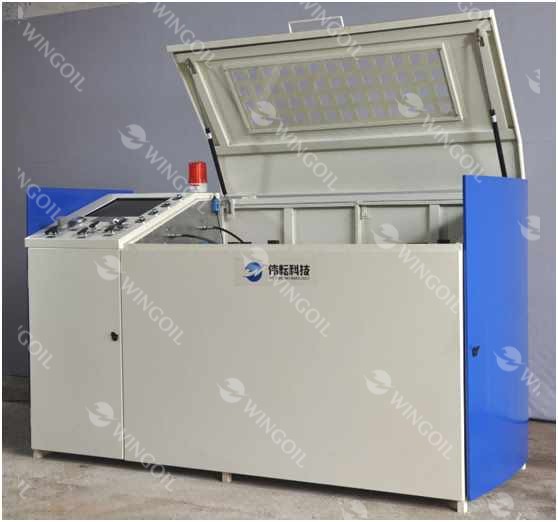
Ultimate Downhole Tool Testing Solution: Wingoil Explosion-Proof Pressure Testbay Box
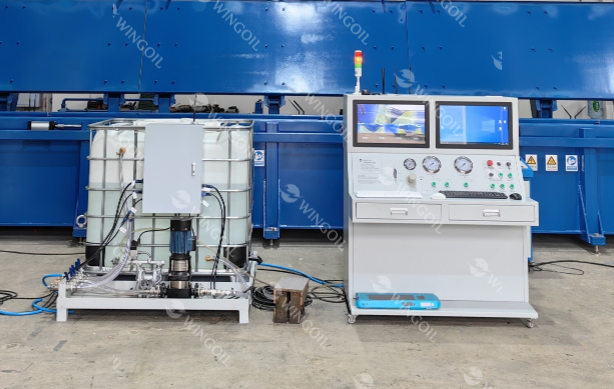
Faced with fatal hazards like high-pressure fluid jets and gas explosions during downhole tool testing, traditional self-built concrete pits can no longer satisfy the high standards of modern oilfield services. Wingoil Explosion-Proof Pressure Testbay Box is custom-engineered to provide surface safety containment and automated pressurization, serving as the perfect alternative to high-risk testing pits.
Wingoil’s Gradient Physical Defense: Fortifying the Safety Red Line
Hard yet Flexible Gradient Blast Wall:
The enclosure walls feature a 70 mm thickness, innovatively utilizing a gradient structure composed of an outer high-strength steel plate + a 50 mm energy dissipation layer + a fumigated solid wood interior lining. This constructs an integrated defense system of “rigid protection , energy dissipation , soft buffering,” securely locking the shockwaves and shrapnel of ultimate workpiece bursts inside the chamber.
Fully Automated Safety Interlocks:
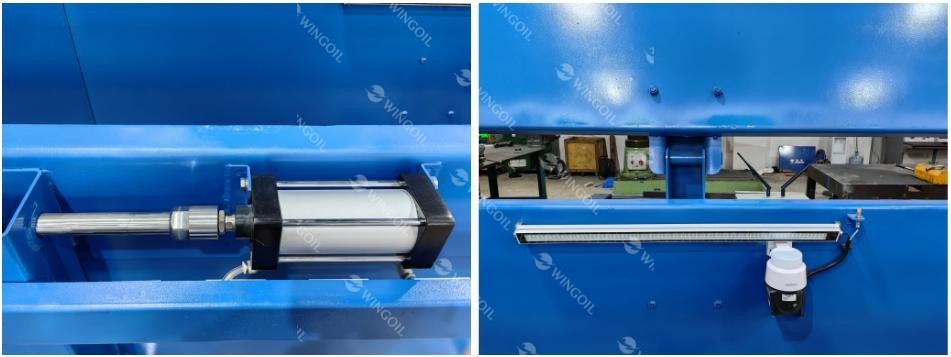
The heavy-duty hydraulic chamber door is equipped with light curtain sensors and self-locking switches. During a test, if the system detects personnel or foreign objects approaching, it immediately rejects pressurization or triggers instantaneous depressurization, achieving “absolute zero exposure” for personnel.
2. Modular “Building-Block” Design: Flexibly Adapting to Diverse Tools
Supports Multi-Section Assembly (Up to 18 Meters):
With a single-section dimension of 3m × 2m × 1.5m, sections can be combined into various lengths using M30 high-strength bolts. This perfectly accommodates long-axis packers, drill string assemblies, and long tubular completion tools.
Deploy Once, Run Globally:
The system can withstand ultra-high pressure hydrostatic or gas testing up to 20,000 PSI. The entire unit adopts a convenient lifting and skid-mounted design (total weight 12.7T), making it highly mobile for cross-regional transport and perfectly suited for deserts, offshore platforms, or field site integration.
3. PLC+HMI Smart Control: A Win-Win for Safety and Efficiency
High-Precision Closed-Loop Algorithm:
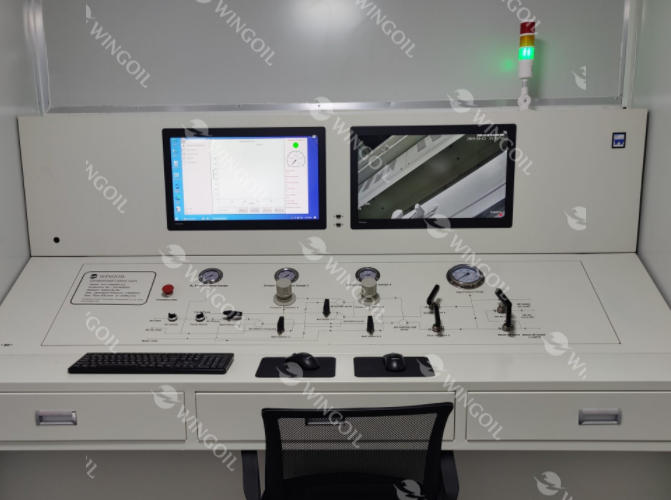
Utilizing a dual-redundant PLC+HMI control architecture, the system is powered by Wingoil’s self-developed, high-precision closed-loop pressure control algorithm (accuracy up to ±0.1% FS) and 100Hz high-frequency sampling sensors to ensure real-time, precise pressure tracking.
Remote Intelligent Monitoring:
The interior integrates 6 sets of explosion-proof pan-tilt-zoom (PTZ) cameras with night vision capabilities. Operators can remotely control the system, monitor pressure curves in real time, and automatically generate test reports that comply with international standards from the safety of an isolated control room. This eliminates human error while significantly accelerating tool turnaround times.
Summary
Premium downhole tool performance is forged through rigorous surface testing—but extreme testing demands bulletproof safety. Investing in high-spec blast protection isn’t just about protecting your frontline team; it’s a powerful business statement that proves your commitment to quality control, helping you win high-value contracts from global oil and gas giants.
Ready to Elevate Your Testing Safety?
Whether you are designing a brand-new downhole testing lab or upgrading an active high-pressure setup, Wingoil is here to help. We design and manufacture custom, certified Explosion-proof Pressure Testbay Boxes tailored to your specific tool sizes and pressure ratings. Partner with Wingoil’s engineering team for a turnkey safety solution that keeps your operations secure and your equipment flight-ready.
Related Articles