Ultimate Guide to Oilfield Equipment: Types, Applications and Selection
Oilfield equipment is the core machinery needed to keep the oil and gas industries running, covering each stage from drilling and production to transportation, processing, and pressure control. Whether in onshore fields or at offshore platforms, reliable oilfield equipment directly affects operational efficiency, safety, and overall output. For this reason, understanding equipment type, applications, and proper selection techniques are essential for oilfield service companies, engineering firms, and field operators.
In this post, we will present a comprehensive view of oilfield equipment and explain how professional oilfield equipment suppliers can help enterprises improve the efficiency of oilfield operations.
Part 1. What is Oilfield Equipment and Why is It Important?
Oilfield equipment refers to all mechanical tools and machinery employed in oil and gas exploration, drilling, well completion, production, processing, storage and transportation activities. This encompasses machinery of all sorts: power systems, pressure-control equipment, measurement instruments, transportation systems as well as various spare parts.
The importance of oilfield equipment is reflected in several key aspects:
- Provide for safe operations of oil and gas (e.g., BOPs, pressure-control systems)
- Enhancing production output and efficiency, for example, booster systems or artificial lift equipment
- Reducing operating costs and minimizing downtime
- Ensuring stable performance under extreme working conditions
Oilfield equipment continues to be in high demand across the Middle East, North America, and Asia-Pacific regions to meet an expanding energy market; contributing to its continued steady expansion.
Part 2. Major Categories of Oilfield Equipment
Based on actual oilfield operations, oilfield equipment can be divided into the following five major categories.
1. Drilling Equipment
Utilized during the drilling phase of oil and gas wells, which is the very first step in field development.
Common equipment includes:
- Drill Pipes
- Top Drive Systems
- Mud Pumps
- Drawworks
- BOP-Related Drilling Control Systems
Function:
These systems handle rock drilling, mud circulation, drill string hoisting, and well control to ensure safe and efficient drilling operations.
2. Production Equipment
Production equipment is deployed once the well is completed for maintaining output stability and improving recovery efficiency.
Core equipment includes:
- Wellhead Assemblies
- Christmas Trees
- Artificial Lift Systems
- Gas Boosters / Gas Compressors
- Downhole Pumps
Note:
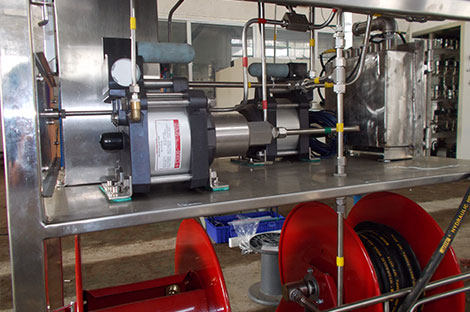
Gas boosters (or gas pressure intensifiers) have found wide application in well testing, nitrogen-assisted recovery, pressure boosting, and pipeline pressurization.
3. Pressure Control Equipment
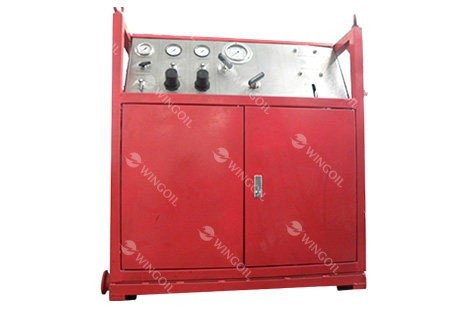
These devices maintain pressure stability in wells and pipelines, preventing blowouts, leakage, or failures due to high pressure; they are crucial for safe field operations.
Common pressure control equipment:
- BOP (Blowout Preventer)
- Choke Manifolds
- Wellhead Pressure Control Systems
- High-Pressure Valves
Most of the pressure control systems meet API 6A, API 16A, and other international standards that ensure their dependability under hazardous conditions.
4. Oil & Gas Processing Equipment
Used to separate, treat and transfer produced fluids from the wellhead to downstream pipelines or storage.
Typical equipment includes:
- Oil-Gas-Water Separators (Three-phase separators)
- Dehydration Units
- Natural Gas Compression Skids
- Flow Measurement Systems
These systems remove impurities and help to stabilize the production, ensuring the oil or gas meets transportation and sale specifications.
5. Supporting & Maintenance Equipment
Essential tools and consumables required for day-to-day oilfield operations and routine equipment maintenance.
Includes:
- Pumps
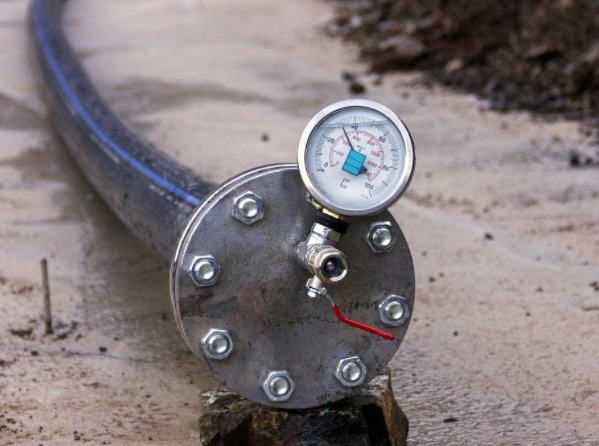
- Joints, Flanges, and Pipeline Components
- Industrial Hoses
- Valves – gate valves, ball valves, check valves
- Testing & Monitoring Instruments
- Spare Parts and Consumables
The supporting equipment guarantees that the whole oilfield system works reliably, while reducing downtime, and providing quick replacement during field maintenance.
Part 3. Typical Application Scenarios of Oilfield Equipment
Oilfield equipment has broad applications in different segments of the oil and gas industry, with each segment having its operational requirements and standards. The main application scenarios include:
1. Onshore Oilfields
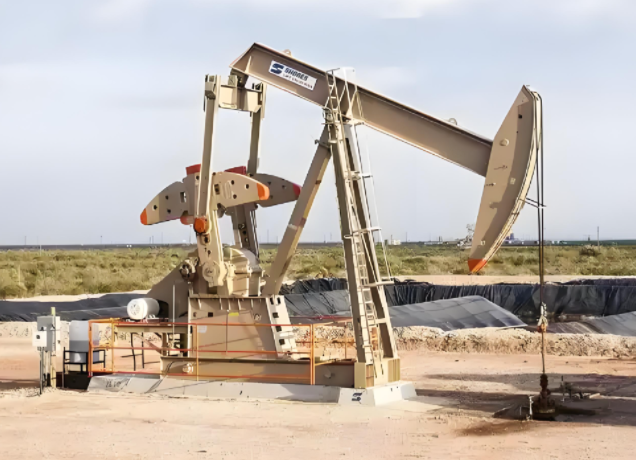
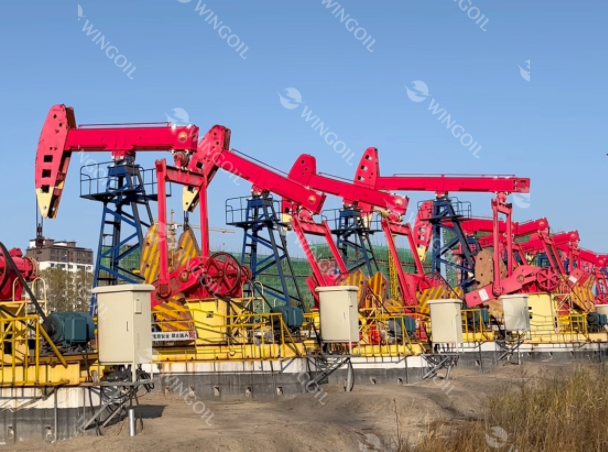
On land oilfields, oil companies use various types of machinery such as drilling rigs, artificial lift systems, and wellhead systems. Terrain, soil, and weather conditions are always changing and the oil companies must monitor production safely and efficiently.
2. Offshore Platforms
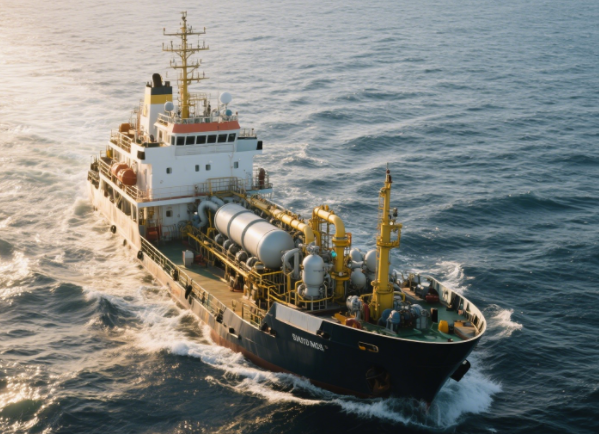
Some of the more specialized pieces of machinery are oil rigs and corrosion resistant pipelines. The platforms must endure waves, winds and salty corrosion. Standard tools are subsea BOPs and riser systems.
3. Natural Gas Production Sites
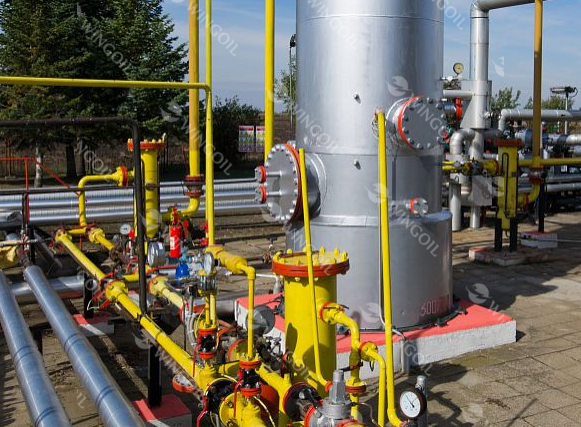
Equipment at gas fields focuses on compression, pressure boosting, separation, and dehydration. In addition, the gas boosters and compressors are critical for flow rate maintenance, to assist pipeline transmission, and also make gas storage and processing effective.
4. Oil Refineries and Petrochemical Industries
These establishments are similarly equipped with separators and dehydration systems, heat exchangers, and control systems, which are needed for refining, chemical disintegration, and dealing with high temperature, high pressure fluids, and for making sure that routine activities are safe and uninterrupted.
5. Pipeline Transport and Maintenance
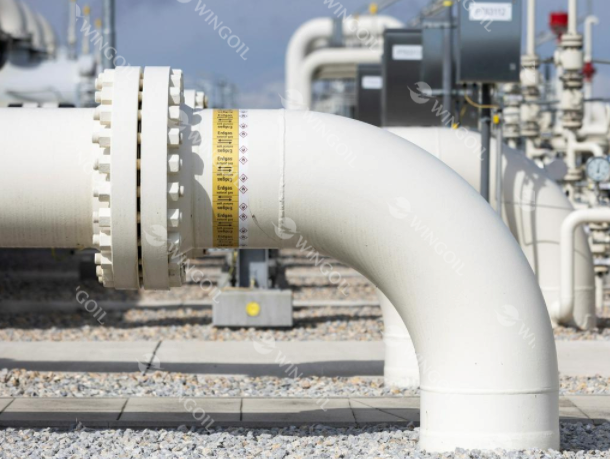
Pipelines require equipment for control of pressure, detection of leaks, and for pumping and maintenance of flow in addition to maintenance of pressure. These include, control valves to be used in pressure streams, flow measurement devices, hoses and maintenance of closed systems. These are built with high endurance, safety standards and will not collapse under long distances.
These all have very specific pressure ratings, materials, and corrosion resistance and safety standards. Selecting equipment of appropriate design for each environment is crucial to ensuring reliability and compliance, keeping costs down and avoiding down time.
Part 4. How to Choose High-Quality Oilfield Equipment?
The following are key factors that should be taken into consideration when choosing oilfield equipment:
1.Material and Pressure Rating
Ensure that the equipment is made of the right materials for the intended operating environment, including the corresponding pressure conditions: for example, 10,000 psi and 15,000 psi, not to mention even higher pressures. Materials should be resistant to corrosion, hydrogen sulfide (H₂S), high temperatures, etc-commonly encountered in oilfield operations.
2. Compliance with API and International Certifications
High-quality oilfield equipment must be designed to meet the recognized industry standards and certifications that ensure safety, reliability, and global usability. Key standards include:
- API 6A – for wellhead and Christmas tree equipment
- API 16A – for pressure control equipment and BOPs
- API Q1 – quality management for manufacturing
- ISO 9001 – international quality management certification
Compliance ensures that the equipment can operate safely under extreme conditions and is accepted worldwide.
3. Reliability and Maintenance Cycle
Assess equipment durability/anti-corrosion resistance/wear and heat/sour gas resistance. Longer maintenance intervals reduce downtime and operational costs. Consider whether spare parts are readily available and if routine maintenance is easily performed in field conditions.
4. Oilfield Equipment Supplier Capability
- A good supplier can make all the difference. Things to think about include:
- Lead time and inventory availability
- Ability to provide customized solutions
- Technical support and training
- After-sales service
Suppliers with strong technical expertise facilitate smooth installation, commissioning, and ongoing operation.
5.System Compatibility
Oilfield equipment seldom works in isolation. Verify that new equipment, such as gas boosters or pressure control systems, will interface easily with existing systems. Compatibility ensures efficient operations, avoids unnecessary retrofits, and reduces potential operational risks.
Part 5. Wingoil Oilfield Equipment: Dependable Solutions for Effective and Safe Workflows
Wingoil’s oilfield equipment has products to cover every oil and gas industry-related need. Oilfield Equipment’s products are recognized for their high quality, durability, and compliance with industry-related standards.
Wingoil ensures every piece of equipment has earned quality certifications and good operational reliability by using sophisticated production apparatus and good industry manufacturing capacity.
Our product portfolio includes:
Pressure Testing Equipment: Hydrostatic test pumps, pipeline pressure testing systems, pressure test units with PC recorders, and explosion-proof test bays.
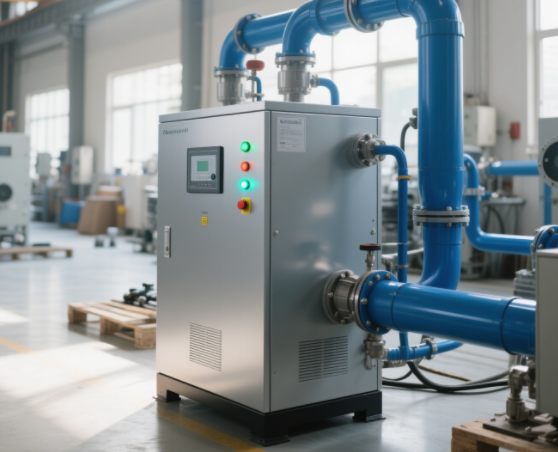
Gas Boosters and Compressors: High-pressure gas booster systems for well testing, gas injection, and pressure enhancement.
Chemical Injection and Downhole Tools: Pumps, skids, and specialized downhole equipment to support production and maintenance operations.
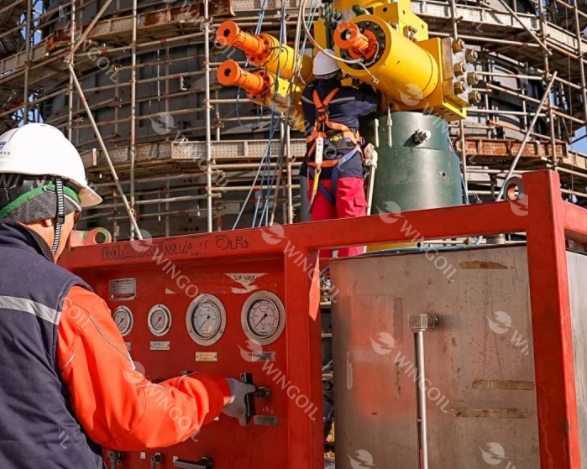
Well Control Equipment: BOP and manifold testing systems, wellhead pressure test vehicles, and pneumatic pressure testing benches.
Multiphase Pump Systems & Accessories: It includes supporting devices for fluid handling, flow measurement, and pressure calibration.
Specialized Solutions: Nitrogen generator units, burst pressure testing equipment, and customized OEM/ODM solutions tailored to client needs.
Wingoil oilfield equipment is widely used in oilfield boosting, gas transportation, equipment testing, and pressure management, with the aim of assisting customers in improving operational efficiency, safety, and productivity.
Part 6. Care and Maintenance of Oilfield Equipment
1. Daily Inspections
Daily inspections provide the first line of defense against equipment failure. Pressure levels, temperature, and vibrations should be monitored by operators to identify early signs of abnormal operation. Checks for leaks and strange noises can help locate a problem before it becomes serious.
Verification that safety devices, alarms, and emergency shutdown systems function correctly determines whether the equipment can continue to operate safely.
2. Weekly Checks
Weekly maintenance checks focus on maintaining the mechanical integrity of equipment. This involves inspecting lubrication systems to ensure proper flow of oil or grease for reduced wear and friction, inspecting connectors, flanges, fasteners to tighten when necessary as well as checking seals gaskets other critical components for wear cracks or degradation that could potentially reduce system efficiency and leakages that reduce its efficiency.
3.Regular Maintenance
Regular maintenance should focus on systems where performance is critical. Hydraulic, fuel and lubrication circuit filters should be changed regularly to maintain ideal fluid cleanliness; valves, pressure regulators and control units shall be tested and calibrated regularly for precision of operation; as well as electrical systems wiring sensors motors etc inspected for wear corrosion or loose connections to ensure reliable functionality under harsh field conditions.
4. Annual Overhaul
Annual maintenance includes disassembling key equipment, inspecting for wear, fatigue and hidden damage that could compromise its reliability, replacing parts that have reached their end of service life, calibrating performance in line with operational standards and replacing those approaching retirement at their respective service life dates.
When conducted successfully, annual overhauls extend equipment lifespan while simultaneously minimizing operational downtime for long-term efficiency and safety.
Wrap Up
Oilfield equipment forms an essential element of oil and gas industry infrastructure, with various functions, application scenarios, selection criteria and maintenance methods for various pieces contributing to increased production efficiency while simultaneously decreasing risks in oilfield operations.
If you need equipment from a reliable oilfield manufacturer, reach out to Wingoil. We offer professional, efficient, and cost-effective oilfield equipment solutions according to your requirements.