Methanol Injection Package: Components, Working Principle, Applications, and Selection Guide
In demanding oil and gas production, long-distance pipeline transportation, and refining environments, low-temperature and high-pressure conditions can create significant operational risks. Among them, the formation of natural gas hydrates, commonly known as “ice plugs,” is a major challenge for pipeline operations. In mild cases, hydrates can restrict flow; in severe cases, they may cause equipment damage or even safety incidents.
To effectively address this challenge, the Methanol Injection Package has become an essential piece of equipment in modern energy engineering. As a highly integrated industrial system, it provides controlled and reliable methanol injection to help prevent hydrate formation and maintain stable operation.
This article provides an in-depth overview of the system configuration, key functions, applications, and advantages of an industrial Methanol Injection Package.
What Is a Methanol Injection Package?
A Methanol Injection Package is an integrated chemical injection system designed to deliver methanol steadily and accurately to designated locations within oil and gas production or transportation systems.
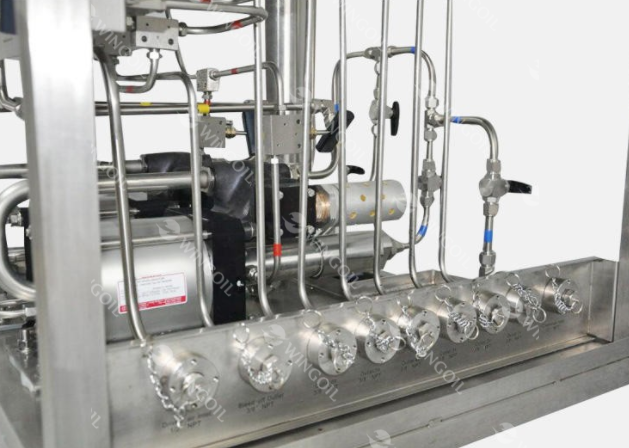
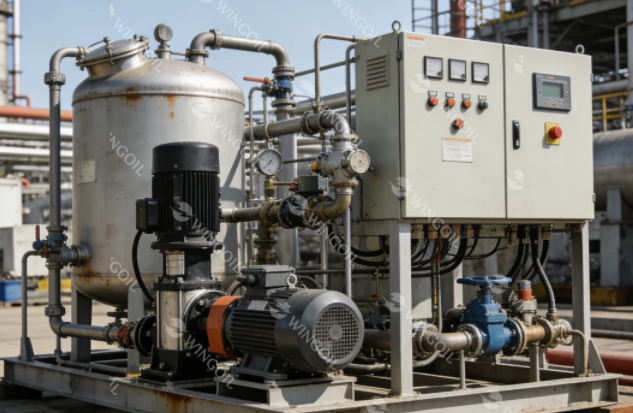
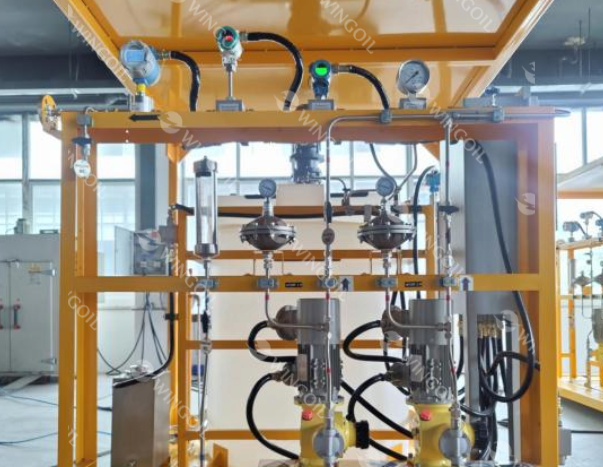
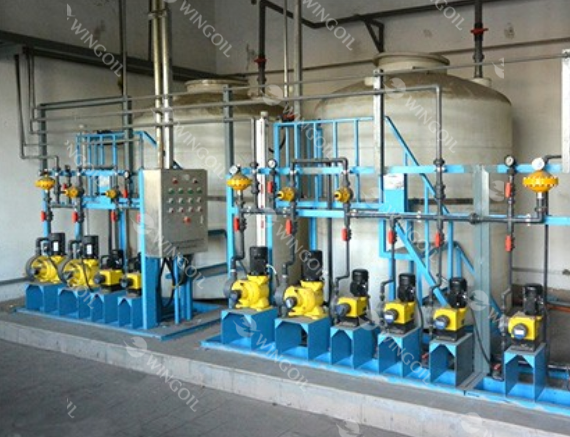
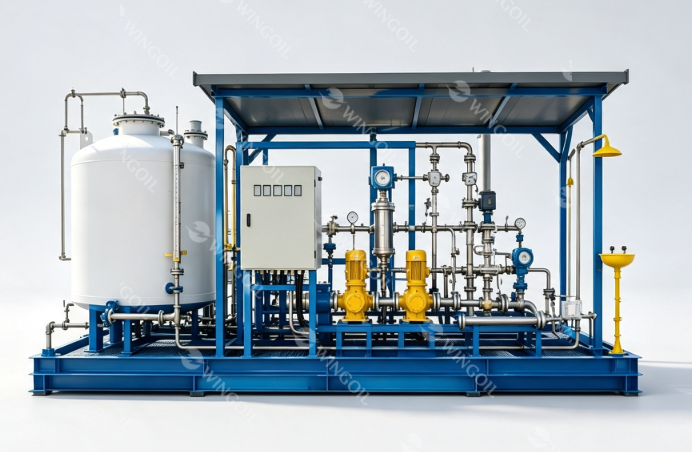
A complete methanol injection package typically integrates a methanol storage tank, injection pumps, piping, valves, flow instruments, pressure instruments, and a control system on a single skid-mounted platform. Compared with installing these components separately, the skid-mounted design improves system integration while reducing on-site installation and commissioning work.
Depending on project operating conditions, a Methanol Injection Package can be designed according to specific requirements, including:
- Methanol storage tank capacity
- Methanol injection flow rate
- Injection pressure
- Number of injection points
- Injection pump configuration
- Instrumentation configuration
- Control method
- Skid dimensions and layout
Therefore, a Methanol Injection Package is typically not simply a standardized piece of equipment. Instead, it needs to be selected and configured according to the specific requirements of each oil and gas project.
Why Does the Oil & Gas Industry Need Methanol Injection?
Prevent Natural Gas Hydrate Formation
Natural gas typically contains a certain amount of water. Under high-pressure and low-temperature conditions, water can combine with certain components of natural gas to form solid natural gas hydrates.
Hydrates may accumulate in pipelines, valves, throttling devices, and other equipment, resulting in:
- Reduced pipeline flow capacity
- Increased pressure loss
- Reduced natural gas flow rate
- Abnormal operation of valves and equipment
- Pipeline blockage in severe cases
Methanol is commonly used as a hydrate inhibitor. By injecting methanol into natural gas production and transportation systems, the possibility of hydrate formation can be reduced.
Address Low-Temperature Operating Conditions
In cold regions, offshore oil and gas platforms, and natural gas throttling processes, system temperatures can decrease significantly.
Low temperatures increase the risk of hydrate formation and freezing-related problems. A methanol injection system can continuously supply methanol to designated injection points according to process requirements, helping maintain flow assurance in oil and gas pipelines and production systems.
Reduce the Risk of Production Interruptions
Oil and gas production systems are generally designed for long-term continuous operation. If hydrates cause pipeline blockage or restrict flow, production interruptions and additional maintenance costs may occur.
A properly designed Methanol Injection Package can control methanol injection flow rate and pressure, helping reduce operational risks associated with hydrate formation.
How Does a Methanol Injection Package Work?
The basic operating process of a Methanol Injection Package can be summarized as:
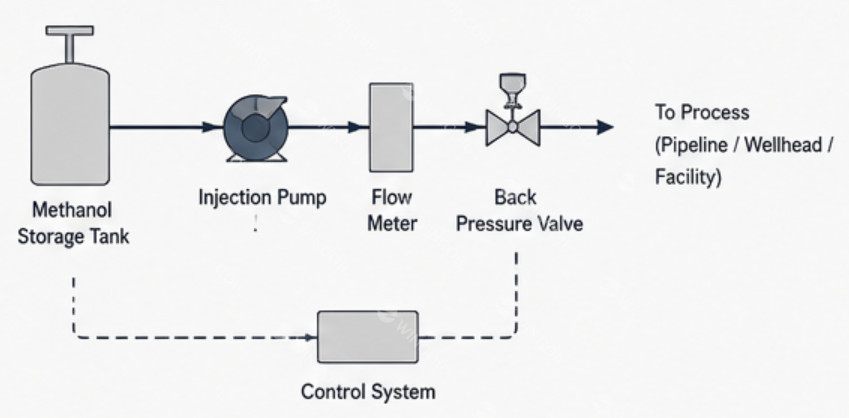
Methanol Storage → Methanol Transfer → Pressurized Injection → Flow Control → Pipeline Distribution → Designated Injection Points
First, methanol is stored in a dedicated storage tank.
During operation, the injection pump draws methanol from the storage tank and transfers it into the injection piping. Flow meters, pressure instruments, and control components then monitor and regulate the methanol flow rate and pressure.
After being controlled, the methanol is distributed through the injection header and injection lines to designated locations, where it is introduced into natural gas pipelines, wellheads, or other process equipment.
If the system uses automatic control, the injection pumps can also be automatically adjusted according to preset parameters, helping maintain a more stable methanol injection rate.
Main Applications of Methanol Injection Packages
Natural Gas Production
During natural gas production, a methanol injection system can help reduce the risk of hydrate formation and maintain stable gas flow.
For production systems exposed to high pressure, low temperature, and water-containing conditions, methanol injection can form an important part of an overall flow assurance solution.
Natural Gas Gathering
During natural gas gathering, gas is transported through relatively long pipeline networks. Changes in pressure and temperature at different locations can increase the risk of hydrate formation.
A Methanol Injection Package can be installed at appropriate injection points according to process requirements to provide a continuous supply of methanol to gathering pipelines.
Natural Gas Pipeline Transportation
Long-distance natural gas transmission systems require highly stable and continuous operation.
By configuring a suitable methanol injection system, methanol can be injected at a controlled rate according to pipeline operating conditions, helping reduce the impact of hydrates on natural gas transportation.
Offshore Oil & Gas Production
Offshore platforms typically face limited space, complex operating environments, and difficulties in maintenance. Therefore, equipment integration and reliability are particularly important.
A skid-mounted methanol injection system can integrate the storage tank, pumps, piping, valves, and instrumentation into a compact unit, making it suitable for offshore oil and gas projects where space-efficient equipment configurations are required.
Onshore Oil & Gas Fields
In onshore oil and gas fields, methanol injection systems can be used at wellheads, natural gas gathering pipelines, production facilities, and gas processing systems.
Depending on the application, the injection flow rate, pressure, storage tank capacity, and control method can be adjusted to meet specific operating requirements.
Natural Gas Processing Facilities
Natural gas processing may involve different temperature, pressure, and water-content conditions. A methanol injection system can be installed at appropriate locations according to process requirements for hydrate control and flow assurance.
How to Choose the Right Methanol Injection Package?
When selecting a Methanol Injection Package, equipment price should not be the only consideration. Actual operating conditions and process requirements should be evaluated comprehensively.
1. Determine the Methanol Injection Flow Rate
Injection flow rate is one of the most important parameters when selecting the system.
The required methanol injection rate is generally related to gas flow rate, water content, pressure, temperature, and specific process conditions.
Therefore, as much complete process data as possible should be provided before system design.
2. Determine the Injection Pressure
The injection pump must be capable of providing sufficient outlet pressure to meet the requirements of the actual pipeline system.
If the pump outlet pressure is insufficient, methanol may not be injected reliably into the target pipeline. Therefore, system operating pressure and the required differential pressure should be carefully considered when selecting the injection pump.
3. Determine the Storage Tank Capacity
Storage tank capacity should be determined based on methanol consumption and the expected continuous operating period.
If a project aims to reduce the frequency of on-site methanol replenishment, a storage tank with sufficient capacity should be selected to support the required operating cycle.
4. Consider Operating Temperature
The Methanol Injection Package needs to withstand the ambient temperature at the project location as well as the actual process temperature.
For projects in cold regions and offshore oil and gas applications, particular attention should be paid to the impact of temperature conditions on equipment, piping, valves, and instrumentation.
5. Determine the Number of Injection Points
Some projects require only one methanol injection point, while others may need to inject methanol at multiple locations.
Multiple injection points typically require an appropriate injection header and control valves, which directly affect the overall system design.
6. Determine the Required Level of Automation
Different levels of automation can be selected according to project requirements.
Simple applications may use local manual control, while large-scale oil and gas projects may require automatic control, data monitoring, and remote operation capabilities.
7. Consider Material Compatibility
Compatibility between methanol and equipment materials, seals, and piping components should also be considered during system design.
The materials used for pumps, piping, valves, and seals should be selected according to the actual medium and operating environment.
What Are the Advantages of a Skid-Mounted Methanol Injection Package?
A skid-mounted Methanol Injection Package uses a modular design to integrate methanol storage, metering, pressurization, and injection equipment onto a unified skid. Compared with conventional distributed installation solutions, it offers significant advantages in system integration, field deployment, and project customization.
Compact Design
The skid-mounted design installs multiple components on a unified platform, effectively reducing the required footprint. This makes it suitable for oilfields, natural gas stations, and other applications where installation space is limited.
High System Integration
The storage tank, injection pumps, piping, valves, instrumentation, and control equipment can be designed as an integrated system. This allows the individual components to work together more effectively while simplifying system connections and on-site installation.
Convenient Transportation
The integrated skid structure facilitates transportation. Pre-assembled equipment can be transported as a complete unit to oilfields, natural gas stations, and remote project sites, supporting faster deployment.
Reduced On-Site Installation Work
Some equipment, piping, and instrumentation can be assembled and tested before delivery. After reaching the project site, only necessary connections and commissioning are required, helping reduce on-site construction work and shorten the installation period.
Customized Design
Different oil and gas projects have different requirements for methanol injection flow rate, pressure, storage capacity, and automation level. Therefore, a Methanol Injection Package can be customized according to actual operating conditions and project requirements.
Why Choose Wingoil Methanol Injection Package?
For oil and gas production and natural gas transportation systems, methanol injection equipment needs to provide stable injection while also considering metering accuracy, operational reliability, maintenance convenience, and site safety.
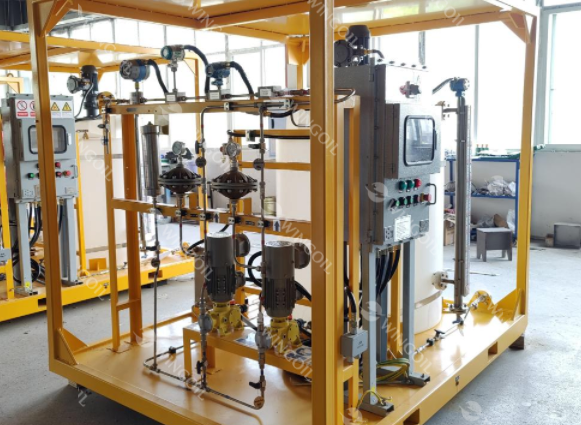
Wingoil Methanol Injection Package features an integrated skid-mounted design that combines storage, metering, injection, and control functions into a single system. The package can also be configured according to specific project requirements.
Stable and Reliable Injection System
The system uses one duty and one standby mechanical diaphragm metering pump, together with independent one duty and one standby pipeline pulsation dampeners. This configuration helps meet normal injection requirements while supporting continuous and stable operation.
Precise and Flexible Flow Control
The methanol injection flow rate can be adjusted within a 0–100% range, with more precise adjustment available within the 10–100% range. This allows operators to flexibly control methanol injection according to different operating conditions.
Integrated Skid-Mounted Design
The storage tank, metering pumps, piping, instrumentation, and control system are integrated into a single skid. The package uses an open skid-mounted structure for easier equipment installation, inspection, and maintenance.
A collection sump is also provided at the bottom of the skid to help reduce site risks associated with chemical liquid leakage.
Suitable for Various Chemical Injection Applications
Although the system can be used as a Methanol Injection Package, the chemical injection platform can also be configured for other chemical injection applications according to project requirements, including:
- Oxygen scavengers
- Biocides
- Corrosion inhibitors
- Demulsifiers
- Scale inhibitors
Automation and Remote Integration
The system supports both manual control and automatic scheduled-task control. It can also generate fault codes and alarm notifications in real time.
A PLC interface is reserved to facilitate integration with the customer’s existing main control system.
Customized According to Project Requirements
Wingoil can configure the methanol injection package according to the customer’s injection flow rate, pressure, storage tank capacity, control method, and site conditions.
The maximum flow rate can reach 20–25 L/h, while the storage tank capacity can reach 1,000 L, supporting different methanol injection applications.
Get a Customized Methanol Injection Package
If you are looking for a reliable Methanol Injection Package for oil and gas production, natural gas gathering, or pipeline transportation, Wingoil can provide a skid-mounted solution configured according to your actual operating conditions.
Contact Wingoil today to discuss your methanol injection requirements and obtain a customized solution.
Related Articles