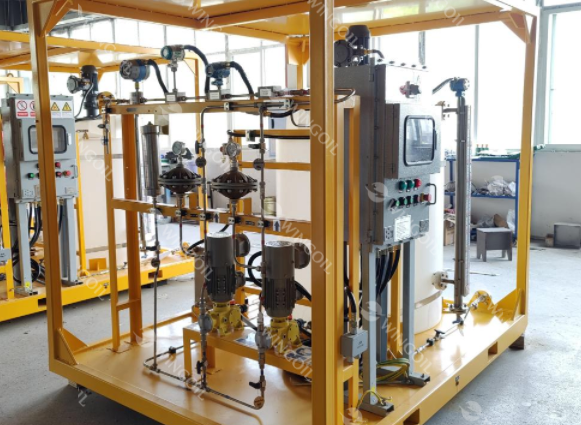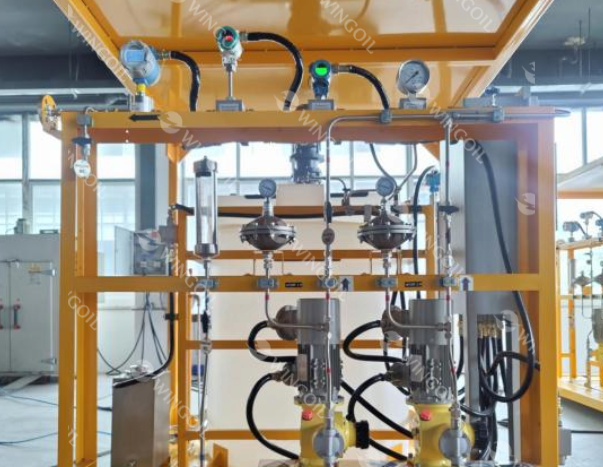
Practical Applications of Wingoil‘s Downhole Tool Testing Products
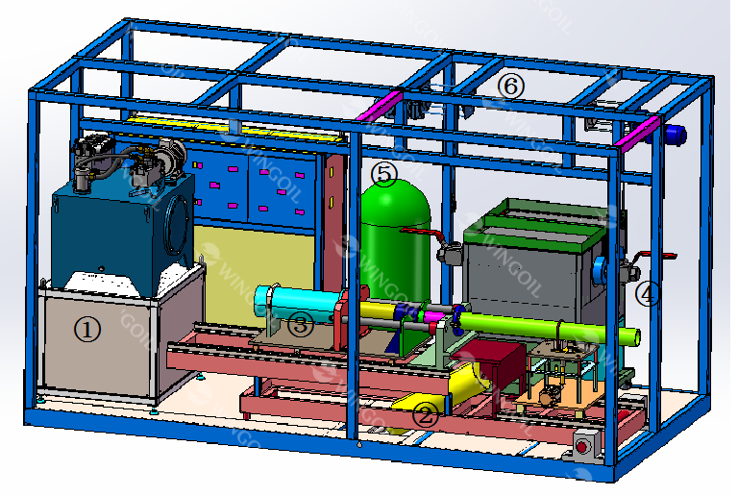
I. Downhole tool testing Products (packers, bridge plugs, soluble bridge plugs, composite bridge plugs) constructed by Chongqing Weiyun Technology Construction Co., Ltd.
1. Introduction to Chongqing Weiyun Technology Development Co., Ltd.
Founded in 2010, Chongqing Weiyun Technology Development Co., Ltd. is a technology-based enterprise specializing in the research and development and production of ultra-high pressure fluid machinery and special equipment for oil fields. It is a product and technology service provider for the oil and gas field industry, using the “WINGOIL” brand and logo. In 2021, it passed API product certification and became an API monograph unit; in 2024, it was recognized as a national high-tech enterprise; and in 2025, it was selected into the “List of Innovative Small and Medium-sized Enterprises in Beibei District, Chongqing” and obtained government innovation qualifications.
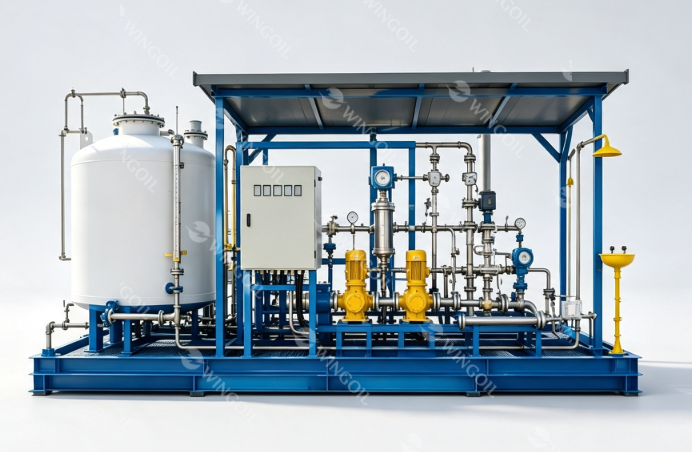
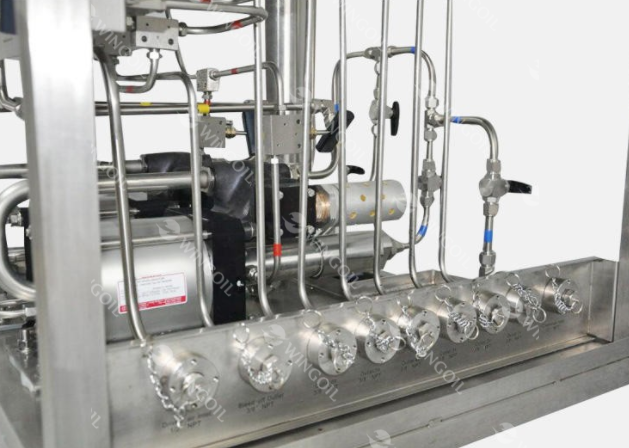
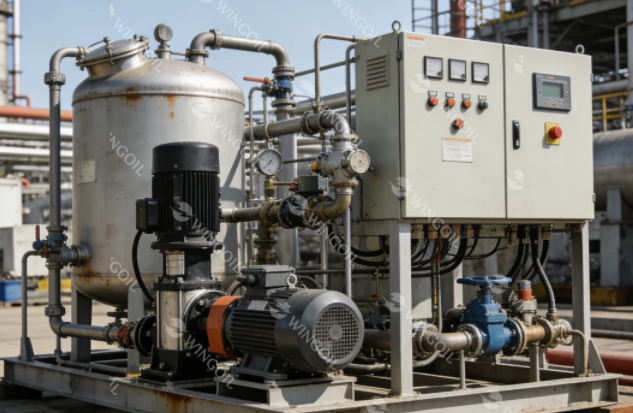
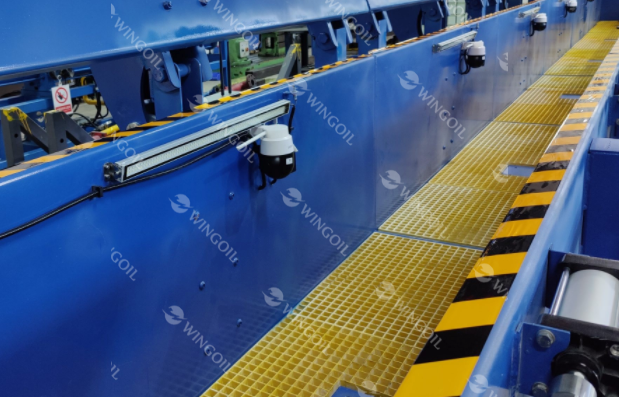
The company’s core businesses cover “ultra-high pressure testing equipment”, “oilfield production enhancement devices” and “downhole tool testing devices” . Its independently developed “multiphase mixed production booster pump” and “downhole tracer medium fixed-point delivery device” have solved industry pain points and obtained invention patents.
2、Downhole Tool Project Case Review
| No. | Customer | Main functions and parameters | Pic |
| 1 | Sinopec | Packer test Medium: Clean water Test pressure: 70MPa Sleeves: 4-1/2, 5, 5-1/2, 7, 9-5/8 | 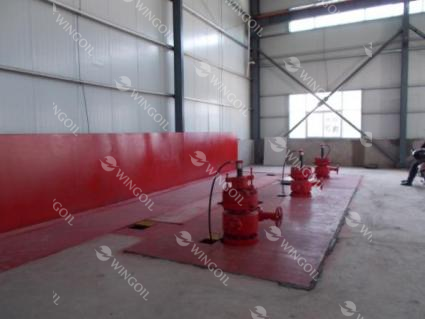 |
| 2 | PetroChina | Dissolvable frac plug test Medium: Clear water, mineralized solution Test pressure: 150MPa Temperature: 204℃ Test sleeves: 3, 3-1/2, 4-1/2, 5, 5-1/2, 7 | 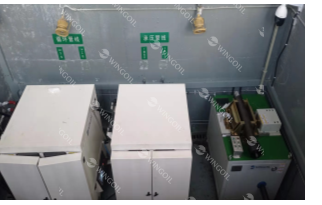 |
| 3 | PetroChina | Dissolvable frac plug and packer test Medium: Clear water, mineralized solution Test pressure: 150MPa Temperature: 250℃ Test sleeves: 3, 3-1/2, 4-1/2, 5, 5-1/2, 7 | 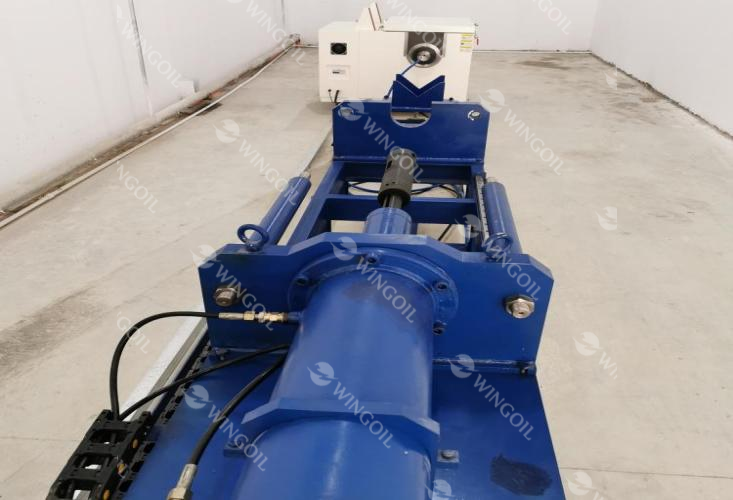 |
| 4 | PetroChina | Packers and downhole instruments Medium: Water, Nitrogen Test pressure: 200MPa | 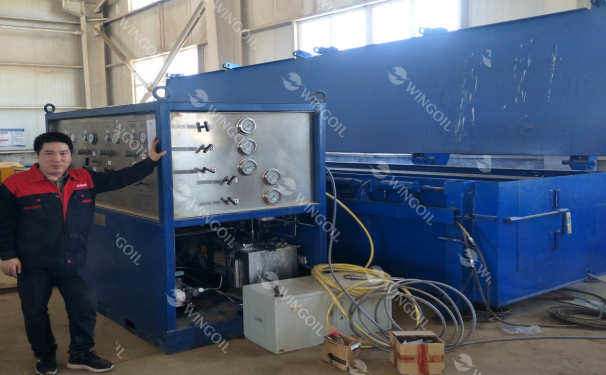 |
| 5 | CNPC Logging | BOP and downhole instruments Medium: Clean water Test pressure: 105MPa | 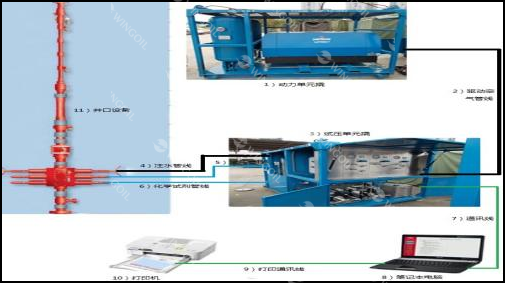 |
| 7 | Private enterprises | Dissolvable frac plug test Medium: Clear water, mineralized solution Test pressure: 105MPa Temperature: 204℃ Test sleeves: 3, 3-1/2, 4-1/2, 5, 5-1/2, 7 | 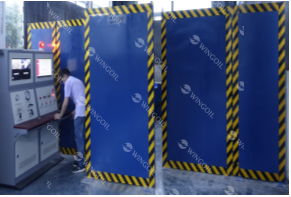 |
| 8 | Private enterprises | Dissolvable frac plug test Medium: Clear water, mineralized solution Test pressure: 120MPa Temperature: 204℃ Test sleeves: 3, 3-1/2, 4-1/2, 5, 5-1/2, 7 | |
| 9 | Private enterprises | Dissolvable frac plug test Medium: Clear water, mineralized solution Test pressure: 120MPa Temperature: 204℃ Test sleeves: 3, 3-1/2, 4-1/2, 5, 5-1/2, 7 | 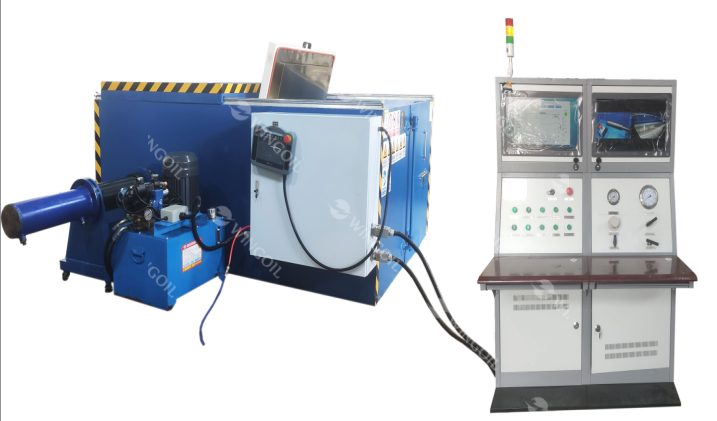 |
| 10 | Export projects | Packer and Dissolvable frac plug test Medium: Water, Nitrogen Test pressure: 150MPa Sleeves: 4-1/2, 5, 5-1/2, 7, 9-5/8 | 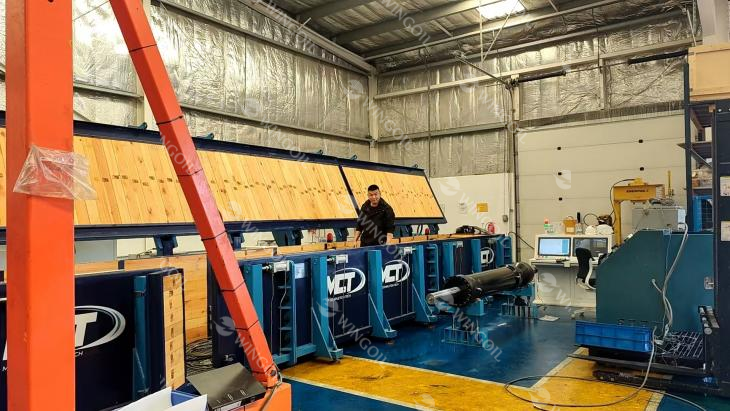 |
| 11 | Sinopec | Packers and bridge plugs Medium: Clear water, mineralized solution Test temperature: 220℃ Test pressure: 140MPa Sleeves: 4-1/2, 5, 5-1/2, 7, 9-5/8 | |
| 12 | PetroChina | Packer test Sleeves: 4-1/2, 5, 5-1/2, 7 Pressure: 105 MPa Max. test temperature: 200℃ Max. length: 10 meters | 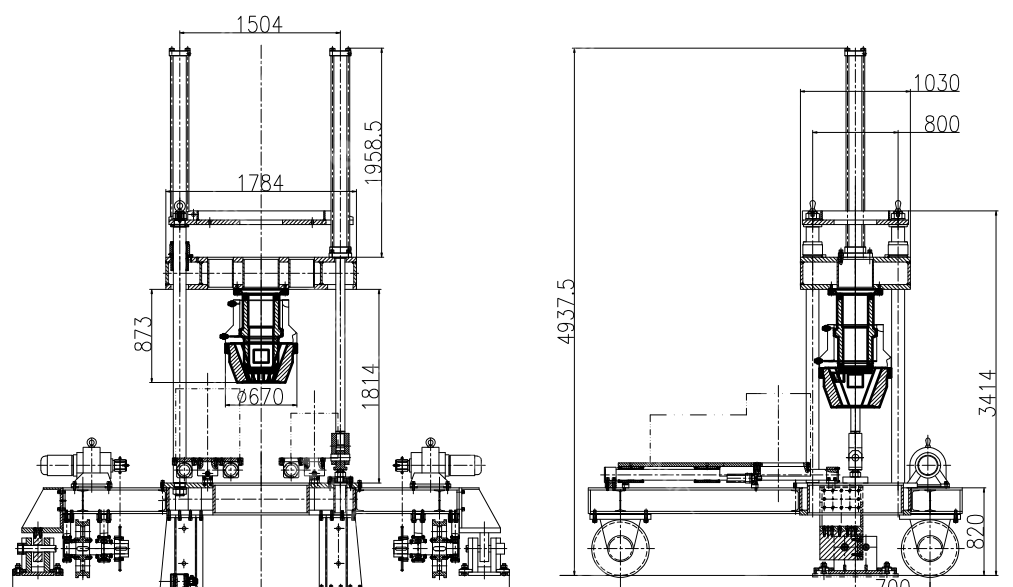 |
II . Main Design Reference Standards
GB/T 20970-2015 “Packers and Bridge Plugs for Downhole Tools in the Oil and Gas Industry”
SY/T 5106-2019 “Specification for Packers in Oil and Gas Drilling and Production Equipment”
API 11D1 “Packers and Bridge Plugs for Downhole Equipment in the Oil and Gas Industry”
SY/T 7462-2019 “Dissolvable bridge plugs for oil and gas drilling and production equipment”
NB/ T 14020.1-2020 “Shale Gas Tools and Equipment Part 1 : Composite Bridge Plugs”
NB/T 14020.2-2020 “Shale Gas Tools and Equipment Part 2: Fracturing Soluble Bridge Plug Detection and Operation Specifications”
GB/T19830-2023 “Steel Grades for Oil and Gas Well Casing or Tubing in the Petroleum and Natural Gas Industry”
GB/T27025-2019 “General Requirements for the Competence of Testing and Standards Laboratories”
GB/T9445-2024 “Qualification and Certification of Nondestructive Testing Personnel”
SY/T 6120-2019 “Specifications for Field Testing of Oil and Gas Drilling and Production Equipment”
SY/T 6640-2016 “Technical Conditions for Downhole Tool Testing Devices for Petroleum Drilling and Production Equipment”
SY/T 6229-2019 “Bridge Plugs for Oil Drilling and Production Equipment”
SY/T 5299-1991 “Operating Procedures for Cable Bridge Plugs”
T/CPI 13002-2023 “Performance Indicators and Testing Specifications for Soluble Bridge Plugs in Oil and Gas Drilling and Production Equipment”
NB/T 14002.5-2023 “Shale Gas Reservoir Stimulation Part 5: Specifications for Drilling and Grinding Bridge Plugs in Horizontal Wells”
GB/T 50779-2022 “Standard for Explosion-Resistant Design of Petrochemical Buildings”
III. Analysis of the Use of Downhole Tools in China
1. Survey of temperature and pressure parameters of production wells in various oil and gas fields in China (including data from wells at depths of 10,000 meters and regional distribution characteristics)
As domestic oil and gas exploration and development extends to deep wells, ultra-deep wells, high-sulfur wells, and unconventional oil and gas (shale gas, heavy oil, and tight oil), packers and bridge plugs, soluble bridge plugs, and composite bridge plugs, as core tools for downhole sealing, stratified fracturing, and wellbore isolation, directly determine oil and gas development efficiency, operational safety, and production costs. In recent years, new tools such as soluble bridge plugs and composite bridge plugs have undergone rapid iteration, accelerating the process of domestic substitution. In 2025, the domestic bridge plug market size exceeded 4.2 billion yuan, with the unconventional oil and gas sector contributing over 55% of the increased demand. However, existing testing equipment is mostly designed for traditional tools, suffering from incomplete testing items, insufficient parameter limits, low levels of intelligence, and a lack of foresight, making it difficult to meet the testing needs of new tools and adapt to future operating conditions. Furthermore, the development conditions of various oil and gas fields in China differ significantly, resulting in personalized and extreme performance requirements for the four types of downhole tools. The testing capabilities of different testing units vary considerably, failing to comprehensively cover all testing needs. Therefore, it is urgent to further clarify market demands and equipment shortcomings, and propose scientific solutions for new equipment construction.
To provide data support and rational suggestions for the design and parameter setting of new equipment, help improve the level of domestic downhole tool inspection, and support the research and development of new tools and domestic substitution, the project will collect data and materials from the following aspects, striving to achieve the goals of “full coverage, leading parameters, intelligent efficiency, forward-looking adaptation, safety and environmental protection” for the new equipment:
- Clearly define the application scenarios and core requirements parameters of packers, bridge plugs, soluble bridge plugs, and composite bridge plugs in major domestic oil and gas fields, and understand the market usage and performance pain points of various tools.
- Identify the testing capabilities, existing equipment configurations, testing item coverage, and technical shortcomings of major domestic testing units (internal testing centers of oil and gas fields and third-party testing institutions);
- Based on future oil and gas field development trends (ultra-deep wells, high sulfur content, and unconventional oil and gas development), we propose forward-looking suggestions for the construction of new testing equipment to ensure that the equipment covers all testing items of the four types of downhole tools and that the parameters are ahead of the current industry level.
2. Temperature and pressure parameters of the 10,000-meter well
The two current deep wells, each over 10,000 meters deep, are Deep Earth Tak-1 (Tarim Basin, Xinjiang) and Deep Earth Chuanke-1 (Jiange County, Guangyuan, Sichuan). Their core parameters are shown in the table below:
| Well | Max. well depth | Hhighest temperature | Max. formation pressure |
| Deep Earth Taco 1 Well | 10910 meters | Approximately 220℃ | 145 MPa |
| Deep Earth Chuanke 1 Well | 10,520 meters (designed), 7,418 meters (actually completed midway) | 224℃ | 138 MPa |
3. Reference data on major pressures and temperatures in major oil and gas fields
| Oil and gas fields/projects | highest temperature | Maximum formation pressure | |
| Tarim Oilfield (including Deep Earth Tako 1 Well) | 220℃ (Tako 1 Well) | 190+ MPa (Fudong 105 Well) | Asia’s deepest well, one of the world’s highest pressure areas. |
| Sichuan Basin (Southwest Oil and Gas Field, including the deep-sea Chuanke 1 well) | 224℃(Well Sichuanke 1) | 147 MPa (Longtan 1 well) | The world’s most complex pressure system at 10,000 meters deep |
| Shunbei Oil and Gas Field (Northwest Oilfield) | 209℃ | 131.9 MPa | Asia’s highest-temperature onshore directional well, the world’s deepest commercially developed oil and gas field. |
| Kuqa Mountain Front (Tarim) | Approaching 200℃ | 180 MPa (KShen 9 gas reservoir) | Rare ultra-deep, ultra-high pressure fractured tight sandstone gas reservoir in the world |
| Ledong 10-1 Gas Field (CNOOC) | 214℃ | 94 MPa | China’s first offshore ultra-high temperature and ultra-high pressure gas field |
| Bozhong 26-6 Oilfield (CNOOC) | 178℃ | – | The Bohai Sea’s billion-ton-level oilfield has extremely hard bedrock in its buried hills. |
| Deep Sea One (CNOOC) | 138℃ | 69+ MPa | China’s deepest offshore gas field operates at a water depth exceeding 1,500 meters. |
| Xinjiang Oilfield | 100+℃ | 90 MPa (Fengtan 101 Well) | Deepest coring record for onshore shale oil production under pressure |
| North China Oilfield (Bayan Branch) | 170+℃ | – | Ultra-deep continental clastic oil reservoirs below 5000 meters |
| Fuling Shale Gas Field (Jianghan Oilfield) | Approximately 175℃ | 130.7 MPa | Asia’s deepest shale gas well record (8517 meters) |
| Changqing Oilfield | 98℃ (typical value) | 70 MPa (shale oil region) | China’s largest oil and gas field, characterized by low pressure and low permeability. |
4. Regional distribution characteristics of temperature and pressure
3.1 Tarim Oilfield (China National Petroleum Corporation)
The Deep Earth Tako 1 Well (Asia’s deepest and the world’s second deepest vertical well): Drilled to a depth of 10,910 meters, with a maximum temperature of approximately 220°C and a maximum pressure of 145 MPa. Completed in 279 days, it set a new global record for the fastest onshore drilling to 10,000 meters. (Tarim Oilfield Company)
Fudong 105 Well (Fuman Oilfield): Formation pressure exceeding 190 MPa, bottom hole temperature exceeding 180℃, a typical “three-ultra-one-high” well (ultra-deep, ultra-high temperature, ultra-high pressure, high sulfur content). China National Petroleum Corporation (CNPC)
Keshen 9 gas reservoir (Kuqa foreland): The bottom-hole temperature reaches nearly 200℃, and the pressure reaches 180 MPa. It is a rare ultra-deep and ultra-high pressure fractured tight sandstone gas reservoir in the world.
Overall characteristics: One of the deepest, hottest, and highest-pressure oil and gas producing areas on land in China, with a concentration of “three-super” (ultra-deep, ultra-high temperature, and ultra-high pressure) wells.
3.2 Sichuan Basin (Southwest Oil and Gas Field, China National Petroleum Corporation)
Deep Earth Chuanke 1 Well (10,520-meter Exploration Well): Designed depth of 10,520 meters, maximum temperature of 224℃, maximum pressure of 138 MPa, 7 engineering difficulty indicators rank first in the world, facing 10 sets of vertical irregular pressure systems.
Double Fish 001h6 Well: China’s deepest onshore gas well (9010 meters), with a well temperature exceeding 180℃, formation pressure exceeding 130 MPa, and hydrogen sulfide content reaching 6 grams per cubic meter.
Longtan 1 well (Jiange block): The highest formation pressure was 147 MPa, setting a new record for the highest pressure in the Southwest Oil and Gas Field region.
Jiao Tan 1 well: The highest measured bottom hole pressure was 115 MPa, and the highest formation temperature was 140.3℃. It is the well with the highest wireline operation pressure in the Southwest Oil and Gas Field of China National Petroleum Corporation.
Yongchuan Shale Gas Field: Maximum burial depth 4250 meters, pressure 80 MPa, temperature 140℃
Overall characteristics: Oil and gas wells in the Sichuan-Chongqing region are characterized by ultra-high temperature, ultra-high pressure, and multiple complex pressure systems. Different regions show obvious differences: Northwest and Central Sichuan are dominated by “three-ultra” wells (ultra-deep, ultra-high temperature, and ultra-high pressure), Southern Sichuan is characterized by high pressure coefficients of deep shale gas, and Northeast Sichuan has the characteristics of high temperature, high pressure, and high sulfur content.
3.3 Shunbei Oil and Gas Field (Northwest Oilfield, Sinopec)
Shunbei 123 Well: Drilled to a depth of 8727 meters, with a bottom-hole temperature of 209 degrees Celsius, making it the highest-temperature directional well on land in Asia. (National Development and Reform Commission)
Shunbeiying 1 Well: Drilled to a depth of 8,588 meters, setting a new record for the deepest onshore well in Asia.
Maximum shut-in pressure: 131.9 MPa, equivalent to a 1.3-ton car parked on an area the size of a fingernail.
Overall characteristics: The world’s deepest commercially developed onshore oil and gas field, with reservoirs buried at depths of up to 8,000 meters, characterized by extremely high temperatures and pressures.
3.4 Offshore oil and gas fields (CNOOC)
Ledong 10-1 Gas Field (Yinggehai Basin): Reservoir temperature reaches 214℃, formation pressure reaches 94 MPa, making it China’s first ultra-high temperature and ultra-high pressure offshore gas field, with an average operating water depth of approximately 90 meters.
The Shenhai-1 gas field (southern Hainan Island): with a maximum formation temperature of 138℃, a maximum pressure exceeding 69 MPa, and a maximum operating water depth exceeding 1500 meters, it is the deepest operating water field and the deepest formation temperature and pressure field independently developed and constructed by China to date.
Bozhong 26-6 Oilfield (Central Bohai Sea): Formation temperature reaches as high as 178 degrees Celsius. The reservoir is located in Archean buried hill metamorphic rock strata at a depth of over 4500 meters, with an average bedrock compressive strength of 137-275 MPa.
3.5 Xinjiang Oilfield (Junggar Basin):
Fengtan 101 Well: 5296 meters deep, with measured bottom-hole temperature exceeding 100℃ and formation pressure reaching 90 MPa, setting a new global record for the deepest pressure-maintained coring operation in onshore shale oil production. (State-owned Assets Supervision and Administration Commission)
3.6 North China Oilfield (Bayan Branch):
The Zhage 101 well area has an average reservoir depth exceeding 5,000 meters, with formation temperatures exceeding 170°C below 5,000 meters and high pressure coefficients, making exploration and development extremely difficult.
3.7 Fuling Shale Gas Field (Jianghan Oilfield, Sinopec):
Jiaoye 44-Z5HF Well: Drilled to a depth of 8,517 meters, setting a new record for the deepest shale gas well in Asia.
Pingqiao Block: Construction pressure reaches 105-130.7 MPa, using 175 MPa fracturing manifold technology.
Hongxing Shale Gas Field: Permian formation buried at a depth of 3300-5500 meters, utilizing a high-temperature lubricating mud system resistant to 210℃.
3.8 Changqing Oilfield (Ordos Basin, China’s largest oil and gas field):
Shale oil fields: maximum temperature approximately 98℃, maximum pressure 70 MPa
The Chang 7 section shale oil reservoir has a reservoir temperature of 61.0-66.2℃ and an original formation pressure of 14.3-16.0 MPa, classifying it as a low-pressure reservoir.
Huang 3, Chang 8 reservoir: formation temperature 85℃, original formation pressure 19.74MPa.
IV. Current Status and Trends of Packer/Bridge Plug Usage in Various Regions of China (Including Analysis of Core Requirements Parameters)
Due to differences in geological conditions and development processes, the demand parameters and application scenarios for downhole tools vary significantly among major domestic oil and gas fields (Changqing, Daqing, Shengli, Southwest, Shunbei, Tarim, etc.). Furthermore, with the advancement of “deep-earth engineering” and the acceleration of unconventional oil and gas development, tool requirements are gradually upgrading towards high temperature, high pressure, corrosion resistance, environmental friendliness, and intelligence. A detailed analysis follows:
1. Overview of core operating conditions and tool usage in major oil and gas fields
| Oil and gas fields | Core Development Conditions | Main tool types | Pain points in tool use | Estimated annual usage (sets) |
| Changqing Oilfield | Primarily low-pressure, low-permeability, horizontal wells, with temperatures ranging from 40-120℃ and pressures from 20-35MPa, often employing stratified fracturing techniques. | Conventional packers, composite bridge plugs, soluble bridge plugs (shale gas blocks) | In horizontal wells, eccentric sealing is unstable, and long-term setting is prone to failure; the soluble bridge plug dissolves at uneven rates. | Packers 8000+, Bridge plugs (including soluble/composite) 6000+ |
| Daqing Oilfield | High water content, low temperature (40-80℃), widespread casing deformation, pressure 15-30MPa, and significant demand for production enhancement and upgrading in old oilfields. | Conventional packers, removable bridge plugs, composite bridge plugs | Deformation of the sleeve leads to failure of setting the seal; the seal is prone to aging in high water content environments; and the bridge plug is difficult to release. | Packers 7000+, Bridge plugs (including composite) 5000+ |
| Shengli Oilfield | Heavy oil thermal recovery, high temperature (180-230℃), steam drive, pressure 35-70MPa, shale oil development demand is growing. | High-temperature packers, composite bridge plugs, soluble bridge plugs (shale oil blocks) | Rubber sleeves age rapidly under high-temperature steam, resulting in insufficient sealing durability, and soluble bridge plugs dissolve excessive residue at high temperatures. | Packers 6000+, bridge plugs (including soluble/composite) 4500+ |
| Southwest Oil and Gas Field (Sichuan-Chongqing) | High-pressure, deep/ultra-deep wells, temperatures 150-180℃, pressures 70-140MPa, core areas for shale gas development. | High-pressure, high-sulfur packers, composite bridge plugs, soluble bridge plugs (main tools) | High sulfur content leads to tool failure, unstable sealing performance under ultra-high pressure, and insufficient sulfur resistance of soluble bridge plugs. | Packers 5000+, bridge plugs (including soluble/composite) 7000+ (soluble bridge plugs account for more than 60%) |
| Shunbei/Tarim Oilfield | Ultra-deep wells (6000-10000m deep), high-temperature (180-230℃), high-pressure (105-140MPa), and highly deviated wells are the main types. | Ultra-high pressure packers, composite bridge plugs, permanent packers | Under ultra-high temperature and pressure, the structure is prone to deformation, the risk of seal failure is high, and the tool has insufficient fatigue resistance. | Packers 3000+, Bridge plugs (including composite) 3500+ |
| Other oil and gas fields (Liaohe, Bohai, etc.) | Heavy oil thermal recovery, high-salinity offshore environment, temperature 120-180℃, pressure 35-70MPa | Conventional packers, composite bridge plugs, and soluble bridge plugs (small-scale pilot testing) | High-salt environments cause corrosion, offshore equipment requires high reliability, and the residue from dissolved soluble bridge plugs is difficult to return. | Packers 4000+, Bridge plugs (including soluble/composite) 3000+ |
2. Analysis of core requirements parameters for four types of downhole tools (by oil and gas field)
Considering the differences in operating conditions across various oil and gas fields, the core parameter requirements for downhole tools exhibit distinct specificities while also taking into account general applicability. The following are the key parameter requirements for downhole tools in various oil and gas fields, clarifying the range of core parameters that the testing equipment must cover:
2.1 Core requirements parameters for packers and bridge plugs:
| Oil and gas fields | Temperature range (°C) | Pressure resistance range (MPa) | Applicable sleeve size (in) | Special requirements |
| Changqing Oilfield | 40-120 | 20-35 | 4½-9⅝ | Horizontal well eccentric adaptation, long-term setting (≥30 days), resistant to polymer fracturing fluid corrosion. |
| Daqing Oilfield | 40-80 | 15-30 | 4½-7 | Adaptable to casing deformation (≤5%), resistant to high water content corrosion, and flexible unsealing. |
| Shengli Oilfield | 180-230 | 35-70 | 5½-9⅝ | Resistant to high-temperature steam erosion, rubber sleeve anti-aging, and resistant to heavy oil media. |
| Southwest Oil and Gas Field | 150-180 | 70-140 | 5½-9⅝ | Ultra-high pressure sealing, zero leakage |
| Shunbei/Tarim Oilfield | 180-230 | 105-140 | 7-9⅝ | Structural integrity under ultra-high temperature and pressure, resistance to ground shear, and long-term pressure resistance (≥72h). |
2.2 Core Requirements Parameters for Soluble Bridge Plugs
Soluble bridge plugs are mainly used in stratified fracturing of shale gas and shale oil. The core requirements focus on dissolution characteristics and pre-dissolution sealing performance, which are currently the key and challenging aspects of testing. In 2025, the compound annual growth rate of soluble bridge plugs exceeded 15%, making it a hot spot for industry growth. Specific parameters are as follows:
| Oil and gas fields | Temperature range (°C) | Pressure resistance range (MPa) | Dissolving medium | Dissolution rate requirements | Special requirements |
| Changqing Oilfield | 60-120 | 35-70 | Formation water, fracturing fluid | Completely dissolves in 3-7 days | Residue content ≤5%, particle size ≤0.5mm, does not clog formation. |
| Shengli Oilfield | 120-180 | 35-70 | High-temperature formation water and acid | Completely dissolves in 5-10 days | It dissolves at high temperatures, dissolves evenly, and leaves no localized residue. |
| Southwest Oil and Gas Field | 150-180 | 70-105 | Sulfur-containing formation water, CO₂-saturated water | Completely dissolves in 7-15 days | After dissolution, the wellbore is clean, and the residue is easy to return. |
| Other shale gas blocks | 80-150 | 50-105 | Formation water, acid | Completely dissolves in 4-8 days | The dissolution rate is adjustable to adapt to different fracturing cycles. |
2.3 Core Requirements Parameters for Composite Bridge Plugs
Composite bridge plugs are made of metal and non-metal composite materials, featuring low density and high strength. Their market penetration rate in the Sichuan Basin shale gas blocks has exceeded 65%. Core demands focus on the performance of the composite structure and sealing reliability. Specific parameters are as follows:
| Oil and gas fields | Temperature range (°C) | Pressure resistance range (MPa) | Composite material requirements | Special requirements |
| Changqing/Daqing | 40-120 | 20-35 | Metal + Glass Fiber Reinforced Resin | Lightweight, easy to drill and remove, and resistant to water erosion. |
| Shengli Oilfield | 180-230 | 35-70 | Metal + High-Temperature Resistant Polymer | Resistant to high temperature aging, resistant to steam erosion, and leak-proof at the sealing interface. |
| Southwest/North | 150-230 | 70-140 | Metal + sulfur-resistant polymer | The composite interface is tightly bonded and resistant to shear. |
3. Analysis of the usage trends of four types of downhole tools
- Conventional packers/bridge plugs: Demand is stabilizing, with a focus on upgrading to “customization” to adapt to the special working conditions of different oil and gas fields (such as casing deformation, high sulfur content, and horizontal wells), while improving long-term reliability.
- Soluble bridge plugs: Demand is growing rapidly, especially in the shale gas and shale oil development sector. In the future, they will develop towards “high temperature resistance, sulfur content resistance, low residue, and adjustable dissolution rate”, becoming the main tool for unconventional oil and gas development.
- Composite bridge plugs: Replacing some conventional metal bridge plugs, demand is steadily increasing. The focus is on optimizing the high temperature resistance, corrosion resistance, and shear resistance of composite materials to adapt to ultra-deep wells and high temperature and high pressure conditions.
- Overall trend: Tool performance is upgrading towards “high temperature, high pressure, corrosion resistance, environmental protection, and intelligence,” which places higher demands on the upper limit of testing equipment parameters, testing accuracy, and testing item coverage. At the same time, it is necessary to be forward-looking and adapt to the research and development and testing needs of future new tools.