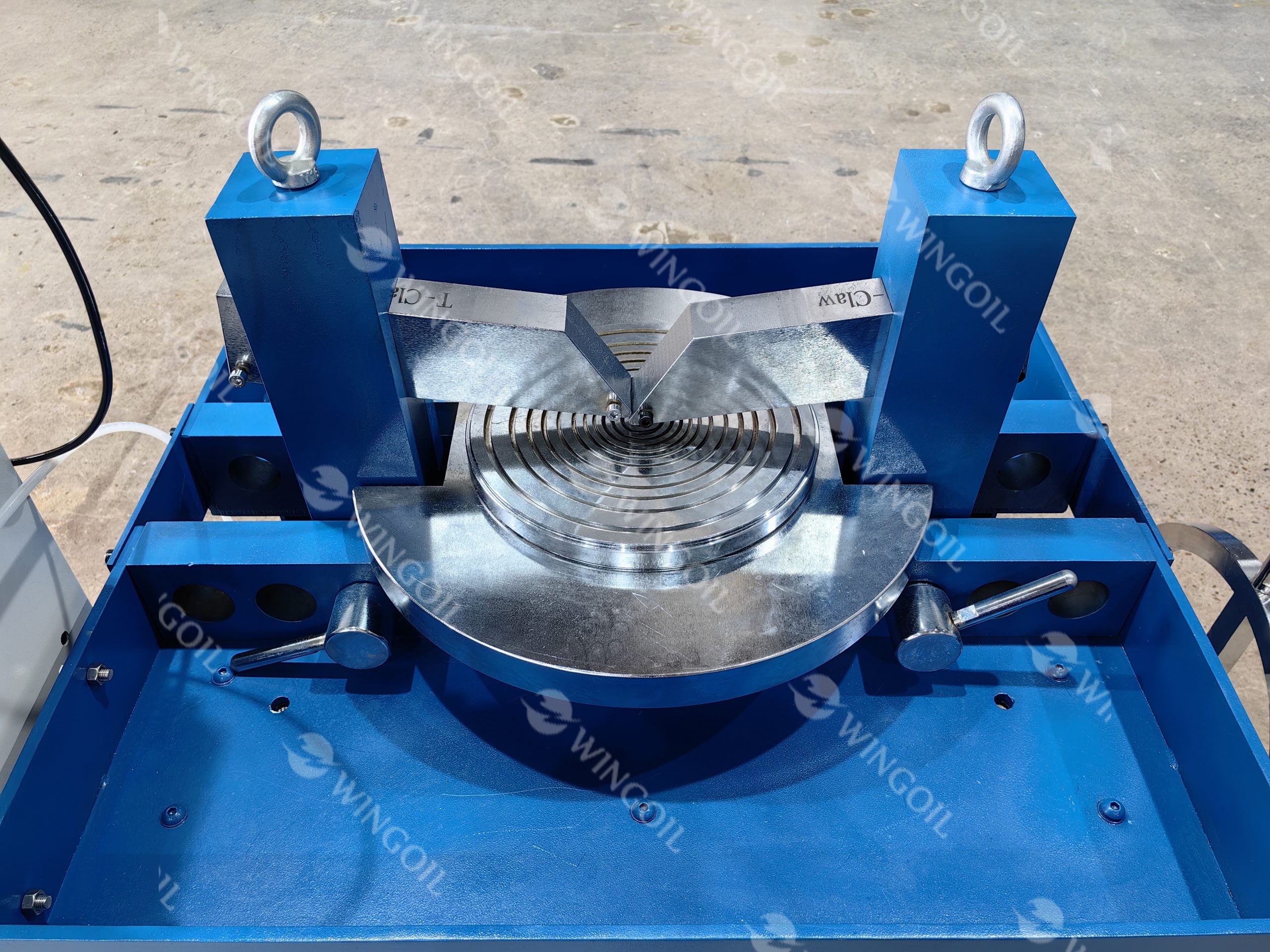
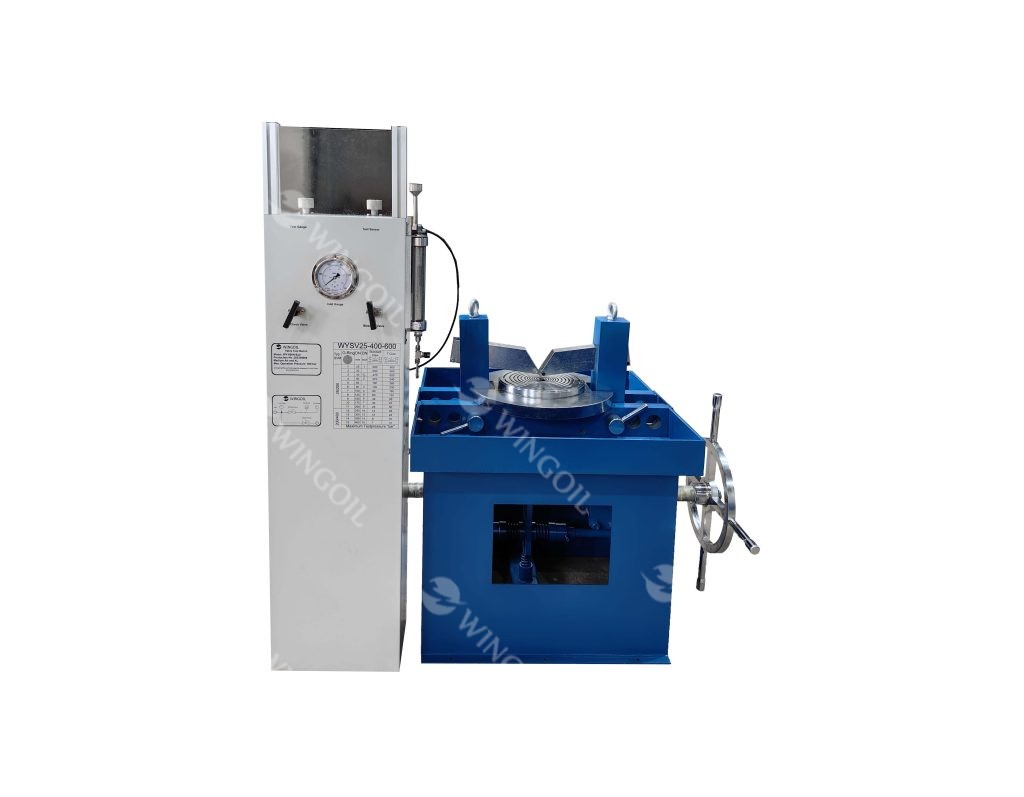
Safety Relief Valve Test Bench
- Model: WY-600N-BJ0
- The manual safety relief valve test bench is a critical piece of equipment in various industries, including oil and gas, chemical processing, and power generation. Its primary purpose is to test and validate the performance of safety relief valve (SRV) / Pressure Relief Valve (PRV) / Pressure Safety Valve (PSV), under controlled conditions, ensuring they operate reliably and efficiently in emergency situations.
Share to
Overview
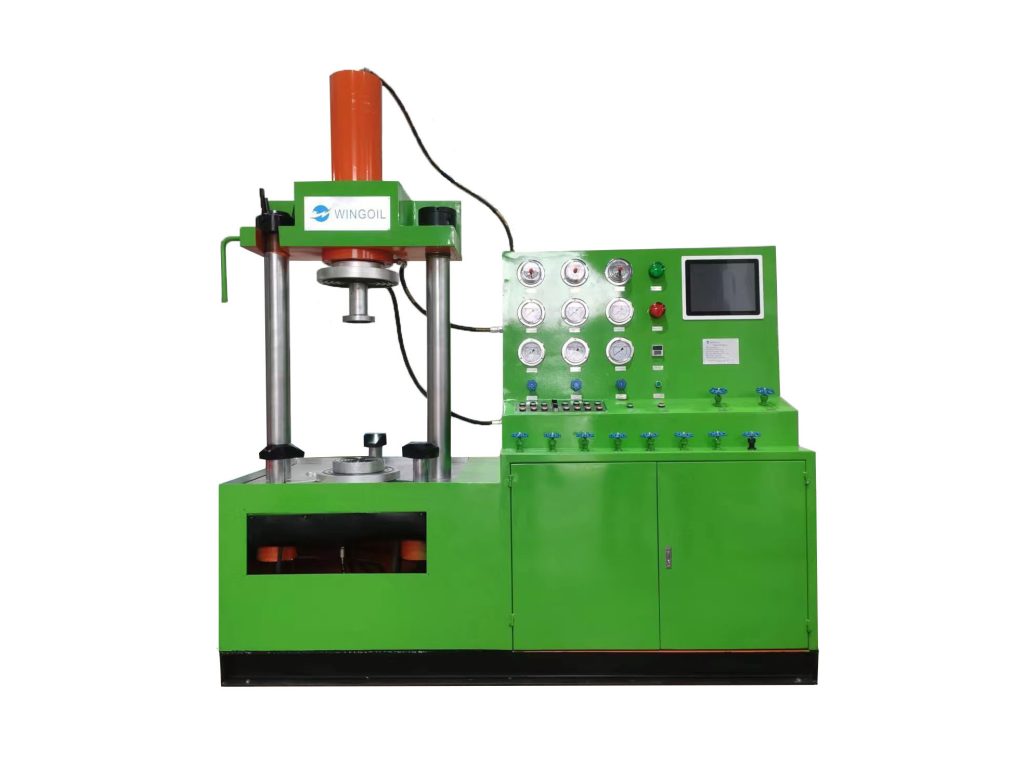
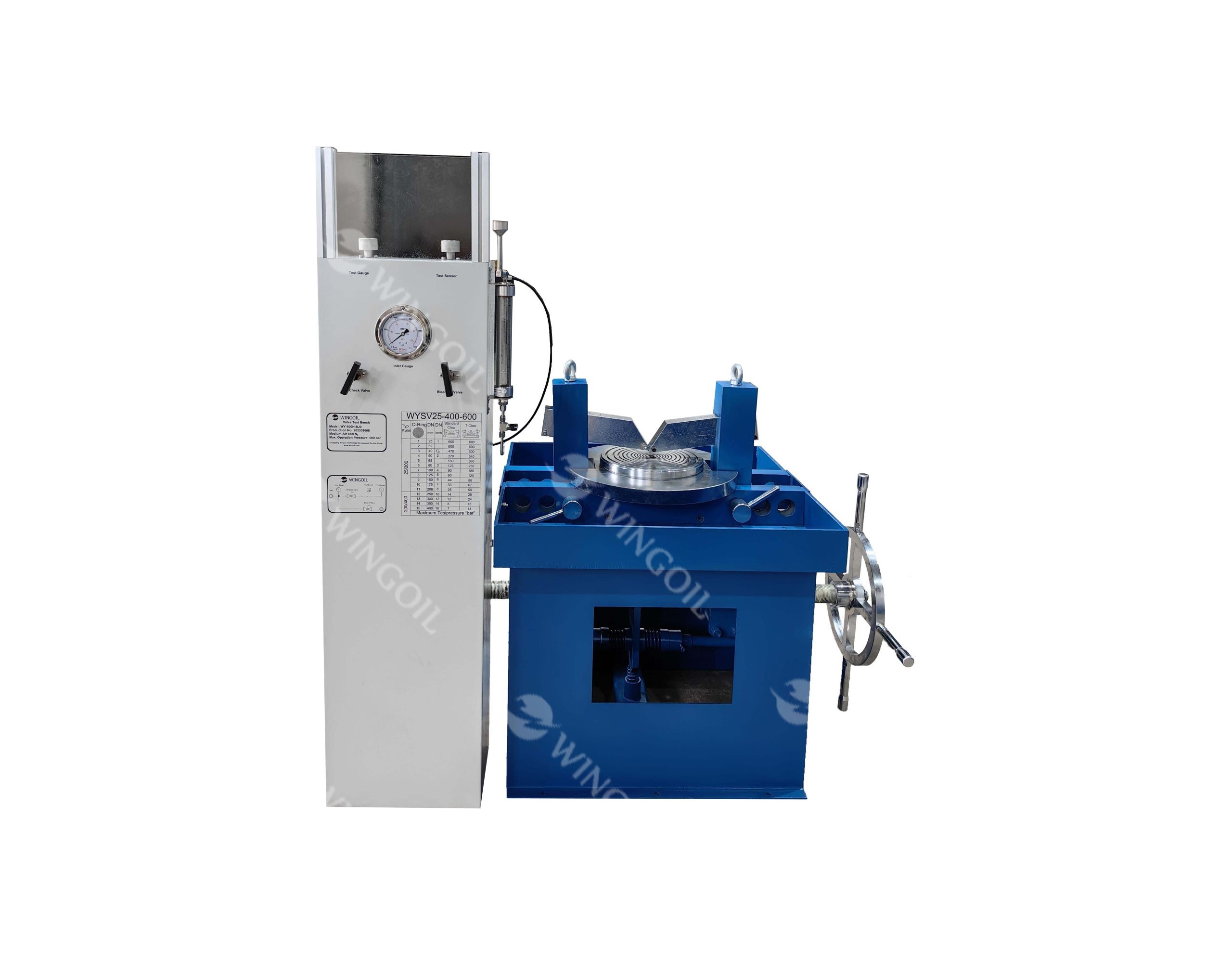
This Safety Relief Valve Test Bench is mainly used for the test and calibration of all kinds of flange safety. Its basic principle is: manually clamp the safety valve, and then input the test medium (nitrogen or compressed air) through the manual control valve, and finally realize all kinds of test process safely.
Manual Console
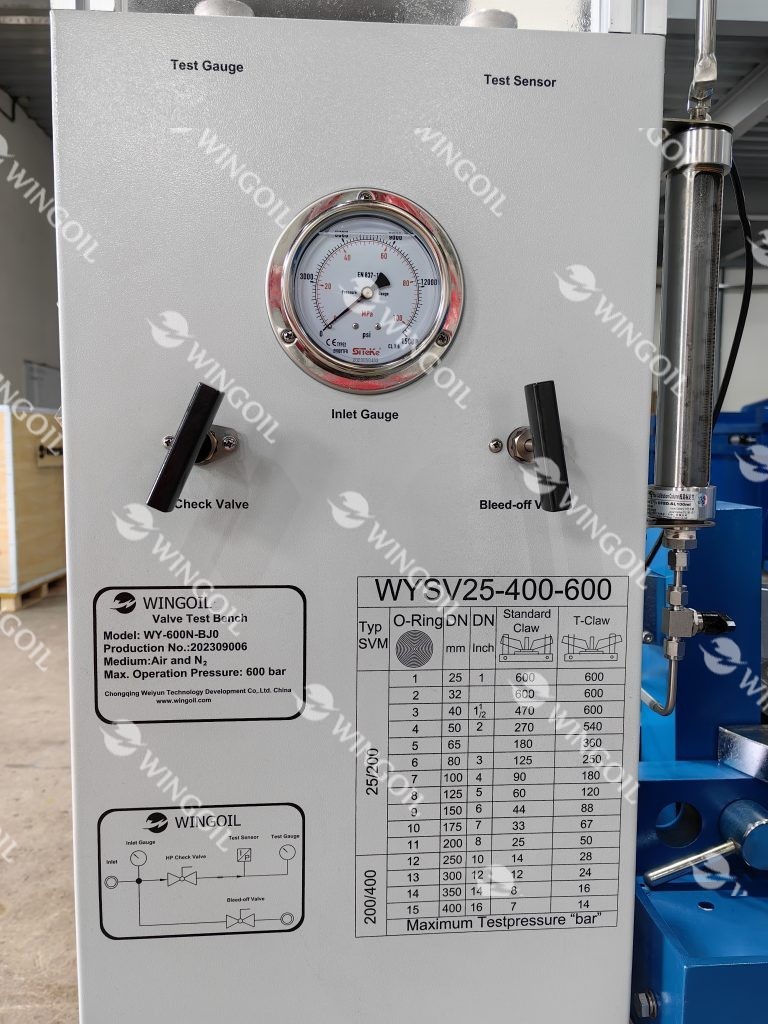
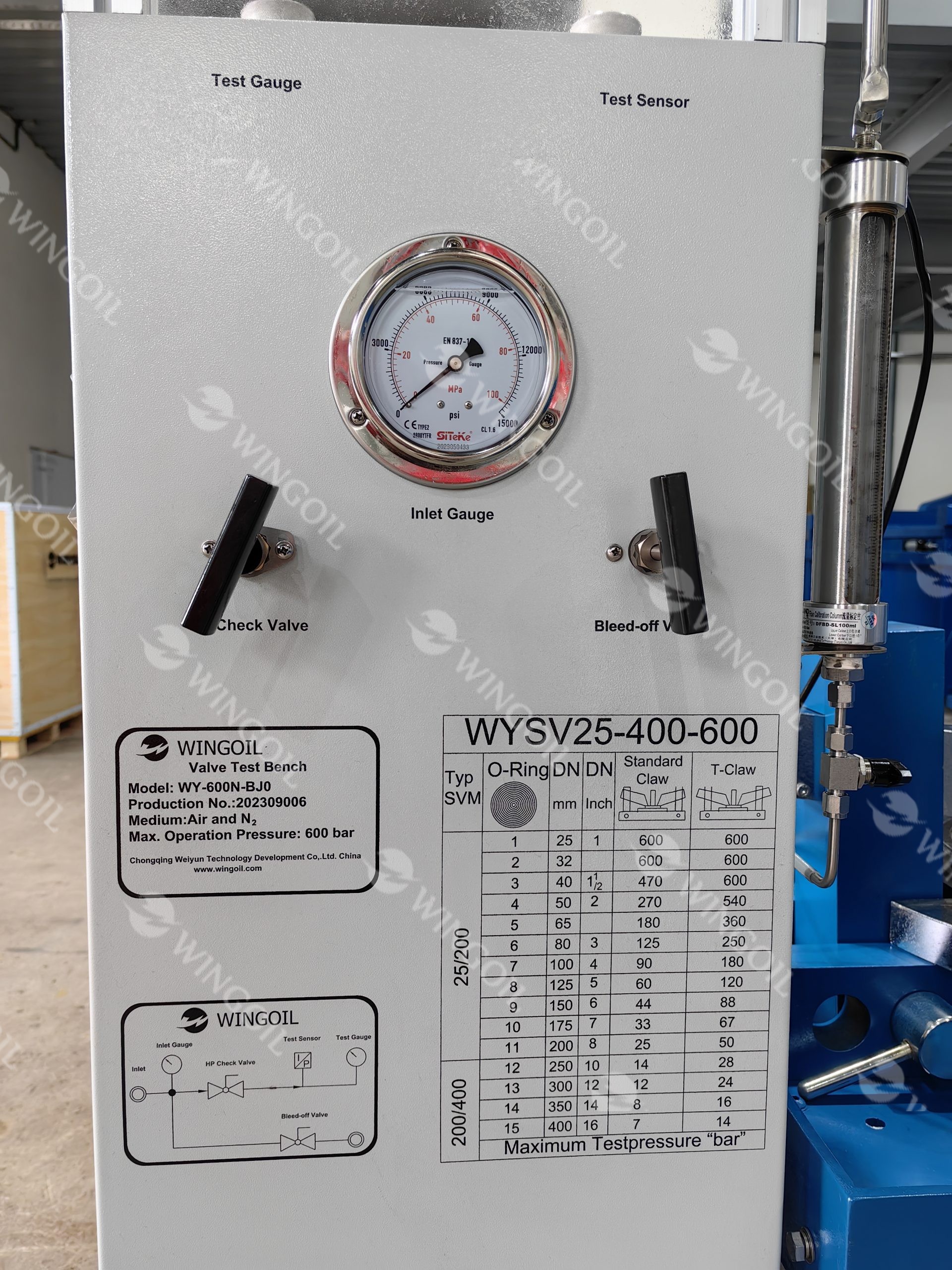
The manual console is the conversion part of the high pressure process of the valve test bench, which enters the system through the external test medium (nitrogen or compressed air). The pressure gauge on panel shows the pressure of the external test medium. It uses the micro-regulating flow function of “HP check valve” to lock the test pressure within the test range, and observe the actual test pressure through “Test gauge” or “Test sensor”, and determine the set pressure through the bubble counter.
Test Bench
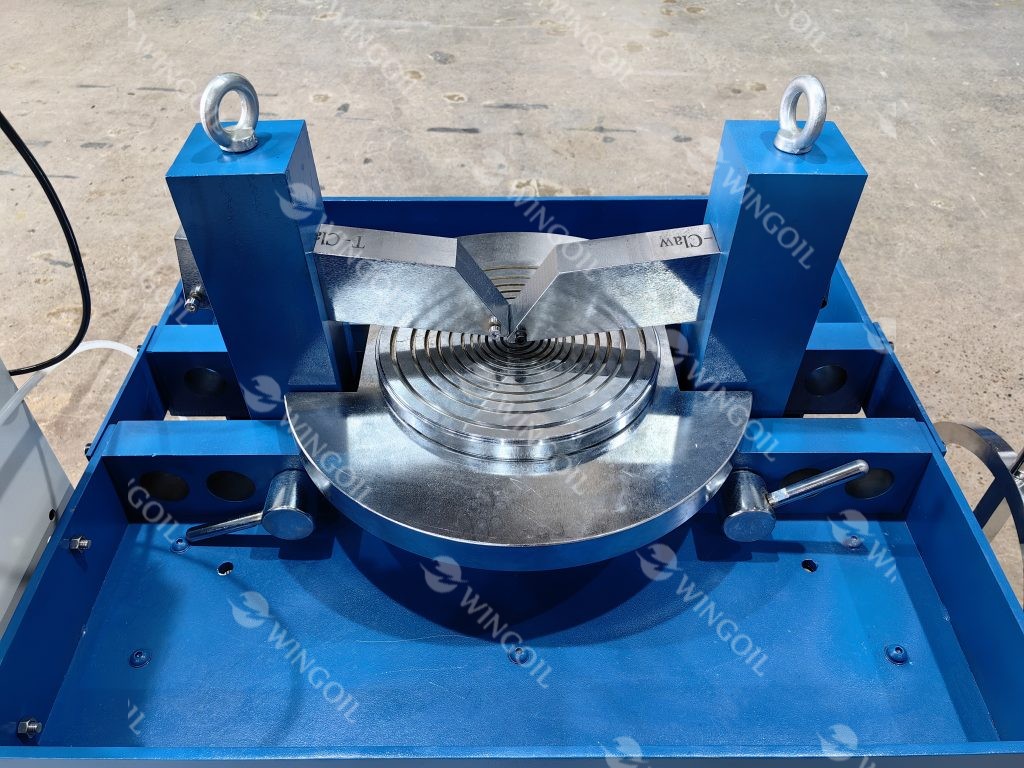
The test bench is mainly the manual clamping and sealing of the safety valve, and the product design is integrated sealing groove. The corresponding seal ring is replaced according to the specifications of the safety valve, and the manual clamping mechanism is adopted to realize the rapid clamping of the sealing ring.
FAQ
| ① Driving air source pressure is too low (Driving Air Source Pressure * Boost Ratio = High-Pressure Outlet Pressure) | a. Check whether the driving air pressure reaches the rated value. b. Listen for air leaks or abnormal noises in the air loop. c. Adjust the driving air pressure to the required value. |
| ② Filter—Pressure Regulator Component Failure | Check if the pressure regulator filter is blocked or if there is water accumulation. |
| ③ Abnormal clamping device operation | Check whether the front, rear and lifting pipelines of each clamping jaw are connected correctly. |
| ④ Insufficient hydraulic system pressure | Check whether the oil tank level meets the requirements. |
| ⑤ The throttle valve of the clamping jaw’s actuating cylinder is too tight. | Gradually loosen the throttle valve while conducting operational tests to verify performance until the hydraulic cylinder jaws resume smooth and stable operation. |
Model: WY-600N-BJ0
- Pre-test preparation: The SRV is mounted on the test bench, and the test fluid is filled to the required level.
- Pressure application: The pressure source is used to apply pressure to the SRV, gradually increasing the pressure until the valve opens.
- Set point verification: The pressure at which the SRV opens is measured and compared to the specified set point to verify that it is within the acceptable range.
- Valve performance evaluation: The SRV’s performance is evaluated by measuring its opening and closing times, as well as its ability to release excess pressure.
- Post-test analysis: The test data is analyzed to determine if the SRV meets the required performance criteria.
Model: WY-600N-BJ0
| Design shape size of Manual Console | 400L*260W*1600H |
| Working pressure | 60MPa |
| Medium inlet | 1/4NPT |
| Medium outlet | 1/4NPT |
| Valve operating pressure | 20000 psi (140MPa) |
| Gas source pressure range | 0-70MPa |
————————————————————————————————————————————————————————————————————————————————————————————————————————————————————