What Is a Pressure Testing Bay and Why It Matters for Industrial Applications?
In industrial equipment and piping systems, pressure failure can lead to serious accidents, as well as significant economic losses and safety risks. A pressure testing bay is a specialized testing facility that can simulate high-pressure conditions in a controlled environment to assess the pressure resistance and reliability of equipment and pipelines.
Here, we will provide a comprehensive analysis of the definition, functions, operating procedures, and application value of a pressure testing bay, helping industrial enterprises enhance product safety and quality management.
Part 1. Definition and Types of Pressure Testing Bay
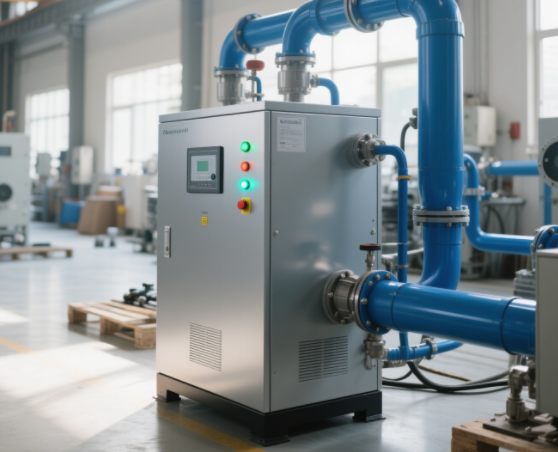
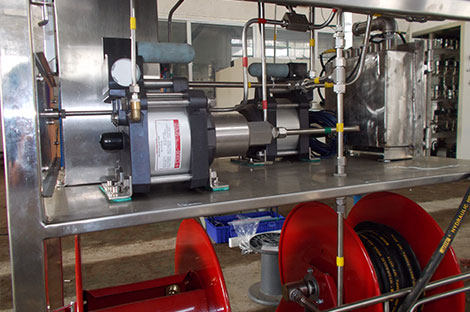
A pressure testing bay is a specific area or location that is usually dedicated solely for the purpose of conducting pressure test operations on equipment or pipes. With that said, the equipment that can normally be found in pressure testing bays includes a pressure pump, pressure sensor, safety devices, among others.
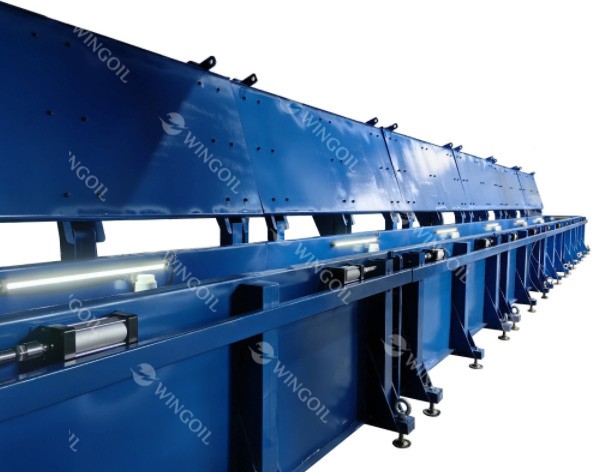
On the basis of the medium or equipment used, pressure testing bays can be classified as the following:
Hydrostatic Testing Bay
Uses water or other liquids as the medium for static pressure testing. This is a common method for testing industrial pipelines, pressure vessels, and valves.
Pneumatic Testing Bay
Uses compressed air or inert gases for pressure testing, suitable for piping systems that are sensitive to liquids or lightweight.
Custom pressure testing bay
Designed according to specific equipment or project requirements, capable of meeting different pressure levels, testing media, and safety standards.
Different types of pressure testing bays, enterprises can ensure the safety and reliability of their equipment during actual operation while complying with industry standards and regulatory requirements.
Part 2. Main Functions of a Pressure Testing Bay
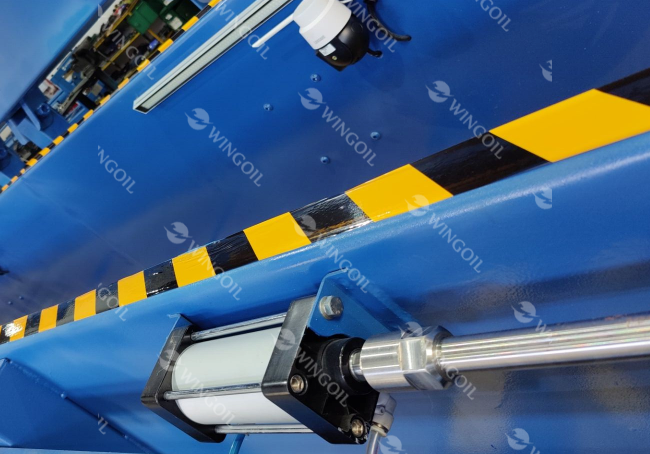
A pressure test bay assumes critical importance in various industries involved in production activities and acts as a controlled environment for ensuring the safety and efficacy of various equipment and systems. The key features of pressure test bay comprise the following responsibilities:
1. Assessing Equipment Pressure Resistance
Pressure testing bay equipment is used to apply required pressure to devices like pipelines, pressure vessels, and valves, ensuring their capability to function at required pressures without deformation and/or failure when required to do so.
2. Verifying Sealing Performance of Pipelines and Valves
Pressure testing allows for detailed leak detection through holding and leakage tests. By identifying potential weaknesses in joints, seals, or valve mechanisms, enterprises can prevent fluid or gas leakage incidents that could disrupt operations, cause environmental hazards, or endanger personnel.
3. Ensuring Compliance with Industry Standards
Pressure testing bays also aid a company in confirming that their equipment conforms to various guidelines, which may include API, ASME, ISO, and other criteria as per the needs of the nation or globally. By conforming, a company ensures the quality of its products while adhering to the law.
4. Extending Equipment Service Life
Detection of material defects, structural flaws, or manufacturing faults from the beginning enables corrective measures to be taken before the plant is operational. By doing so, the chances of breakdown occurring unexpectedly reduce significantly, maintenance expenses decrease, and the lifespan of the machinery is extended.
Thus, an excellent pressure testing bay is not only critically important when it comes to protecting the equipment involved, but it can simultaneously secure the operators and the whole process, i.e., production system.
Part 3. Operating Procedures of a Pressure Testing Bay
The professional operation of a pressure testing bay generally involves the following stages:
Step 1. Preparation Stage
Before testing, inspect all connections between the equipment and pipelines. Ensure that safety valves, pressure gauges, and monitoring systems are functioning properly. Confirm that the testing environment meets all relevant safety standards and regulations.
Step 2. Pressurization Stage
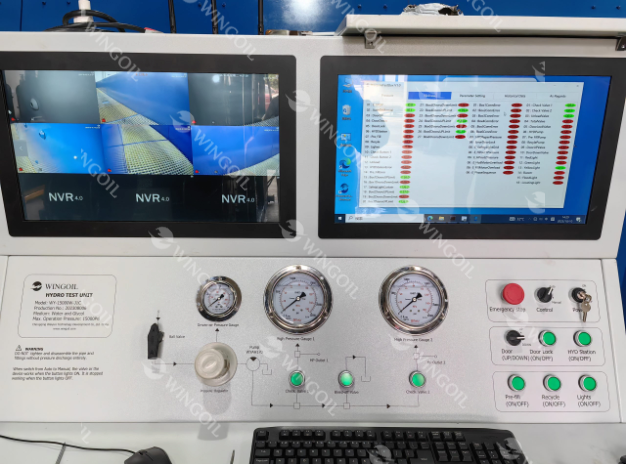
Gradually increase the pressure to the designed test level while continuously monitoring pressure changes in real time. Slow pressurization helps prevent sudden stress on the equipment that could cause damage.
Step 3. Pressure-Holding Stage
Maintain the target pressure for a specified duration to check for potential leaks, seal failures, or structural deformations in the system.
Step 4. Depressurization and Inspection Stage
Slowly release the pressure to ensure safety. Afterward, conduct a thorough visual inspection of the equipment and record any abnormalities.
Step 5. Data Recording and Reporting
Document key parameters such as test pressure, duration of pressure holding, and any detected leakage rates. This data provides a reliable reference for quality tracking and subsequent analysis.
Part 4. Industrial Applications of a Pressure Testing Bay
Pressure testing bays are widely used across various industrial sectors to ensure the safety, reliability, and compliance of equipment under high-pressure conditions. Key applications include:
1. Oil and Gas Pipelines
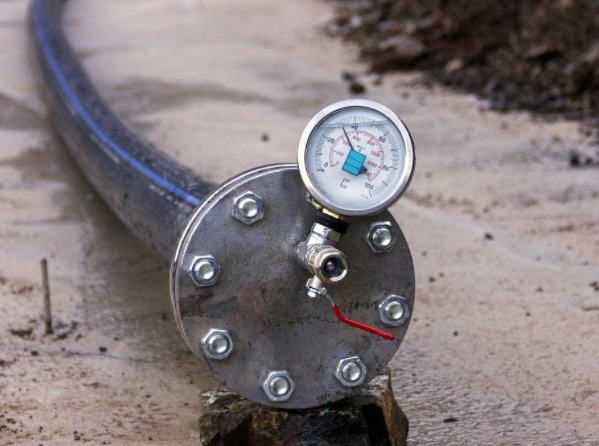
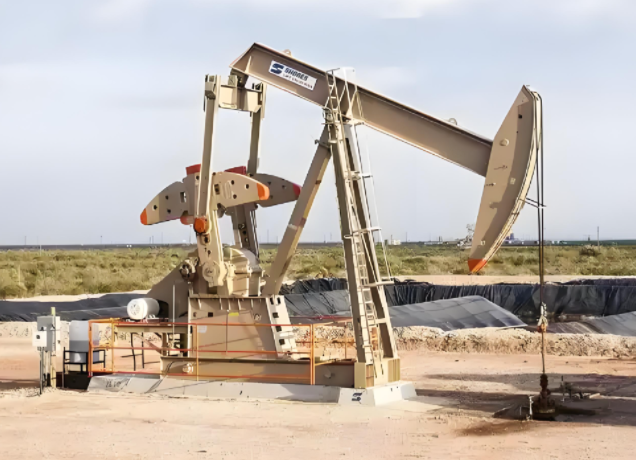
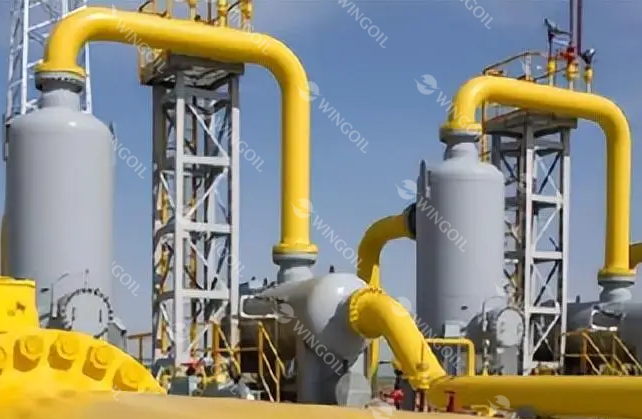
Pressure testing bays play an essential role in ensuring that pipelines for oil and natural gas transport operations have adequate pressure resistance to guarantee safety during operations. This is necessary to help identify any vulnerabilities in the points where the pipeline may be joined together to prevent any accidents that may occur due to such vulnerabilities during operations.
2. Pressure Vessels (Boilers, Storage Tanks, etc.)
For equipment such as boiler components, storage tanks, and chemical processing reactors, pressure tests verify whether any material used in them meets safe level requirements in order to avert tragedies emanating from material wear and tear or production flaws.
3. Valves and Pipe Fittings Manufacturing
Manufacturers use a pressure testing bay to test the pressure resistance of valves, flanges, as well as other pipe fittings, which are done to validate the operational efficiency in demanding industrial conditions.
4. Shipbuilding and Offshore Engineering Equipment
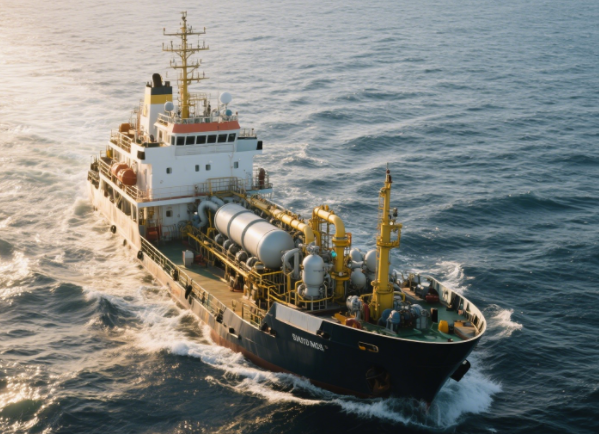
Marine/offshore equipment is often subjected to high pressures, harsh environments, etc. pressure testing bays replicate these environments to ensure the longevity of pumps, pipelines, valves, etc., which is critical in ship operations, oil rigs, etc.
Whether for new manufacturing plant prior to delivery or for periodic inspection of operational plant, pressure testing bays can meet the needs of industrial enterprises for safe operational service.
Part 5. Considerations When Choosing a Pressure Testing Bay Supplier
The selected aspects for industrial enterprises when selecting a pressure testing bay supplier are as follows:
1. Equipment Safety and Facility Compliance
Ensure the test bay meets the necessary design safety standards and requirements. The facility should incorporate broad emergency measures such as pressure relief systems and safety interlocks that will protect personnel and equipment during tests.
2. Capabilities of Testing & Pressure Range
Choose a supplier whose equipment can accommodate the required pressure levels and testing media for your specific products. The facility should be capable of handling the full range of operational pressures to ensure accurate and reliable results.
3. Professional Operators and Technical Support
There should also be suppliers that offer trained personnel that can assist with the safe operation of the testing bay. There should be technical support that will help in increasing the value being harnessed through the process.
4. Customized Solutions
When special equipment is needed, specific pressure testing bay designs that include personalized testing protocols along with data reporting need to be a part of the picture. Finding a dependable supplier not only provides assurance of accuracy in the tests carried out but also minimizes risks in terms of operational costs and quality management in industry in general.
Final Words
A pressure testing bay plays an indispensable role in the quality assurance process of equipment or pipes used in the industries. This quality assurance process enables the potential risks that machinery or pipes are subjected to, even before the onset, to be detected or identified in advance.
Hence, such equipment becomes more efficient in terms of resistance while subjected to pressure or high conditions. With the help of the facilities offered by pressure testing bay, enterprises can enhance the quality of their products to build trust among customers.
Wingoil can offer complete services of design, construction, and maintenance of a pressure test bay system if you need a professional and safe system with options to customize it.
Related Articles