Air Driven Liquid Pump: How It Works, Applications and Selection Guide
In oil & gas, petrochemical, hydraulic equipment, and industrial pressure testing applications, many operating conditions require pressuring water, oil, or other liquids to high pressure to perform hydrostatic testing, valve testing, BOP testing, wellhead equipment testing, pipeline testing, and leak detection.
For these applications, the pump must not only provide sufficient pressure, but also account for field power availability, potential environmental hazards, long-term pressure holding requirements, and media corrosiveness.
An Air Driven Liquid Pump uses compressed air as its power source, utilizing a pneumatic drive mechanism to reciprocate the hydraulic end and pressurize liquids to the required pressure. Compared to traditional electric motor-driven pumps, it is particularly suitable for high-pressure, intermittent operation, and industrial environments with electrical restrictions.
This article provides a detailed introduction to Air Driven Liquid Pumps from the perspectives of working principles, pressure and flow, practical applications, and selection methods, with a focus on their applications in Oil & Gas Pressure Testing.
What is an Air Driven Liquid Pump?
Air Driven Liquid Pump is an industrial pump operated with the help of compressed air that helps deliver fluids at a high pressure or compress water, oil, or any other compatible fluid. It is also known as Pneumatic Liquid Pump, Air Operated Liquid Pump, or Air Powered Liquid Pump.
As compared to typical centrifugal pumps, which are designed mainly for constant fluid flow, Air Driven Liquid Pumps are more appropriate for low flow and high pressure situations, especially hydrostatic testing, pressure testing, valve testing, and oil and gas equipment pressure testing.
Its specific output pressure, flow rate, and compatible media vary depending on the pump model, pressure rating, materials, and system configuration.

How Does an Air Driven Liquid Pump Work?
The core principle of an Air Driven Liquid Pump is using compressed air to drive a pneumatic piston back and forth, achieving pressure amplification through the surface area ratio between the pneumatic end and the hydraulic end.
Compressed Air Drives the Piston
On-site compressed air enters the Pneumatic Drive Section. An Air Control Valve directs the airflow to drive the pneumatic piston in a continuous reciprocating motion. The mechanical power provided by the pneumatic piston serves as the foundation for the entire pump’s operation.
Pneumatic Piston Drives the Hydraulic Piston
The connection between the two pistons lies in the fact that the pneumatic piston pushes the hydraulic piston in order to compress the fluid within the hydraulic chamber when it moves.
As a result of different areas of both types of pistons, the pump uses the area ratio to increase the pressure of the liquid output from lower input pressure. A larger area ratio theoretically yields higher output pressure at the same air supply pressure.
Liquid Suction and Pressurization
During the suction stroke, the Inlet Valve opens, drawing water, oil, or other compatible liquids into the hydraulic chamber. Upon entering the compression stroke, the inlet valve closes, the hydraulic piston compresses the liquid, and the Outlet Valve opens to deliver the high-pressure liquid to the test line.
For pressure testing systems, the typical flow path is:
Test Line → Manifold → Equipment Under Test
Automatic Stall at Target Pressure
When the liquid-end pressure rises to balance the driving force of the pneumatic end, the pump stops reciprocating and enters a stall state. If system pressure drops, the pump automatically restarts to replenish pressure.
Therefore, the Air Driven Liquid Pump not only generates high pressure, but also achieves automatic pressure holding and replenishment—one of its key advantages in hydrostatic testing, pressure testing, and valve testing scenarios.

How Does an Air Driven Liquid Pump Generate Pressure?
The high-pressure capability of an Air Driven Liquid Pump primarily stems from its Pressure Ratio. Due to the area difference between the pneumatic and hydraulic pistons, the driving force applied by the compressed air is converted by the area ratio to generate significantly higher liquid pressure on the hydraulic end.
Under ideal conditions, the relationship can be understood as follows:
Theoretical Liquid Pressure ≈ Air Pressure× Pressure Ratio
For example, a pump with a 10:1 pressure ratio can theoretically generate approximately 1,000 psi of liquid pressure from a 100 psi air supply.
However, this is only a theoretical value. The actual output pressure is affected by air supply pressure, flow rate, friction, seal conditions, and system back pressure. Therefore, a pump’s maximum pressure rating does not represent its sustainable working pressure under actual operating conditions.
In engineering selection, a more reliable approach is to consult the manufacturer’s pressure-flow performance curve to confirm actual flow rate and operating conditions at the target pressure, rather than relying solely on the Pressure Ratio.
Why Use Air Driven Liquid Pumps in Industrial Pressure Testing?
The advantage of an Air Driven Liquid Pump extends beyond merely generating high pressure. For industrial pressure testing, what matters more is whether it can operate stably under real-world conditions, including target pressure, flow rate, field air supply, and test duration.
Ideal for High-Pressure, Low-Flow Testing
Many industrial pressure tests do not require high liquid flow rates, but require systems to reach pressures of several thousand or even tens of thousands of psi. Air Driven Liquid Pumps increase pressure via pressure ratios, making them ideal for these low-flow, high-pressure conditions.
Common configurations cover pressure ratings such as 5,000 psi, 10,000 psi, 20,000 psi, 30,000 psi, and even 40,000 psi, though selection should not be based solely on maximum pressure. A more reasonable approach considers required test pressure, required flow, and overall system rating simultaneously.
For example, testing at 10,000 psi does not mean a 40,000 psi pump is a better choice; excessively high pressure ratings increase equipment costs while imposing higher pressure tolerances on high-pressure lines, valves, fittings, and test fixtures.
Driven by Compressed Air to Suit Industrial Sites
Air Driven Liquid Pumps use compressed air as their power source, requiring no direct electric motor drive at the liquid end. This allows seamless integration into existing industrial air supply systems, making them especially suitable for oilfields, refineries, petrochemical plants, offshore platforms, and other environments where equipment deployment and field conditions must be considered.
However, air drive does not mean the equipment is inherently suitable for all hazardous areas. Actual projects still require verification against hazardous area classification, equipment certifications, air supply conditions, and field safety standards.
Automatic Stall for Pressure Holding
In hydrostatic testing, the pump must not only reach the target pressure, but also maintain that pressure for a set duration to check for leaks or abnormal pressure drops. When liquid-end pressure balances pneumatic drive force, the Air Driven Liquid Pump enters a stall condition and ceases cycling, avoiding continuous compressed air consumption once target pressure is reached.
If pressure drops during testing, the pump restarts to re-pressurize. This automatic stall and pressure holding capability is particularly valuable for extended pressure testing.
Suited for Mobile and On-Site Testing
Compared to large, stationary pressure testing systems, certain Air Driven Liquid Pumps feature compact, modular, or skid-mounted configurations, making them easy to integrate into mobile test units. Consequently, they are suitable not only for workshop testing, but also for field pressure testing, wellhead testing, valve maintenance, and equipment commissioning.
For projects requiring frequent relocation, evaluating size, weight, air supply requirements, high-pressure connections, and system compatibility is often more decisive than looking at “maximum pressure” alone.
Typical Industrial Application Scenarios
It is because of their high-pressure capacity, air-driven liquid pumps, that make them very applicable in many industrial situations where there is need for fluids to be pumped at high pressure. There are different types of these pumps depending on the nature of the medium being used, pressure, flow, and field.
Hydrostatic Testing of Hoses, Pipelines, and Pressure Vessels
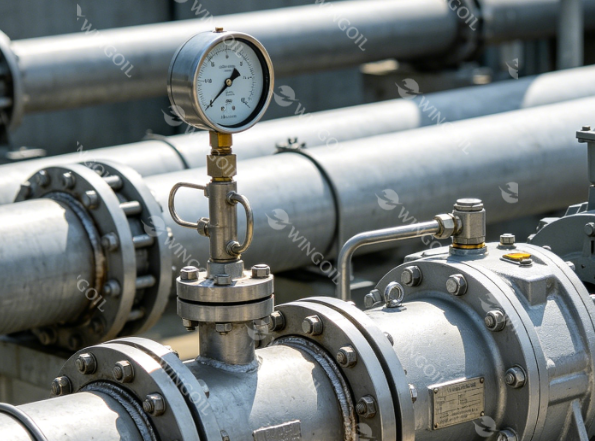
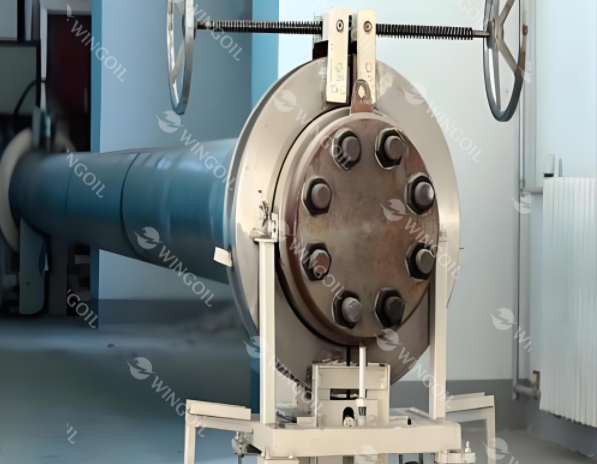
The Hydrostatic Pressure Test is the classic application of Air Driven Liquid Pumps. The liquid pump is used to increase the pressure of water or any other test media up to the desired pressure level.
Portable Hydraulic Power Unit
The Air Driven Liquid Pumps can be installed into Hydraulic Power Units to drive high-pressure hydraulics such as Bolt Tensioners or Hydraulic Pullers. The compact construction makes the device perfect for field applications in oil fields and offshore platforms.
Chemical Injection in the Oil & Gas Industry
For chemical injection during oil and gas production process, Chemical Injection Skid is used to inject corrosion inhibitors, scale inhibitors, methanol, and any other media. Pneumatic pumps work with the help of compressed air, available at site, changing the pressure and flow of the media with the help of driving air pressure.

What Liquids Can an Air Driven Liquid Pump Handle?
Air Driven Liquid Pumps can handle a variety of liquids, but media compatibility depends on the pump’s wetted materials, seal materials, valves, and overall structural design. Therefore, suitability for a specific fluid cannot be judged solely by pressure rating.
Water:
One of the most common media, widely used in hydrostatic testing and pressure testing. For these applications, focus typically centers on pump body materials, seals, and long-term corrosion resistance against water.
Hydraulic Oil:
Some Air Driven Liquid Pump models are intended for use in hydraulic oil pressure or hydraulic systems testing. In the selection of an appropriate model of pump, verify the compatibility of the sealing components with the hydraulic oil, as well as the influence of oil viscosity on the pump performance.
Chemical Fluids:
Some models are capable of working with particular types of chemical liquids; however, you need to verify the material compatibility according to the nature of the chemical liquid. In case of corrosive medium, inspect all the wetted parts, seals, and valves.
Other Compatible Liquids:
For specialized media, consider factors such as viscosity, corrosiveness, temperature, and chemical compatibility.
Handling Water does not mean the same pump is suitable for all chemicals. When handling special or corrosive fluids, select appropriate material and seal configurations based on media characteristics.
Air Driven Liquid Pump vs. Electric Motor Pump: Industrial Performance Comparison
For engineering personnel and procurement managers, choosing between pneumatic and electric power sources requires evaluating safety, energy consumption, and maintenance costs comprehensively:
| Evaluation Dimension | Air Driven Liquid Pump | Electric Motor Pump |
| Explosion-Proof Safety | Inherently safe (Fully pneumatic drive, no electrical sparks, no heat accumulation) | Requires explosion-proof motors and control panels; high explosion-proof certification costs |
| Energy Consumption During Holding | Zero energy consumption (Stalls at pressure balance; zero air consumption) | Motor must run continuously via relief valve or cycle frequently; consumes power and generates heat |
| Pressure & Flow Adjustment | Stepless pressure adjustment simply by regulating the drive air filter-regulator (FRL) | Requires frequency converters (VFDs) or complex electro-hydraulic proportional valves |
| Size & Weight | High power density, compact design; typically 1/3 the weight of an electric pump | Includes motor, gearbox, and oil tank; overall bulky and heavy |
| Maintenance & Media | Fewer components; can directly pump non-lubricating liquids like water and solvents | Relies on hydraulic oil lubrication; cannot directly pump non-oil media |
How to Select the Right Air Driven Liquid Pump?
Selecting an Air Driven Liquid Pump requires looking beyond maximum pressure to evaluate working pressure, flow rate, media, and air supply conditions.
Determine Working Pressure and Pressure Ratio
First, find out the pressure requirement of the system. Afterward, select a Pressure Ratio in comparison to the air pressure available in the facility. If a system needs 700 bar and air pressure is 8 bar, the pressure ratio must be at least 87.5:1 theoretically. However, practical selection will have to consider variations in air pressure, friction losses, and back pressure of the system.
Confirm Flow Rate at Target Pressure
Rated flow for pumps is usually based on low back pressures; flow becomes lower when the pressure is higher. Always refer to the manufacturer’s chart for pressure versus flow performance to determine if the actual flow is adequate at the required pressure level.
Verify Media and Material Compatibility
Based on fluid viscosity, corrosiveness, and temperature, confirm that wetted parts, seals, and valves are compatible. For chemical media, do not assume suitability merely because the pump can handle Water.
Evaluate Drive Air Supply
In addition to air pressure, confirm air flow rate, air quality, and inlet pipe size. Moisture and contaminants in compressed air can impair pneumatic control components, while undersized air lines cause pressure drops that prevent the pump from operating stably under target conditions.
Wingoil Air Driven Liquid Pump for High-Pressure Applications
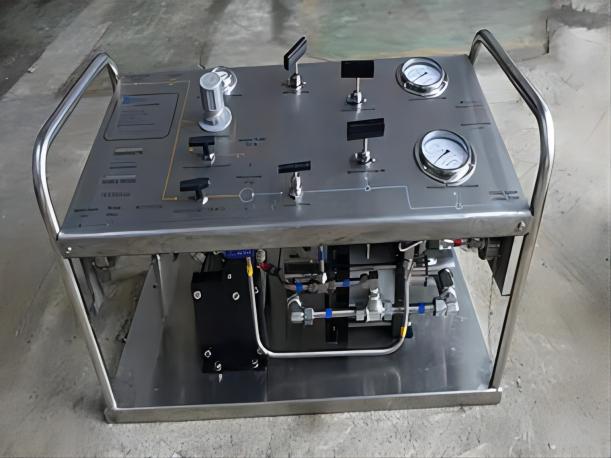
Wingoil Air Driven Liquid Pump is an industrial compressed air-driven liquid test pump suitable for water, oil, and compatible corrosive media. It is designed for hydrostatic testing of heat exchangers, pipelines, pressure vessels, hoses, and other equipment, serving both field and workshop testing.
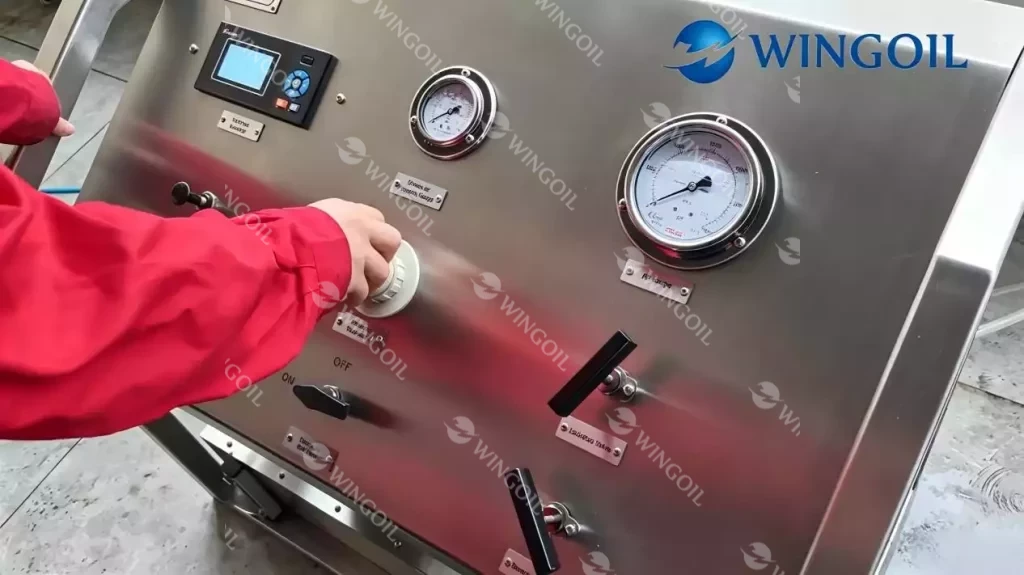
This pump features stepless output pressure regulation, automatically stalling and maintaining pressure once the preset pressure is reached without continuous power consumption or heat generation. The standard configuration utilizes a stainless steel structure equipped with a liquid filter, fluid reservoir, pressure regulator, pressure gauge, and high-pressure outlet.
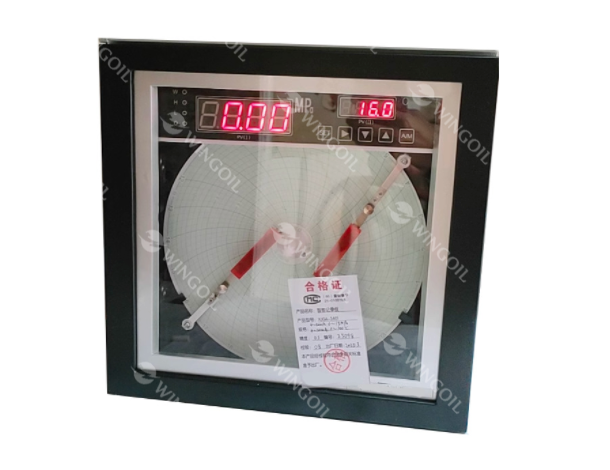
To meet custom testing requirements, optional configurations include high-pressure hoses, hose reels, chart recorders, accumulators, flow controllers, and pressure-time data acquisition systems.

Related Articles