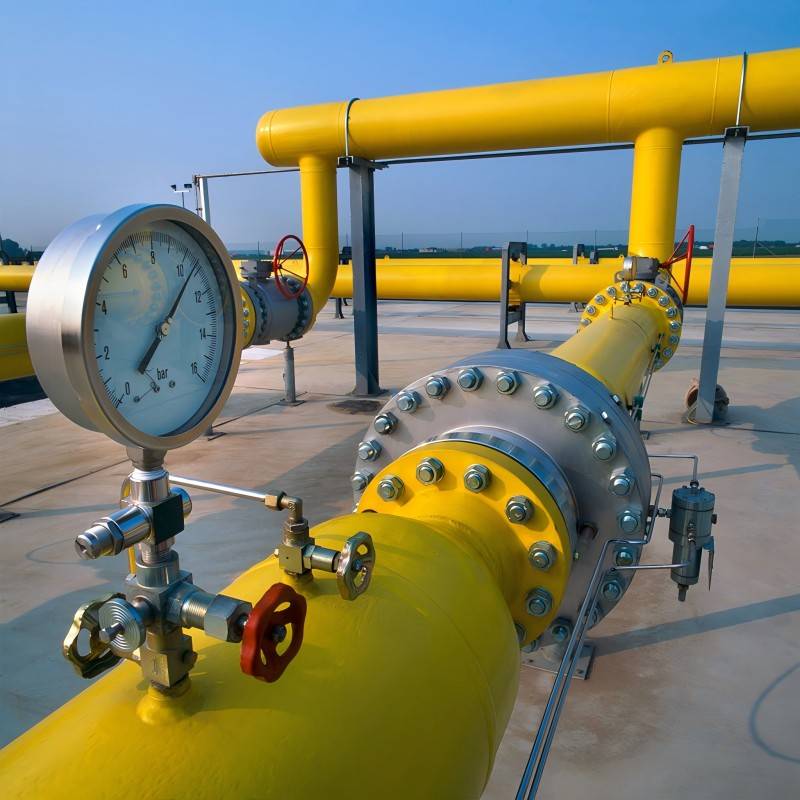
What Factors Affect Hydrostatic Pressure Test Accuracy?
Hydrostatic pressure testing is widely used to verify the pressure integrity of pipelines, valves, pressure vessels, hoses, and other pressure-containing equipment. However, reaching the required test pressure does not automatically mean that the test result is accurate. Pressure measurement, test conditions, equipment performance, and system setup can all affect the final result.
Understanding these factors can help operators identify avoidable pressure fluctuations, improve test consistency, and obtain more reliable test data.
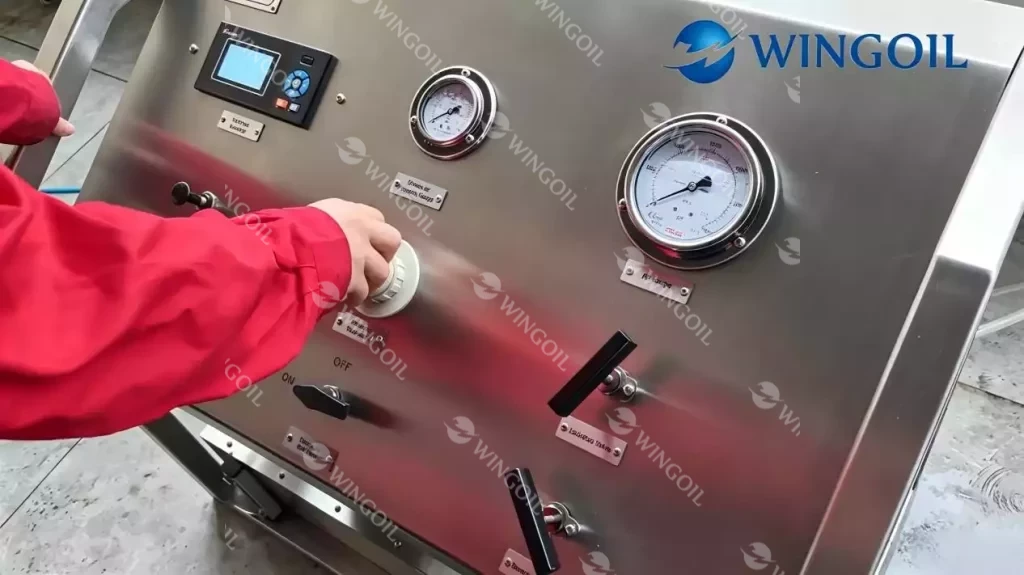
7 Factors That Affect Hydrostatic Pressure Test Accuracy
1. Pressure Pump Performance
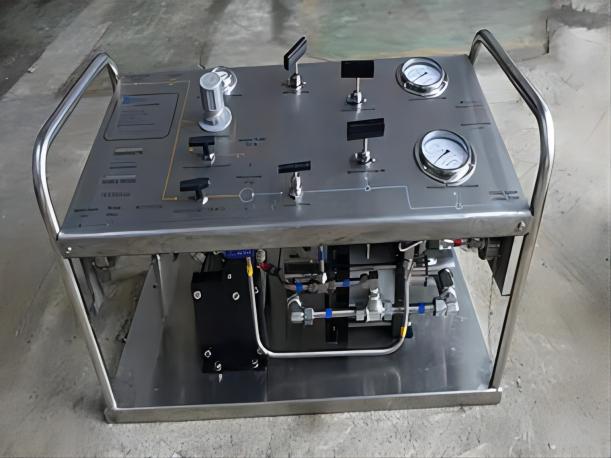
The performance of the hydro test pump directly affects how consistently the required test pressure can be reached and maintained. A pump should have a suitable pressure range for the application and provide stable pressure output throughout the test.
A pump that is incorrectly sized or unable to maintain stable pressure may cause unnecessary fluctuations during pressurization and pressure holding. Flow rate is also important, particularly when the system has a large internal volume and requires efficient filling before high-pressure testing.
For this reason, the test pump should be selected according to the required test pressure, test medium, equipment volume, and application conditions rather than based on maximum pressure alone.
2. Pressure Gauge and Measurement Accuracy
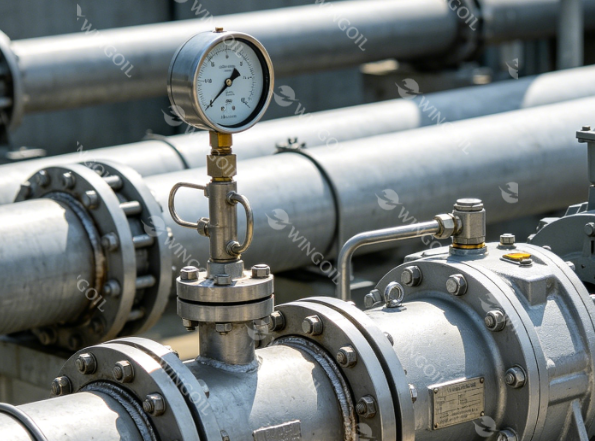
The pressure gauge is one of the most important components in a hydrostatic testing system because the test result depends on the pressure being measured correctly.
Several factors should be considered, including:
- Gauge accuracy
- Appropriate pressure range
- Calibration status
- Installation condition
- Stability of the pressure reading
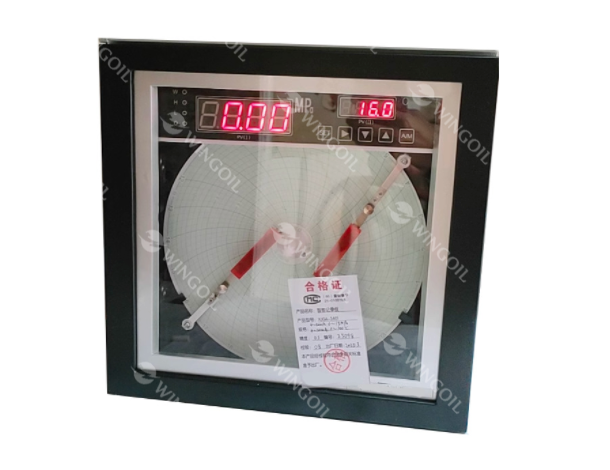
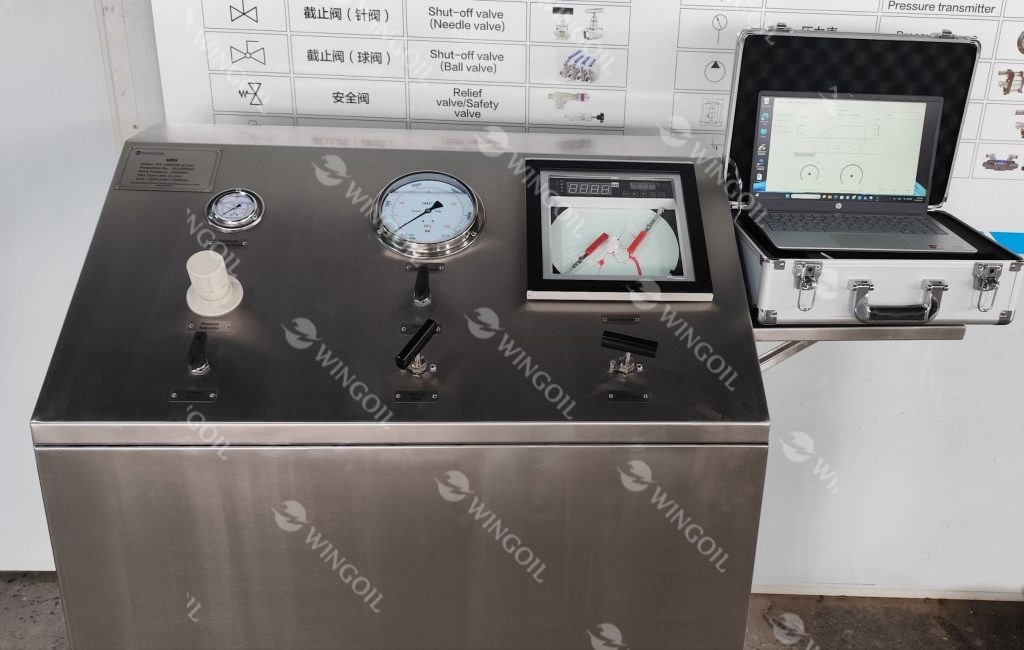
Using a gauge with an unsuitable range or relying on an uncalibrated instrument can introduce measurement errors. For applications where test results need to be documented, a pressure recorder or data acquisition system can provide a more complete record than manual readings alone.
3. Test Medium and Trapped Air
Hydrostatic testing normally uses a liquid such as water because liquids are much less compressible than gases. However, the condition of the test medium and the presence of trapped air can still affect test behavior.
If air remains inside the test system, it can be compressed as pressure increases and may cause unstable pressure behavior. Air pockets can also make it more difficult to determine whether a pressure change is related to a leak or simply to changes within the test system.
The test system should therefore be filled properly, and trapped air should be removed before the main pressure test begins.
4. Temperature Changes During Testing
Temperature can affect pressure readings during a hydrostatic test, particularly when the pressure is maintained for an extended period.
Changes in ambient temperature or test-medium temperature can cause the pressure to rise or fall even when the tested component itself has not developed a leak. This is one reason why a pressure change should not automatically be interpreted as evidence of leakage.
For longer tests, operators should consider the surrounding temperature and allow the system to stabilize before evaluating pressure changes.
5. Test Setup and Connections
The accuracy of a hydrostatic pressure test depends not only on the pump and measuring instruments but also on the complete test setup.
Hoses, fittings, valves, seals, adapters, and test fixtures should all be suitable for the required pressure. A loose connection or damaged seal can result in pressure loss and make the test result difficult to evaluate.
Before pressurization, the complete system should be inspected for visible leakage and properly secured connections. This is particularly important for high-pressure applications where even a small connection problem can affect the test.
6. Pressure Holding Time and Stabilization
Pressure should not always be evaluated immediately after the target level is reached. The test system may require a period of stabilization after pressurization.
Initial pressure fluctuations can result from factors such as system expansion, temperature changes, trapped air, or the behavior of the test equipment. Allowing the system to stabilize can make it easier to distinguish normal pressure changes from potential leakage.
The required pressure holding time should follow the applicable testing standard, equipment specification, or project requirements rather than using one fixed period for every application.
7. Pressure Recording and Data Collection
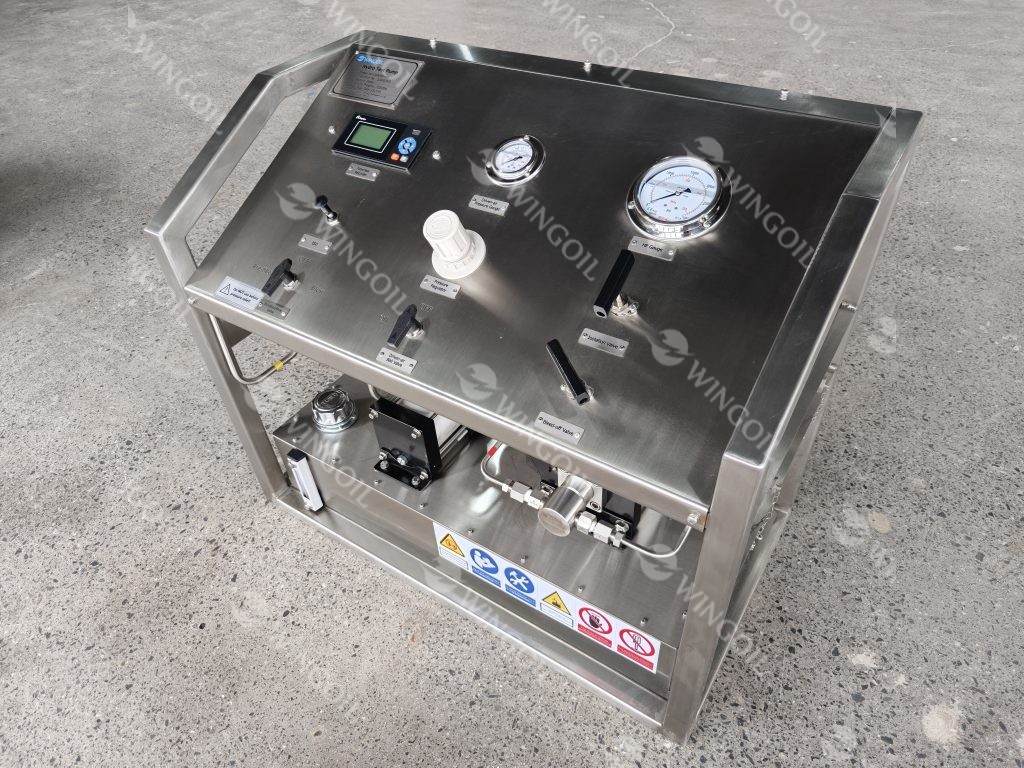
Portable-Hydro-Test-Pump-Unit-with-Built-in-Paperless-Recorder
Accurate testing is not only about obtaining a pressure reading. In many industrial applications, it is also important to record how pressure changes throughout the test.
Manual readings may provide limited information, while chart recorders, digital pressure recorders, or data acquisition systems can capture pressure over time and provide a more complete testing record.
Recorded data can help operators review the pressure-holding process, identify abnormal fluctuations, and maintain traceability for inspection and quality-control purposes.
How to Improve Hydrostatic Pressure Test Accuracy
Improving hydrostatic pressure test accuracy requires attention to both the testing procedure and the equipment used. The following checklist can be used before and during testing:
| Checkpoint | What to Check |
| Test Equipment | Use a hydro test pump with a suitable pressure range and stable pressure output. |
| Pressure Measurement | Use properly ranged and calibrated pressure gauges or pressure recorders. |
| Test Medium | Use the appropriate test liquid and ensure the system is properly filled. |
| Air Removal | Remove trapped air from the test system before pressurization. |
| Temperature | Monitor significant temperature changes during the test. |
| Connections | Check hoses, fittings, valves, seals, and other connection points. |
| Pressure Stabilization | Allow the system to stabilize before evaluating pressure changes. |
| Data Recording | Record pressure and relevant test conditions for traceability. |
Using suitable pressure testing equipment can help maintain stable pressure, improve measurement consistency, and simplify the recording of test results. The equipment configuration should be selected according to the required pressure, flow, test medium, test environment, and data-recording requirements.
A Real-World Example of Hydrostatic Pressure Testing
Real testing projects demonstrate why equipment configuration matters. Wingoil has supplied portable hydro test pump units with pressure recording functions for industrial pressure-testing applications.
For example, a portable hydro test pump unit with a built-in paperless recorder was supplied to a customer in Kazakhstan. The system was designed for high-pressure testing and included digital recording and storage of test data, reducing the need for manual recording and making test results easier to review. The unit was specified for applications involving pipelines, valves, and other equipment in the oil and gas industry.
Read the Full Case Study: Efficient Portable Hydro Test Pump Unit with Built-in Paperless Recorder Exported to Kazakhstan
Wingoil has also supplied a 316SS HPU with a chart recorder and data acquisition system for a Kazakhstan project. The system was designed to record pressure and temperature data during testing, providing real-time monitoring as well as stored test data for later evaluation.
Read the Full Case Study: Advanced 316SS HPU with Chart Recorder and Data Acquisition System Exported to Kazakhstan
In both cases, the equipment was configured around the specific testing requirements, including pressure generation and test data recording. These setups are suitable for projects where stable pressure control and clear test records are required.
Wingoil provides hydro test pump units and customized pressure testing systems for different industrial testing applications.
Related Articles