What Should You Know About CO₂ Gas Booster Pumps?
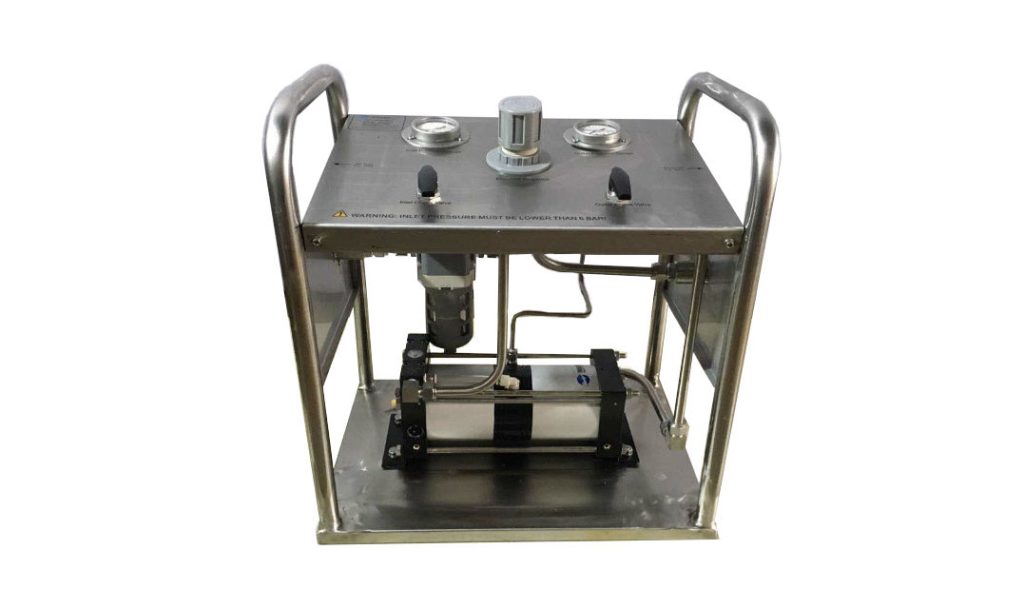
In many industrial gas systems, the existing CO₂ gas supply pressure may not be sufficient for downstream equipment or process requirements. In such cases, a CO₂ Gas Booster Pump can compress and boost CO₂ gas to the required pressure and deliver it steadily to the downstream system. For applications requiring high-pressure, oil-free, or continuous CO₂ gas supply, a CO₂ Booster is a common solution for high-pressure gas boosting.
So, how does a CO₂ Booster work? What are its common configurations and applications? What pressure, flow, and gas supply parameters should be considered when selecting a CO₂ Gas Booster Pump? This article provides an overview of CO₂ gas boosting equipment to help you better understand its working principle, configurations, applications, and selection requirements.
What Is a CO₂ Gas Booster Pump? How Does It Work?
A CO₂ Gas Booster Pump is a high-pressure gas boosting device designed to increase the pressure of carbon dioxide (CO₂) gas. When the existing CO₂ gas supply pressure is not sufficient for downstream equipment or process requirements, a CO₂ Booster can increase the gas from a lower inlet pressure to the required outlet pressure and deliver the boosted CO₂ steadily to the downstream system.
The basic working principle is relatively simple: CO₂ gas enters the booster from the gas source, passes through the boosting mechanism under the action of the drive system, and is compressed to increase its pressure before being delivered to the downstream equipment. Depending on the equipment design, CO₂ boosters can use different boosting configurations and drive methods to meet different pressure and flow requirements.
Simply put, the working process of a CO₂ gas booster can be summarized as:
CO₂ Gas Supply → Booster Inlet → Gas Boosting → Pressure Control → High-Pressure CO₂ Output
Therefore, the core function of a CO₂ Booster is to increase CO₂ pressure when the existing gas supply pressure is insufficient, providing the downstream system with the required high-pressure CO₂ gas.
Why Is a CO₂ Gas Booster Pump Needed?
Not every CO₂ application requires a booster. If the existing CO₂ gas supply pressure already meets the requirements of the downstream equipment and process system, additional boosting is generally unnecessary. However, when the gas supply pressure is lower than the required system pressure, a CO₂ Gas Booster Pump can further increase the gas pressure and bring the CO₂ supply to the required operating conditions.
Increasing CO₂ Supply Pressure
One of the most common reasons for using a CO₂ booster is to address insufficient CO₂ gas supply pressure. When gas storage equipment, cylinders, or other CO₂ supply systems cannot provide sufficient pressure for downstream equipment, a CO₂ booster can be installed between the gas source and the end-use equipment to increase the CO₂ pressure to the required level.
Meeting High-Pressure CO₂ Process Requirements
Some industrial processes require CO₂ to be supplied at relatively high pressures, such as high-pressure gas supply, pressure testing, and other processes involving high-pressure CO₂. In these applications, the booster needs to meet not only the required pressure but also the actual gas flow rate and continuous operating requirements to ensure stable system operation.
Providing More Stable CO₂ Pressure
The function of a CO₂ booster is not limited to increasing pressure. It can also work together with pressure monitoring, control, and safety components to regulate the boosting process. With an appropriate system configuration, the outlet pressure can be better matched to downstream operating requirements, helping reduce the impact of fluctuations in the gas supply pressure on system operation.
Adapting to Different CO₂ Gas Supply Conditions
CO₂ supply conditions can vary significantly from one project to another. Inlet pressure, gas supply method, and required operating pressure may all be different. Therefore, CO₂ boosters generally need to be selected and configured according to actual operating conditions.
By matching the appropriate boosting method, pressure range, and flow capacity, the booster can bridge the pressure gap between the existing gas supply and the final application.
Main Applications of CO₂ Gas Booster Pumps
CO₂ gas boosting equipment can be used in a variety of industrial and process applications. The specific application depends on factors such as required pressure, flow rate, materials, and system configuration.
CO₂ Pressure Testing
In some high-pressure testing systems, CO₂ can be used as a test medium or process gas. A CO₂ booster can provide the required pressure and operate together with pressure monitoring and control equipment.
Industrial Gas Systems
When the available CO₂ gas pressure is insufficient for downstream equipment, a booster can be installed between the gas source and the end-use equipment to further increase the CO₂ pressure and meet the requirements of specific industrial gas systems.
Chemical and Process Systems
CO₂ can be used as a process gas in certain chemical and industrial processes. When a process system has specific CO₂ pressure requirements, an appropriate CO₂ booster system can be configured according to the actual operating conditions.
Types of CO₂ Gas Booster Pumps
Depending on pressure requirements, gas supply conditions, and application scenarios, CO₂ boosters can use different drive methods and system configurations.
Pneumatic CO₂ Gas Booster
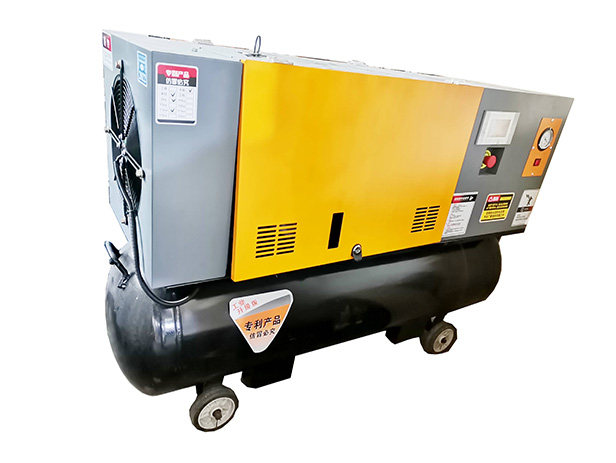
A Pneumatic CO₂ Booster uses compressed air as the driving power and is suitable for industrial facilities where a compressed air supply is already available. Its actual boosting capacity and operating performance depend on factors such as drive air pressure, CO₂ inlet pressure, required outlet pressure, flow rate, and the specific equipment configuration.
Single-Stage and Multi-Stage CO₂ Boosters
Depending on the required pressure increase, CO₂ boosters can use single-stage or multi-stage boosting designs. A single-stage booster may be suitable for relatively straightforward pressure boosting requirements, while multi-stage boosting may be required when there is a larger pressure difference between the inlet and target outlet pressures. The specific configuration should be determined based on the actual operating conditions and equipment design.
Customized CO₂ Booster Systems
For industrial projects with specific requirements for pressure, flow rate, installation space, or control methods, a customized CO₂ booster system may be used. The manufacturer can match the drive method, boosting stages, control system, and overall configuration according to the project conditions and application requirements.
What Parameters Should Be Considered When Selecting a CO₂ Gas Booster Pump?
When selecting a CO₂ Gas Booster Pump, maximum pressure should not be the only consideration. Proper equipment selection requires a comprehensive evaluation of the gas supply conditions, target pressure, flow rate, operating conditions, and installation environment.
1. CO₂ Inlet Pressure
First, determine the inlet pressure of the existing CO₂ gas supply. Inlet pressure is a fundamental parameter for determining the required boosting range and equipment configuration.
2. Required Outlet Pressure
Next, determine the operating pressure required by the downstream equipment. The target outlet pressure determines how much pressure increase the CO₂ booster needs to provide.
3. CO₂ Flow Rate
In addition to pressure, the actual CO₂ flow requirement needs to be confirmed. The flow capacity of the equipment should match the gas consumption of the downstream process. Therefore, it is recommended to provide the inlet pressure, outlet pressure, and required flow rate when requesting a booster.
4. Operating Temperature
The operating temperature of CO₂ can affect its physical state as well as the design requirements of the equipment and sealing system. Therefore, the actual operating temperature should be considered when selecting the appropriate configuration.
5. Duty Cycle
The operating pattern should also be determined, such as intermittent operation, batch operation, or continuous operation. Different duty cycles may require different equipment configurations.
6. Drive Source
For a pneumatic CO₂ booster, it is necessary to confirm whether a suitable compressed air supply is available on site and whether the drive pressure meets the equipment’s operating requirements.
7. Material Compatibility
Components that come into contact with CO₂ need to be compatible with the actual pressure, temperature, gas conditions, and sealing requirements. Specific materials and sealing configurations should be confirmed according to the actual operating conditions.
8. Control Requirements
If the project requires pressure control, automation, or remote monitoring, the control system configuration should also be determined in advance. This may include automatic pressure control, pressure monitoring, or remote monitoring functions.
Overall, inlet pressure, required outlet pressure, and flow rate are the three basic parameters for CO₂ booster selection. Other operating conditions can then be used to determine the specific equipment configuration.
Wingoil CO₂ Gas Booster Pump: High-Pressure CO₂ Gas Boosting Solution
After determining the target pressure, flow rate, boosting method, and application requirements, selecting an appropriate CO₂ Gas Booster Pump is an important step in ensuring reliable system operation.
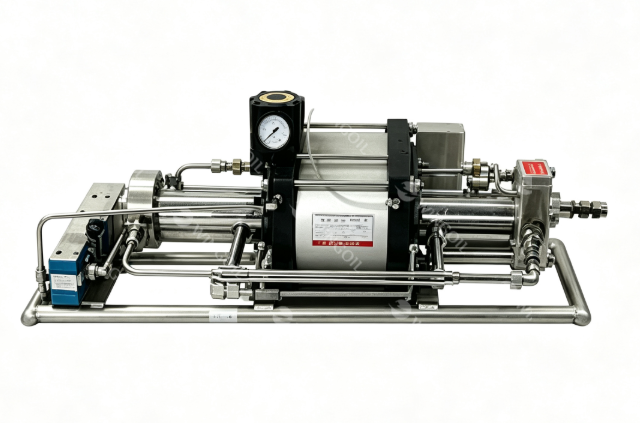
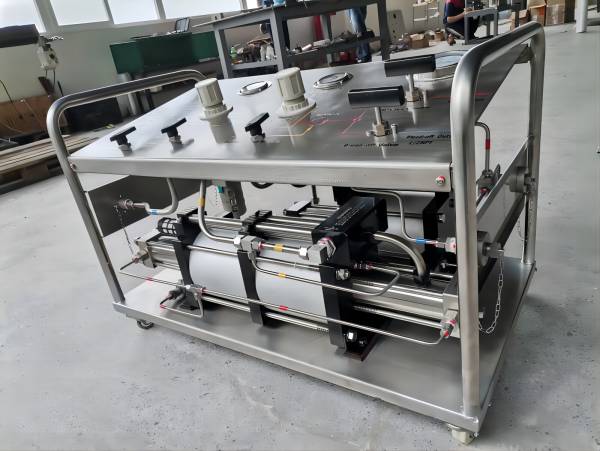
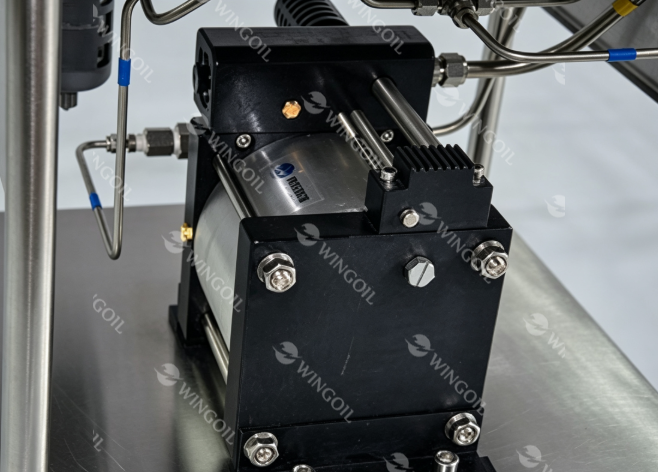
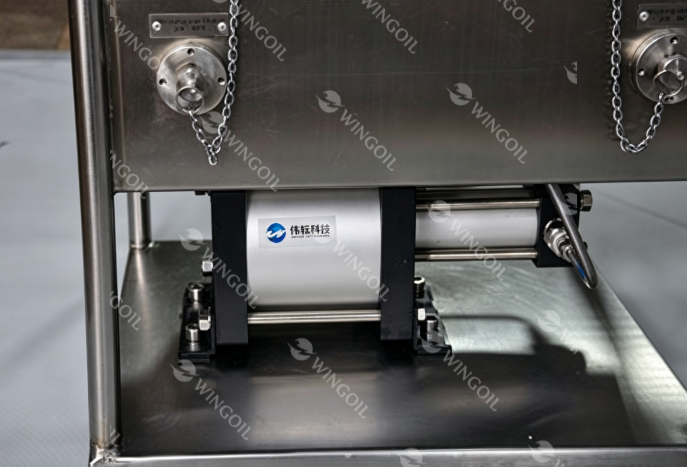
Wingoil CO₂ Booster is designed for oil-free CO₂ compression and boosting applications. It is available in single-stage, double-acting, two-stage, and combined configurations to accommodate different operating pressure and flow requirements.
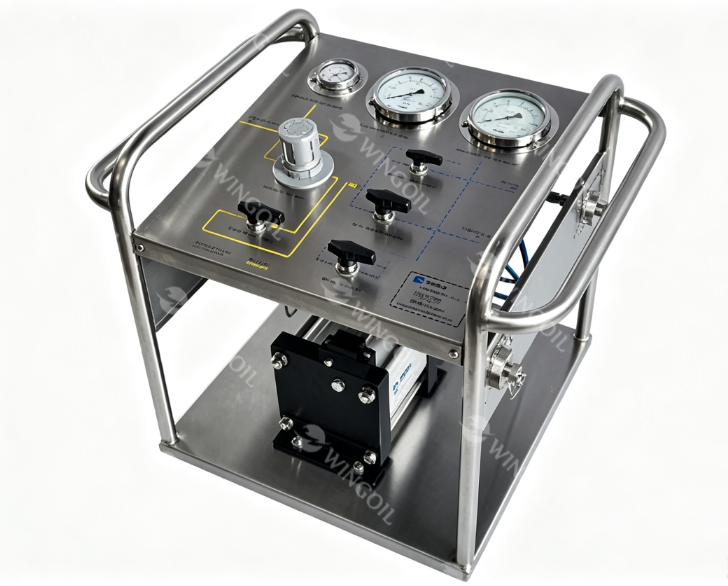
Key Features
- Oil-Free CO₂ Compression: Designed for oil-free compression and boosting of CO₂.
- Multiple Booster Configurations: Available in single-stage, double-acting, two-stage, and combined configurations.
- Automatic Pressure Control: The booster automatically stops when pressure balance is reached and restarts when the high-pressure side pressure drops.
- Flexible Control Options: Automatic start and stop can be controlled through air pilot switches, contact pressure gauges, or external control devices.
- Wide Range of Applications: Suitable for CO₂ leak testing, transfer, recovery, foaming, pressure testing, auxiliary injection molding, and CO₂ isolation system gas supply.
With different models and configuration options, the WINGOIL CO₂ Gas Booster Pump can be selected according to specific application requirements, operating pressure, and flow requirements, providing a corresponding solution for CO₂ gas boosting systems.
FAQs About CO₂ Gas Boosters
Can a pneumatic CO₂ gas booster pump handle liquid CO₂?
Yes, but specialized liquid-handling models or dual-phase booster pumps need to be specified to ensure that the sealing materials and inlet valves are suitable for liquid CO₂ conditions and to avoid issues such as cavitation.
What Is the Ideal Drive Air Pressure for Continuous Operation?
A stable factory air supply of 6 to 8 bar (87 to 116 psi) is optimal for maintaining consistent output pressure and maximizing pump service life.
Is a CO₂ Booster Oil-Free?
A high-pressure CO₂ Booster can be used for oil-free CO₂ compression. Whether a specific booster configuration meets the oil-free requirements of a particular application should be confirmed based on the equipment configuration and actual operating conditions.
Can a CO₂ Booster Stop Automatically?
Yes. According to its operating principle, when the high-pressure side reaches the corresponding static end pressure and pressure balance is established, the Booster automatically stops. When the pressure on the high-pressure side drops, the Booster can automatically restart.
Depending on the system configuration, automatic start and stop can also be controlled through air pilot switches, contact pressure gauges, or external control devices.
What Are the Main CO₂ Booster Configurations?
Common configurations include Single-stage, Double-acting, and Two-stage Boosters. Different configurations can also be combined according to the required operating pressure and flow rate.
Related Articles