Gas Booster vs. Gas Compressor: How to Choose the Right One
Both gas boosters and gas compressors are used to increase gas pressure, but they are not necessarily designed for the same operating conditions. Choosing between them requires more than comparing maximum pressure ratings. Factors such as inlet pressure, required outlet pressure, flow rate, pressure ratio, operating cycle, and system configuration can all influence the right choice.
For applications involving nitrogen, hydrogen, oxygen, carbon dioxide, and other industrial gases, understanding the practical differences between a gas booster and a gas compressor can help engineers select equipment that matches the actual pressure and flow requirements.
Gas Booster and Gas Compressor: What Are They?
What Is a Gas Booster?
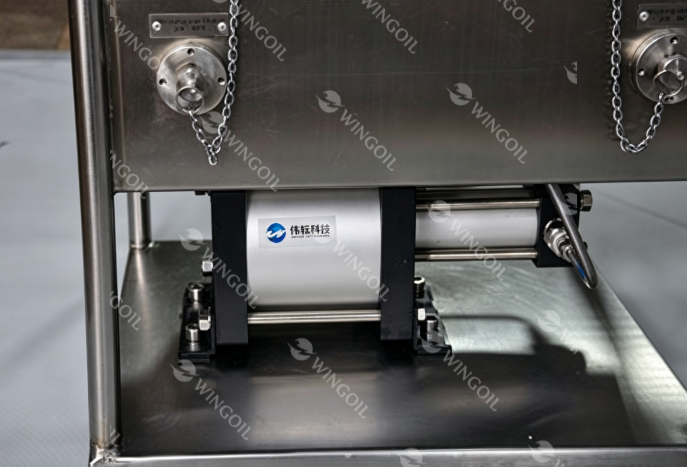
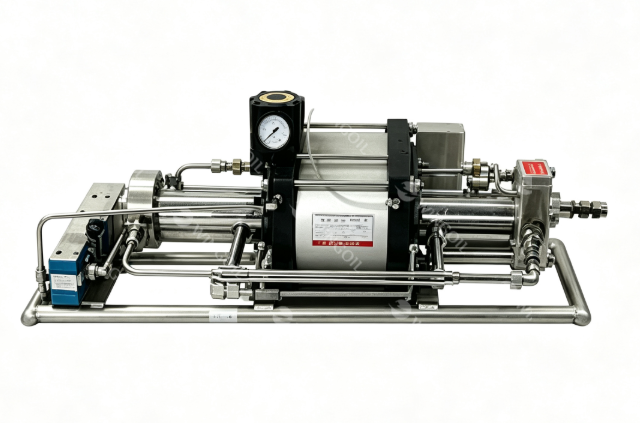
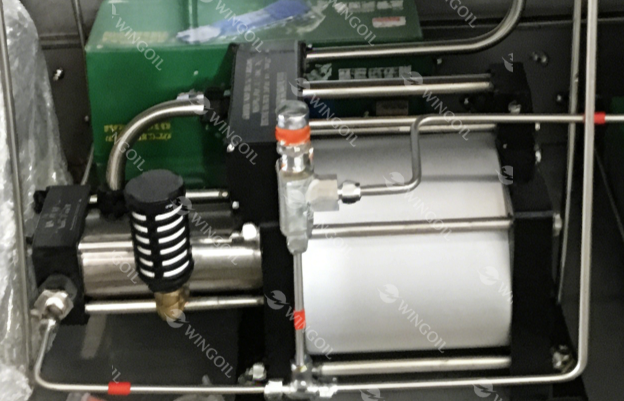
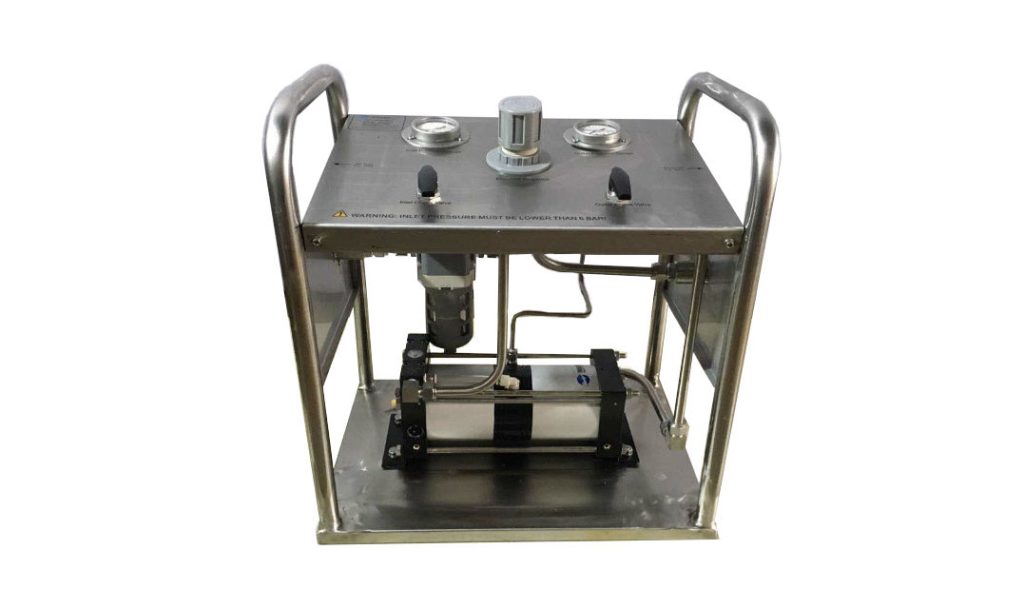
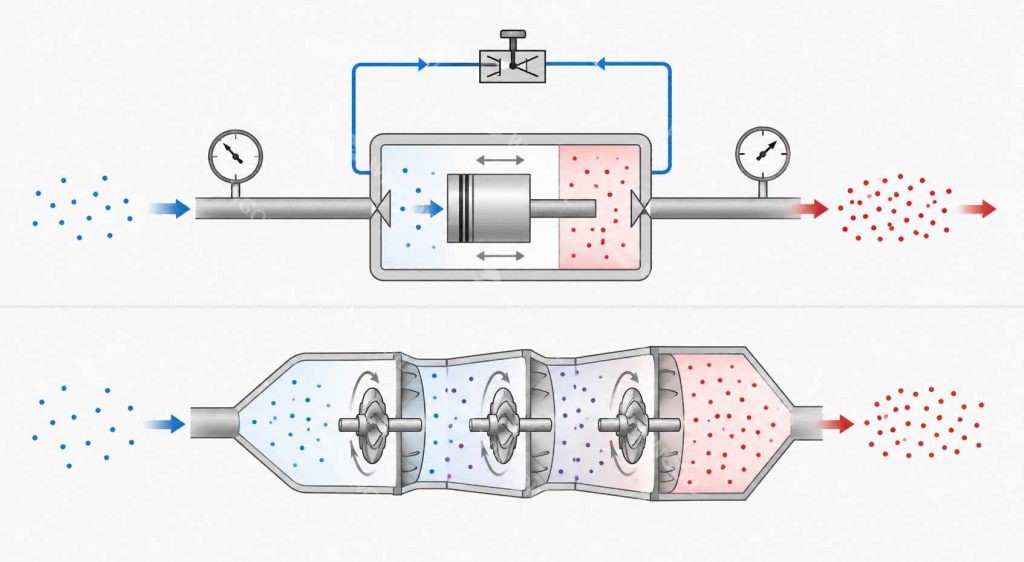
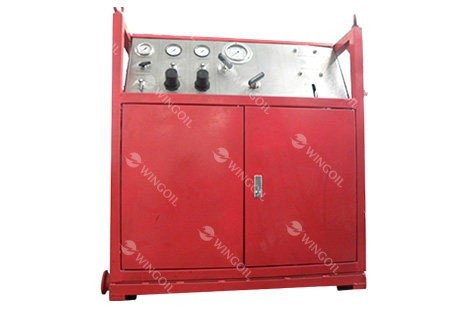
The function of a gas booster is to further increase the pressure of the gas based on the existing intake pressure. It is generally not the main compression unit for low-pressure gas sources, but rather performs secondary compression on the existing gas source to raise the pressure to the required level for downstream conditions.
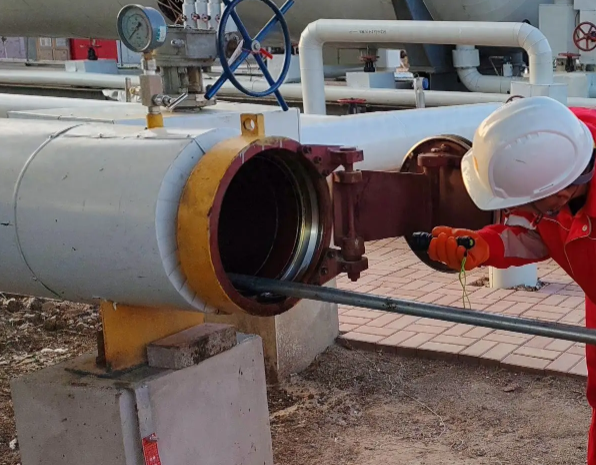
Gas boosters are widely used in scenarios such as pressure testing, gas charging, gas transportation, and local high-pressure gas supply. Depending on the equipment configuration, they can be adapted to various industrial gases such as nitrogen, hydrogen, oxygen, and carbon dioxide.
What Is a Gas Compressor?
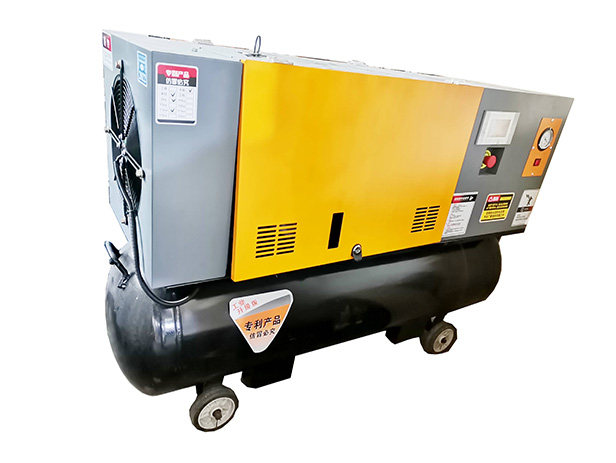
A gas compressor can compress low-pressure gas into high-pressure gas and can serve as the main compression equipment in the gas supply system. Different structural types of compressors are suitable for different media, pressure ranges, flow sizes, and working conditions.
Compared with gas boosters, if the system needs to directly compress the low-pressure gas source or requires stable and large-flow gas supply, a gas compressor is generally selected. The selection of a compressor requires comprehensive consideration of key parameters such as compression ratio, gas handling capacity, gas medium properties, cooling conditions, and working cycle.
Gas Booster vs. Gas Compressor: Key Differences
The distinction between a gas booster and a gas compressor becomes clearer when the complete operating conditions are considered.
| Consideration | Gas Booster | Gas Compressor |
| Starting Gas Pressure | Typically works with an existing pressurized gas supply | Can compress gas from a relatively low-pressure source |
| Primary Purpose | Further increase gas pressure | Provide primary gas compression |
| Pressure Requirement | Often used when a higher final pressure is required | Selected according to the required compression pressure and ratio |
| Flow Requirement | Often suited to high-pressure applications with application-specific flow requirements | Often preferred for continuous or higher-volume gas compression |
| Operating Pattern | Often intermittent or demand-based | Commonly used for continuous or extended operation |
| Drive Method | Often pneumatically or externally driven, depending on design | Commonly driven by an electric motor or other mechanical power source |
| Typical Applications | Pressure testing, gas charging, gas transfer, localized pressure boosting | Primary compression, continuous gas supply, high-flow applications |
| System Role | Can operate downstream of an existing gas source or compressor | Often serves as the primary compression stage |
Inlet Pressure and Pressure Ratio

Starting gas pressure is one of the most important factors when comparing the two.
A gas booster typically receives gas that already has a usable inlet pressure and raises it further. This makes it particularly useful when the existing gas supply has adequate volume but cannot reach the pressure required by the final application.
A compressor can also produce high outlet pressure, but it is commonly used as the primary compression stage, including applications where gas must be compressed from a relatively low-pressure source.
Pressure ratio should also be considered together with inlet pressure. A high required outlet pressure does not automatically mean that a booster is the better choice. The gas properties, available inlet pressure, required flow, and number of compression or boosting stages all need to be evaluated.
Flow Rate and Operating Cycle

Flow rate is another major distinction.
Many compressor systems are designed to provide continuous gas compression and relatively high gas flow. This makes them suitable for applications where a large volume of gas must be supplied over an extended period.
Gas boosters can be advantageous when the application is more focused on achieving high pressure than moving a large continuous volume of gas. Pressure testing, gas charging, and other demand-based applications may require high pressure for a limited period rather than continuous high-volume compression.
However, these are general tendencies rather than strict rules. The actual performance of a gas booster or compressor depends on its design and rated operating conditions.
Drive Method and System Configuration

The two types of equipment may also differ in how the compression or boosting process is driven. Many gas booster systems use compressed air or another external driving medium, while conventional compressors are commonly powered by electric motors or other mechanical drives.
The drive method can affect installation requirements, energy supply, control arrangements, and suitability for particular operating environments.
System configuration is equally important. A gas booster may be installed as a downstream pressure-boosting device, while a compressor may serve as the primary source of compressed gas. In some systems, both can be used as part of a multi-stage gas supply arrangement.
How to Choose Between a Gas Booster and Gas Compressor?
There is no universal answer to which equipment is better. The choice should begin with the actual gas conditions and application requirements.
When Should You Use a Gas Booster?
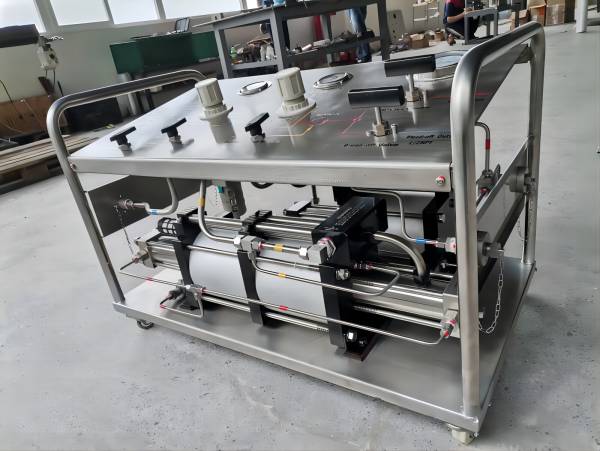
A gas booster may be appropriate when:
- The available gas already has sufficient inlet pressure but requires further boosting.
- The application requires a significantly higher final pressure.
- The required gas volume is moderate or application-specific rather than continuously high.
- High-pressure gas is needed for pressure or leak testing.
- Gas cylinders or other vessels need to be charged to a higher pressure.
- Gas needs to be transferred or boosted at a particular point of use.
- A compact or localized high-pressure solution is preferred.
For example, a facility may already have a nitrogen source at a certain pressure but require a much higher pressure for a pressure-testing process. In such a case, a gas booster can provide the additional pressure without requiring the entire gas supply system to operate at the higher pressure.
When Is a Gas Compressor a Better Choice?
A gas compressor may be a better fit when:
- Gas enters the system at relatively low pressure.
- A large volume of gas needs to be compressed.
- Continuous gas compression is required.
- The equipment will serve as the primary compression stage.
- The application places greater emphasis on sustained flow capacity.
In these applications, compressor capacity, compression stages, cooling, gas compatibility, and continuous-duty performance should be evaluated together.
The gas type is also critical. Nitrogen, hydrogen, oxygen, CO₂, and other gases can have different requirements for materials, sealing, cleanliness, temperature control, and system design.
Can a Gas Booster and Gas Compressor Work Together?
A gas booster and gas compressor do not always have to be competing solutions. In some high-pressure gas systems, they can perform different functions within the same process.
A typical configuration may be:
Gas Compressor → Storage or Buffer → Gas Booster → High-Pressure Application
In this arrangement, the compressor provides the initial gas compression and supplies a pressurized gas source. The gas booster then increases the pressure further when the downstream application requires a higher pressure than the compressor can efficiently provide.
This approach can be useful when a system needs both substantial gas supply capacity and localized high-pressure boosting. For example, a compressor may be responsible for establishing the primary gas supply, while a booster is used only when a specific process requires additional pressure.
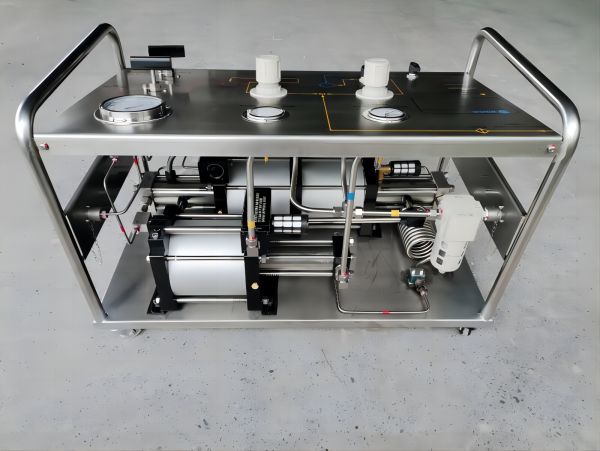
The exact configuration depends on the gas type, inlet pressure, target pressure, flow rate, duty cycle, and required control and safety features.
When selecting, do not merely focus on the maximum pressure: The compressor is mainly designed for continuous large-flow compression of low-pressure gas sources; the booster is used for secondary pressure increase when there is an existing pressurized gas source. In some cases, the two can be used together. The selection process should take into account the intake/outlet pressure, compression ratio, flow rate, medium, working condition cycle and system configuration.
Related Articles