How Hydrostatic Pressure Testing Systems Support Reliable Test Documentation
In industrial manufacturing, a hydrostatic pressure test report is more than a post test document. It objectively verifies that components meet required quality and safety standards under specified test conditions. For manufacturers of valves, pressure vessels, pipelines, heat exchangers and other pressure containing equipment, complete reliable documentation is critical for customer acceptance, quality control and regulatory compliance.
Yet the report’s validity fully depends on test data quality. Inaccurate pressure readings, undetected fluctuations or heavy manual input reliance make it an unreliable proof of product performance.
Modern hydrostatic testing systems resolve this by integrating precise pressure control, continuous data acquisition and automatic documentation into one workflow. Instead of separate report generation work, they generate trustworthy documents directly from verified test data.
Accurate Test Data Is the Foundation of Every Hydrostatic Test Report
A hydrostatic test report is only as reliable as the data behind it. Regardless of industry or testing standard, several types of information are fundamental to evaluating whether a pressure test has been successfully completed.
Core Test Data Every Hydrostatic Test Should Capture
| Test Data | Why It Matters |
| Target & Actual Test Pressure | Confirms the specified pressure was achieved accurately. |
| Holding Time | Demonstrates that pressure remained stable for the required duration. |
| Pressure Curve | Reveals fluctuations that cannot be identified from a single pressure reading. |
| Pressure Drop | Helps detect leakage or sealing issues during the holding period. |
| Test Medium | Documents whether water, hydraulic fluid, or another medium was used. |
| Product Identification | Links the report to the tested component for future traceability. |
| Equipment ID & Operator | Supports audit requirements and quality management. |
Why Pressure Curves Matter More Than a Final Pressure Reading
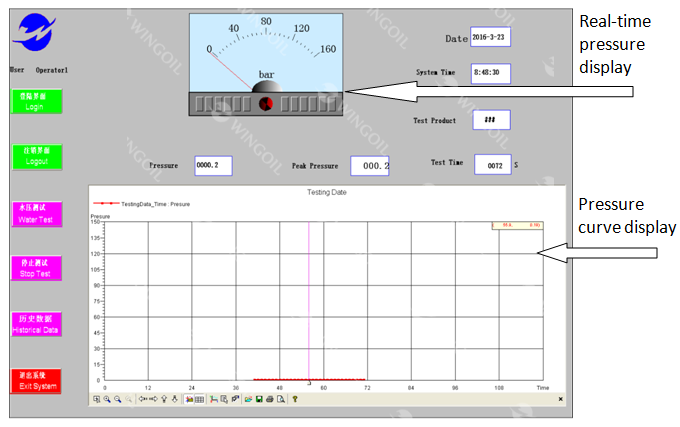
Reaching the specified test pressure is only one part of a successful hydrostatic test. Engineers must also verify that the pressure remains stable throughout the required holding period.
This is where continuous pressure curve recording becomes essential. Instead of relying on a single pressure reading at the end of the test, engineers can review the complete pressure profile to identify gradual pressure loss, unexpected fluctuations, or other abnormal conditions that may indicate leakage or unstable pressure control.
As a result, pressure curves have become an essential part of modern hydrostatic pressure test reports, providing stronger evidence of both test integrity and product quality.
How Hydrostatic Pressure Testing Systems Ensure Data Integrity
Reliable documentation begins long before the report is generated. It starts with a testing system capable of collecting accurate, complete, and traceable data throughout the entire pressure testing process.
High-Accuracy Pressure Measurement
Pressure sensors form the foundation of any hydrostatic pressure testing system. Accurate measurement ensures that test pressure meets specification and provides confidence that recorded values truly reflect actual test conditions.
Stable Pressure During the Holding Period
Maintaining pressure is often more challenging than reaching it. A well-designed hydrostatic pressure test unit minimizes pressure fluctuations during the holding period, improving both test repeatability and confidence in the recorded results.
Continuous Data Acquisition
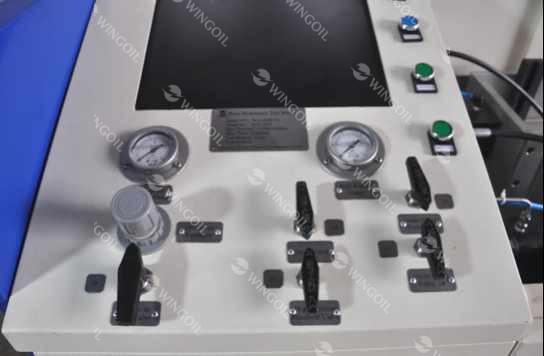
Automatic data logging records pressure throughout the complete testing cycle instead of relying on manual readings taken at selected intervals. This provides a much more detailed picture of system performance while reducing the risk of human error.
Digital Traceability
Modern systems associate every test with product serial numbers, operator information, equipment identification, and timestamps. This creates complete digital records that can be retrieved for customer inquiries, quality audits, or future investigations.
Example Scenario
A valve reaches the required 350 bar test pressure within specification. During the following ten-minute holding period, however, continuous monitoring detects a gradual pressure drop of 3 bar. While the final pressure still appears acceptable, the pressure curve clearly reveals a sealing issue that would likely have been overlooked with manual readings alone. This illustrates why continuous data collection provides much stronger evidence than isolated pressure measurements.
Key Capabilities of Modern Hydrostatic Pressure Test Equipment
Today’s hydrostatic pressure test equipment is expected to do much more than generate pressure. It has become an integrated quality assurance tool that combines testing, monitoring, and documentation within a single platform.
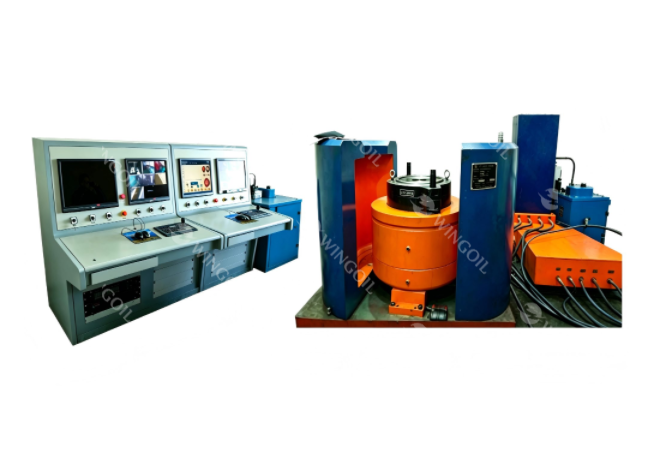
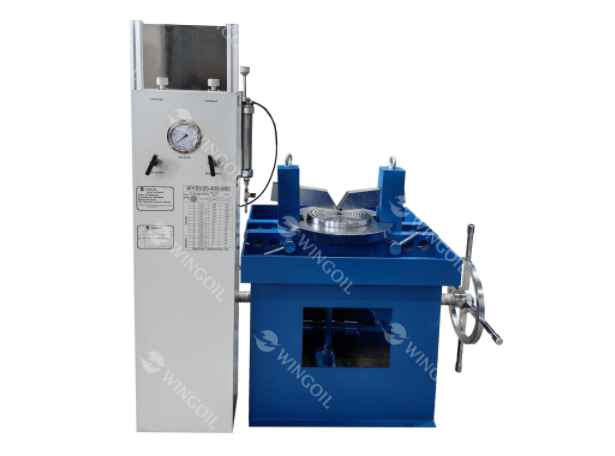
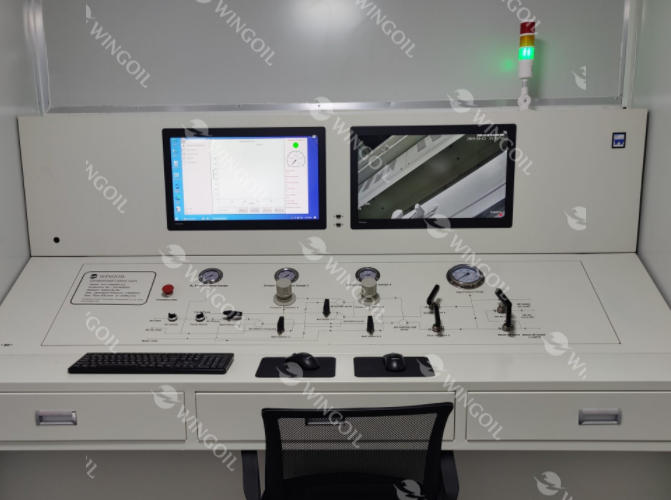
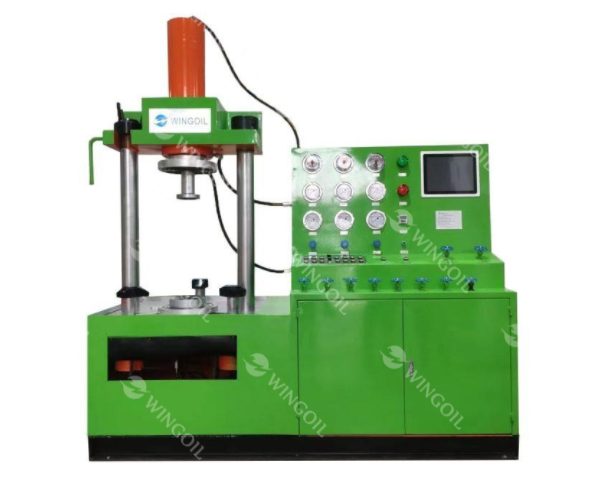
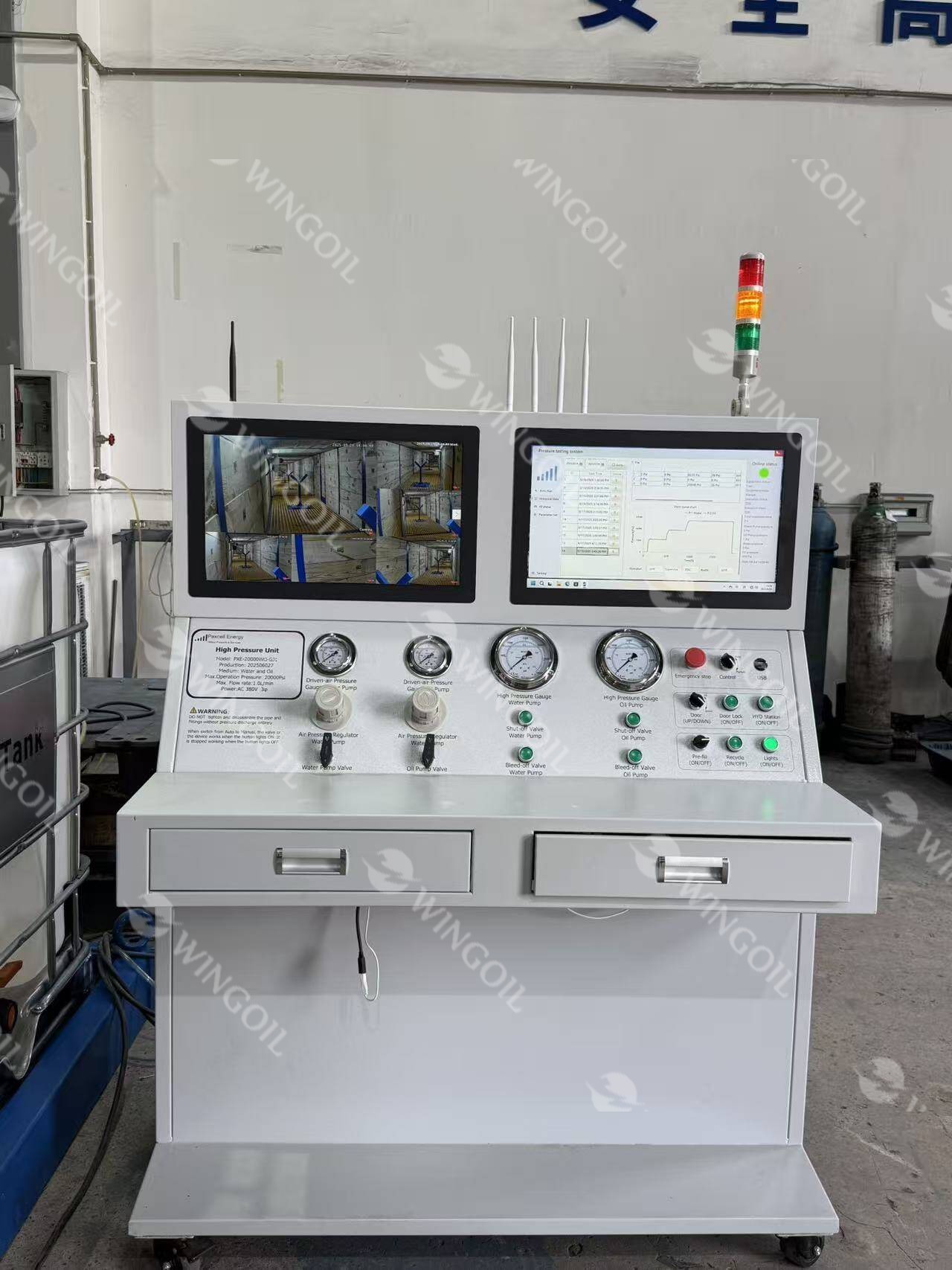
For example, WINGOIL Hydrostatic Pressure Test Equipment and Hydrostatic Pressure Test Units are designed to integrate pressure generation, real-time monitoring, automatic data logging, and customizable report generation into a single system. This helps manufacturers improve testing consistency while reducing manual documentation and operator error.
Essential Capabilities
| Capability | Practical Benefit |
| Automatic Pressure Control | Maintains stable testing conditions throughout the holding period. |
| Continuous Data Logging | Eliminates manual recording errors and captures the complete testing process. |
| Pressure Curve Recording | Detects abnormal pressure changes that single readings cannot identify. |
| Automatic Report Generation | Produces consistent hydrostatic pressure test reports in seconds. |
| Digital Record Storage | Simplifies report retrieval, customer support, and internal audits. |
| PLC / MES Integration | Connects testing data with production and quality management systems. |
These capabilities not only improve testing efficiency but also strengthen documentation quality by ensuring that every report is generated directly from verified testing data rather than manual records.
Selecting the Right Hydrostatic Pressure Testing System
Maximum pressure rating is only one part of selecting the right testing equipment. Manufacturers should also evaluate how effectively the system supports documentation, traceability, and long-term quality management.

Key Selection Considerations
| Consideration | Why It Matters |
| Pressure Measurement Accuracy | Provides confidence in every recorded test result. |
| Pressure Stability | Improves repeatability during the holding period. |
| Continuous Data Recording | Captures the complete testing process automatically. |
| Report Customization | Supports different customer and industry documentation requirements. |
| Traceability Functions | Associates reports with products, operators, and equipment. |
| Integration Capability | Connects testing data with existing manufacturing systems. |
Selecting a hydrostatic pressure testing system with these capabilities enables manufacturers to produce reliable documentation while improving operational efficiency and reducing manual administrative work.
Reliable hydrostatic test documentation is not created after testing—it is built throughout the entire testing process. Every pressure reading, every second of the holding period, and every recorded data point contributes to the credibility of the final hydrostatic pressure test report.
By combining accurate pressure control, continuous data acquisition, and automated documentation, modern hydrostatic pressure testing systems help manufacturers produce reliable test records, strengthen traceability, and support consistent quality assurance across every stage of production.
Related Articles