How to Configure a Hydrostatic Pressure Test Unit for Repeatable Testing
The hydrostatic pressure testing technique is employed to prove the pressure resistance and integrity of parts including pipes, valves, pressure vessels, and other fluid systems. Nevertheless, achievement of the necessary pressure level does not mean automatic repeatability of results. All the elements of the hydrostatic pressure testing system have to cooperate properly.
Proper selection of the hydrostatic pressure testing unit based on the specifics of the testing process allows maintaining proper control and minimizing unnecessary variability of results.
Define the Test Requirements Before Selecting Equipment
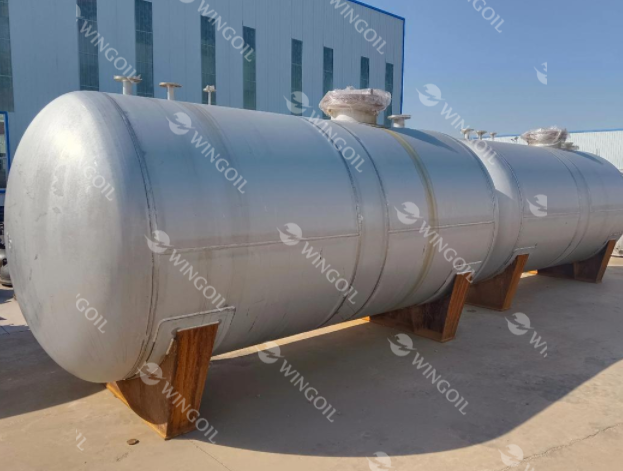
Before assembling a hydrostatic test unit, identify the component being tested and the conditions it must withstand.
Identify the Required Test Pressure
Specify the prescribed test pressure, holding time and applicable test procedures. These requirements should guide the selection of pumps, pressure gauges, valves, hoses and joints.
Each component in the pressure circuit must meet the expected operating conditions. If the connected hoses or joints cannot safely withstand the same pressure, even if a pump with sufficient output pressure is selected, it is not sufficient.
Confirm the Test Medium and Operating Cycle
Water is normally used in static pressure testing, although other media can be used depending on the nature of the test and the application. The system must be compatible with the chosen medium (e.g., seals, pipes, and inner workings).
Another aspect to consider in static water pressure testing is the frequency of testing. Equipment used for maintenance will differ in terms of the test frequency from that used during production periods. The test frequency, time taken to build pressure, and ability to hold pressure several times need consideration.
Select a Pressure Source That Matches the Test Requirements
The pressure source determines how effectively the system can reach and maintain the target pressure.
Match Output Pressure and Flow Rate
Select a pump which is capable of delivering the required test pressure during its expected operation. The maximum rated pressure cannot be considered the normal operating pressure because the entire system should stay within the set limits.
The other critical parameter is the flow rate. The increased flow rate will facilitate the filling of the test element and faster pressure buildup, although typically flow reduces with increasing output pressure in high-pressure pumps. Therefore, one should refer to the performance specifications of the pump rather than relying solely on its maximum flow rating.
The size and capacity of the test element are also determining factors in time taken to build up pressure. What is built specifically for testing a small valve will not give the same results on a large pipeline or vessel.
Choose a Suitable Drive Method
The drive must be compatible with the working conditions, utilities available, and pressure range required.
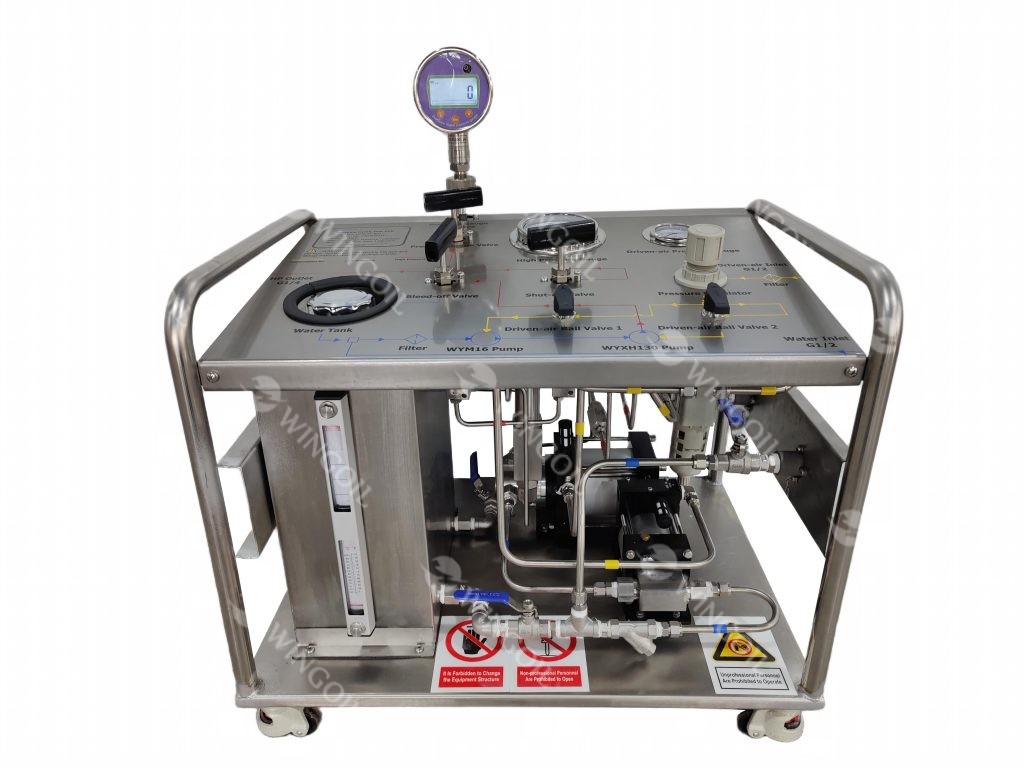
For instance, a pneumatic hydrostatic test pump employs compressed air as a drive source for the pump, which makes it an ideal choice when high pressure of the liquid is needed. The pressure regulation function enables operators to adjust the pump’s output according to the requirements of the system operation.
Where integration of the pressure gauge with control valves is needed, the packaged equipment makes for a convenient setup. For instance, Wingoil’s Pneumatic Hydrostatic Test Pump Unit with Digital Pressure Gauge is a configuration that integrates the pressure source with the corresponding control components.
Configure Pressure Regulation and Measurement
Pressure regulation and measurement should be planned together. The pump builds pressure, while the control components and instruments help operators manage and verify the test conditions.
Establish Controlled Pressure Regulation
The pressure control system shall be designed in such a way that it allows operators to raise pressure step by step and make necessary changes without causing any fluctuations. Drive air pressure in pneumatic systems could be controlled for controlling liquid output pressure depending upon the specifications of the pump.
Valves must be placed and selected based on their functionality like isolation of test specimen, flow control, or pressure release. The operators should be able to follow the correct sequence without making any improvised changes in the pressure system.
Select Suitable Pressure Measurement Instruments
Select a pressure gauge or transducer that has the appropriate measuring range and accuracy for the particular test that you wish to perform. It might be hard for you to detect any small changes in pressure with a gauge that has a very wide measuring range.
Also, the location of measurement is important. The instrument must measure a valid measurement of the amount of pressure exerted on the test component, considering the layout of the system.
Verify the calibration and check the instrument before conducting the test. If the same application uses multiple instruments, consistent instrument specifications and calibration methods can help improve the comparability of the test results.
Plan Test Connections, Air Removal, and Pressure Release
The pressure source and control instruments are only part of the setup. Connections and fluid handling can also affect testing consistency.
Check Connections and Sealing
Use hoses, joints, adapters and seals that are compatible with the test medium and have the required rated pressure. Before pressurization, ensure that the connections are secure and conduct a check.
Leaks can keep the system from attaining the desired pressure or result in loss of pressure while holding pressure. Prior to conducting the test, check the connections and ensure that the component under test is isolated from any other flow paths.
Remove Trapped Air Before Pressurization
Trapped air can affect pressure response and introduce additional risks because compressed gas stores energy differently from liquid. Fill the test circuit appropriately and remove trapped air according to the equipment manufacturer’s instructions and the applicable procedure.
This is particularly important when testing components with complex internal passages or systems that are difficult to fill completely.
Provide a Controlled Pressure-Release Process
The testing device must have a suitable pressure relief mechanism. The pressure should be reduced in a controllable manner in accordance with the equipment manual and on-site safety regulations.
Do not disconnect the hose, connector or test component when the system is still under pressure. Before disconnecting the circuit or preparing the equipment for the next test, make sure that the pressure has been safely released.
Standardize the Testing Procedure for Repeatable Results
Even a properly configured hydrostatic pressure test setup could yield varying results if different approaches were adopted by the operators.
Develop a sequence of steps that would incorporate component installation, filling, purging of air, pressurization, holding time, and depressurization. The pressure and holding time would remain constant unless otherwise specified by the procedure.
Before the start of testing, ensure that all components, including the pump, the gauge, the valves, and the hoses are properly connected. Verify whether the test component and test medium are compatible with the test process and identify if there are leaks or abnormal pressure responses.
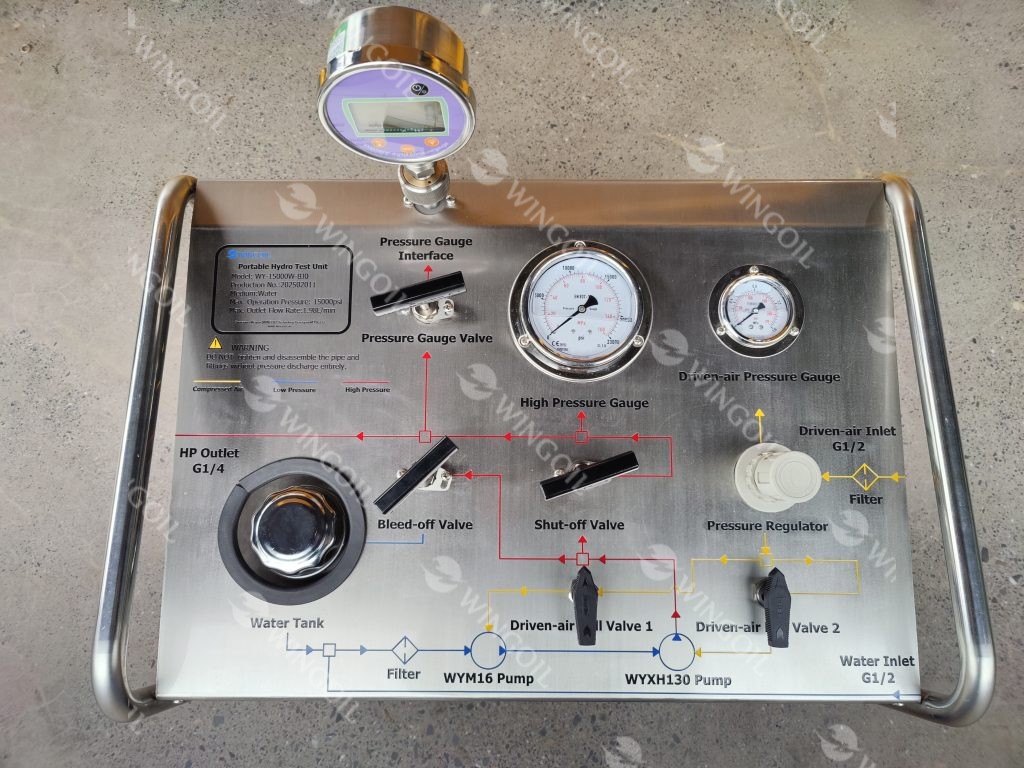
When there are variations in results from different test cycles, the reason for variation must be identified. There might be variations due to various reasons, including differences in filling, presence of air bubbles, loose connections, the condition of the measuring instruments, and pressure settings.
Operators should also follow the equipment manufacturer’s instructions and relevant safety requirements throughout the process. Repeatability must never come at the expense of safe pressure handling.
By defining requirements first and standardizing the setup and operating sequence, testing teams can reduce avoidable variation and make pressure testing more consistent. For applications requiring an integrated setup, explore Wingoil’s hydrostatic test pump solutions to identify equipment that matches the required pressure range and operating conditions.
Related Articles