How Does a Pressure Test Container Enhance High-Pressure Testing Safety in Oil & Gas?
As requirements for equipment reliability and testing safety continue to rise in the oil and gas industry, traditional decentralized pressure testing setups can no longer fully meet the demands of complex testing environments. Particularly during the testing of Blowout Preventers (BOPs), wellhead equipment, valves, and other high-pressure-containing equipment, companies need not only stable pressure output, but also comprehensive monitoring systems, robust safety protection structures, and convenient equipment layouts.
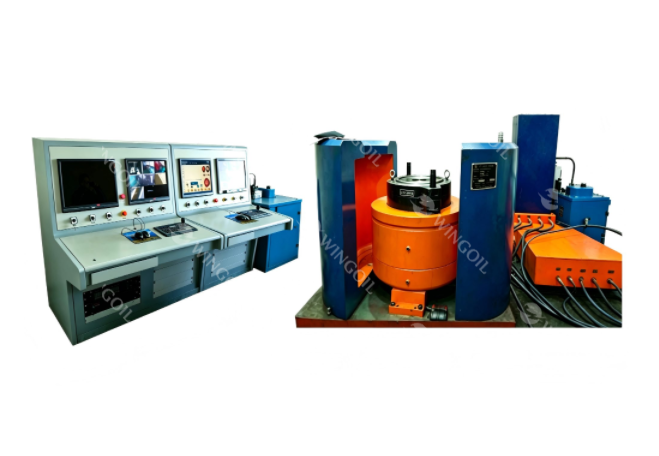
A Pressure Test Container is an integrated solution that houses pressure testing pumps, control systems, pressure monitoring instruments, piping systems, and safety protection structures within a containerized enclosure.
This article introduces the basic concept, key components, working principles, industry applications, and safety designs of a Pressure Test Container, helping oil and gas equipment manufacturers and testing service providers better understand this integrated pressure testing solution.
What Is a Pressure Test Container?
A Pressure Test Container refers to an all-inclusive high-pressure testing device usually manufactured by adopting the concept of containerized construction which comprises pressure generation devices, test lines, control systems, pressure measuring devices, and safety protection facilities within one integrated unit.
In contrast with conventional non-integrated pressure testing devices, more stress has been placed on the integration of the system as well as the whole arrangement of the testing region in a Pressure Test Container. According to particular testing requirements, the Pressure Test Container can be assembled with hydraulic pumps, air booster, pressure manifold, data acquisition, and remote monitoring devices for carrying out pressure tests on various oil and gas equipment.
Key Safety Features of a Pressure Test Container
Pressure test is related to storing and discharging large amounts of energy. This becomes very important especially where the pressures involved are very high and gas is used as the pressure test medium.
Thus, while designing a Pressure Test Container, not only the pressure test capabilities but also human isolation, equipment protection, and abnormal situations are some of the aspects that have to be considered. The various safety designs are listed below:
High-Strength Protective Structure
Correct design of blast walls, protective structures, enclosures and protective doors will achieve the required segregation. The type of media, pressure rating, hazards and risk assessment required by the project must be considered when designing protective structures. Simply using shipping container structures will not be adequate.
Safety Interlock System
Interlocks ensure that safe operation is maintained by linking the position of safety guards with the operation of the test system. Interlocking features within the system can prevent tests being performed if the safety guards are not closed to a desired position, reducing the risk of exposure to personnel in the high pressure test environment.
Remote Monitoring and Operation
Remote monitoring systems allow operators to observe pressure changes and equipment operating status from outside the testing area. Combined with remote control functions, this reduces the need for personnel to come into direct contact with high-pressure equipment during testing.
Pressure Monitoring and Protection
Pressure monitoring is performed using sensors, meters and protective mechanisms. Alarms, pressure regulation and emergency shut down may be provided depending on design requirements to enable quick identification of unusual pressures.
Note: Safety measures should be determined according to risks identified in the project, relevant legislation, and test system design. Electrical systems with explosion proofing and mechanical systems with high pressure protection are separate safety design disciplines, and must be considered separately.
Applications of Pressure Test Containers in the Oil and Gas Industry
A Pressure Test Container can be configured according to different equipment types and testing requirements, offering broad application value across oil and gas equipment manufacturing, oilfield maintenance, and third-party inspection scenarios.
BOP Testing
The blow out preventer (BOP) is very important to well control in oil & gas drilling. It has been designed to allow sealing so that well control can be maintained. In order to assess the performance of the BOP to hold pressure and seal, a Pressure Test Container can be used which will include high pressure testing pumps, pressure monitoring, pipework and safety protections appropriate to testing the BOP.
The container’s pressure capability, connections and monitoring must be designed with regard to the type of BOP, its pressure rating and relevant standards.
Wellhead Equipment Testing
Wellheads and Christmas trees must be pressure tested to ensure they can withstand pressures. The pressure test system can be assembled using suitable pressure pumps, pressure test manifolds and monitoring equipment. For testing wellheads, relevant pressure test methods will be applied according to the design, connections and pressure test requirements of the equipment.
Where applicable, API 6A requirements may be referred for pressure tests. Specific equipment requirements and project requirements will influence what test requirements are applied.
Valve and Pipeline Testing
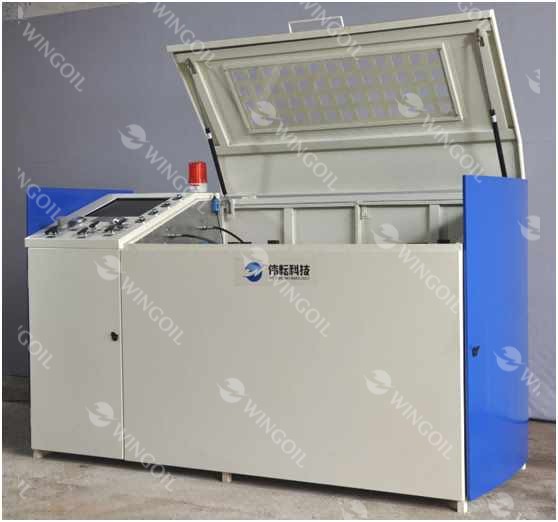
Various valves and pipework components can be tested using a Pressure Test Container. The Pressure Test Container incorporates hydraulic test pumps and test pipework along with pressure measurement systems. It can be used to pressure test various sized valve/pipework assemblies.
Different pressure levels can be specified depending upon the item being tested and the requirements of the project, to allow hydrostatic strength and leak/tightness testing to be conducted.
Downhole Tool Testing
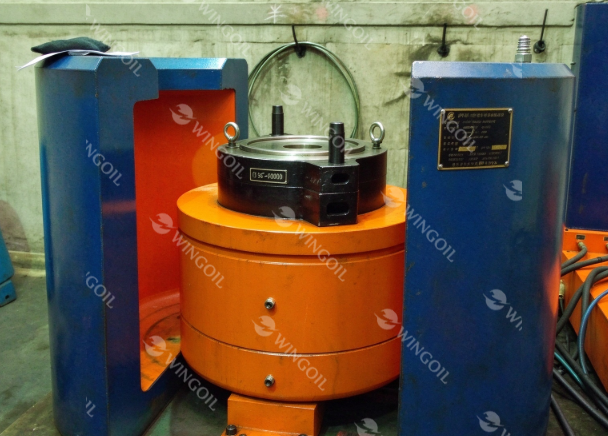
Downhole tools will be exposed to high pressure, high temperature and complex downhole environment in actual operation, therefore, it is necessary to use special testing equipment to verify performance.
Specialized HTHP (High Temperature High Pressure) testing equipment can be used to validate the performance of downhole tools and related components, for testing projects that require simulating high temperature and high pressure operating conditions. Such tests are often custom-engineered around the target pressure, temperature, effective testing space, and the specific test procedures.
Pressure Test Container vs. Traditional Pressure Testing Setup
When selecting pressure testing equipment, companies typically consider factors such as equipment layout, testing environment, operational convenience, and ongoing maintenance. The primary differences between a Pressure Test Container and a traditional decentralized pressure testing setup lie in overall layout and system integration.
| Comparison | Pressure Test Container | Traditional Setup |
| Equipment Layout | Centralized, integrated layout | Equipment may be installed separately/dispersed |
| Testing Environment | Configurable as an independent testing zone | Depends on existing workshop layout |
| Safety Design | Integrates dedicated protective structures | Requires separate planning for safety measures |
| Monitoring System | Centrally configured monitoring system | Depends on individual equipment setup |
| Installation | Holistic, containerized overall planning | Typically requires on-site layout and assembly |
| Customization | Overall customization based on project needs | Usually configured for a single unit or group of units |
For companies looking to centrally arrange pressure testing equipment, establish an independent testing zone, or execute project-based deployments, a Pressure Test Container is a worthwhile solution to consider.
Wingoil Pressure Test Container
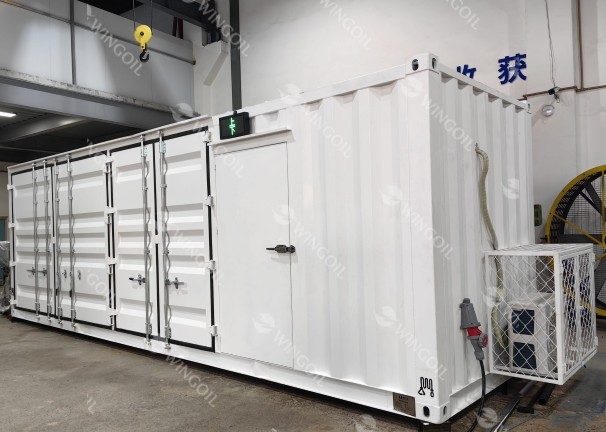
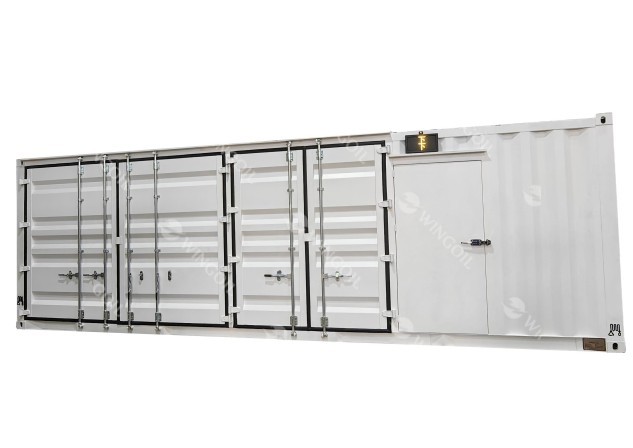
Wingoil Transportable Pressure Test Container is a containerized mobile testing system specifically designed for pressure testing oil and gas equipment. Built with a 20ft or 40ft container structure, it is suitable for testing and evaluating the performance of downhole tools, wellhead manifolds, Blowout Preventers (BOPs), and various valves.
The system features a maximum outlet pressure of up to 140 MPa and a maximum outlet flow rate of 300 L/min, capable of meeting the high-pressure testing requirements of a wide variety of oil and gas equipment.
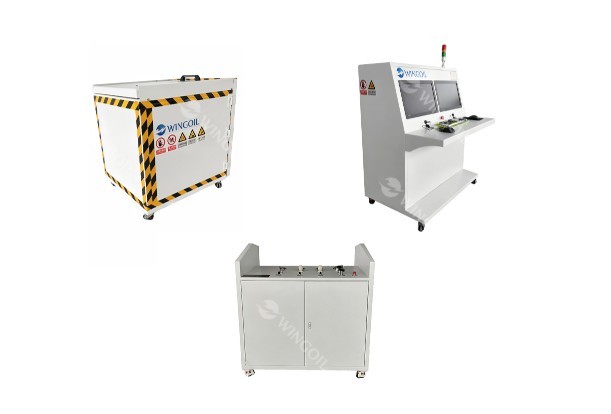
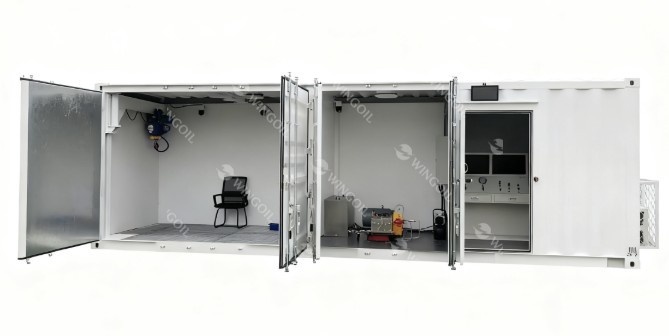
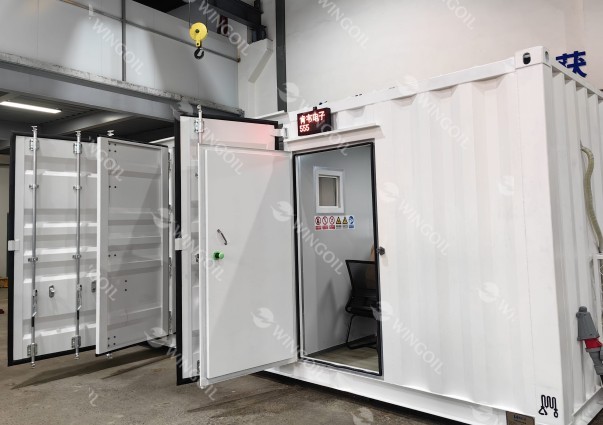
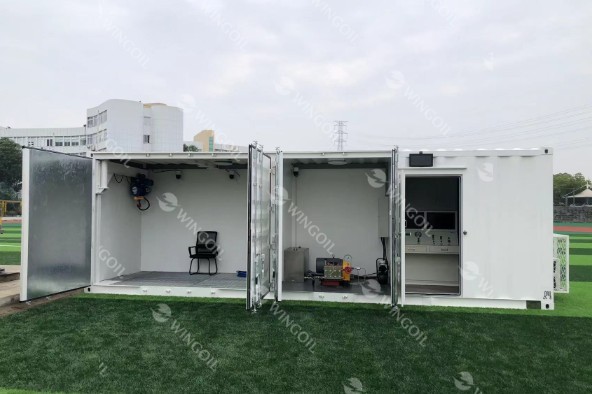
Unlike conventional decentralized pressure testing equipment, this system integrates the testing apparatus inside the container while placing the operation control panels in a separate, isolated safety compartment, enabling operators to control the testing process from a relatively safe area.
Additionally, the unit is equipped with automated test control, data acquisition, and remote HD video monitoring, providing a more integrated and user-friendly solution for oil and gas equipment testing.
Key Features of Wingoil Pressure Test Container
High-Pressure Testing Capability
With a maximum outlet pressure of up to 140 MPa and a maximum outlet flow rate of 300 L/min using clean water as the test medium, the unit is suitable for pressure testing downhole tools, wellhead manifolds, BOPs, and various types of valves.
Dual Control Panels for Flexible Operation
The system is equipped with both manual and automatic control panels:
- Manual Control Panel: Used for manual control of water filling and pressure buildup.
- Automatic Control Panel: Used for automated testing workflow control. The dual-panel design balances operational flexibility with test automation requirements.
Enhanced Safety Design
Featuring a separated layout between the testing equipment and the operation zone, the testing system is installed inside the container while the control panels are housed in an independent safety compartment, minimizing the need for operators to directly access the high-pressure testing area. Key safety configurations include:
- Automatic Door Locks and Sensors
- Emergency Stop Buttons
- Warning Signal Lights for testing operations
- Protective Container Wall: Optional waterproof plywood lining can be configured per customer requirements to provide cushioning and impact resistance.
Remote HD Camera Monitoring
Equipped with a full-range PTZ (Pan-Tilt-Zoom) high-definition camera system, allowing remote observation of the tested equipment and testing process, further reducing the need for personnel to enter the high-pressure testing zone.
Integrated Data Acquisition and Reporting
An integrated data acquisition system records test data on-site and generates test reports, facilitating test result analysis, data archiving, and quality traceability.
Transportable Containerized Design
Available in both 20ft and 40ft container specifications to match on-site space and project requirements. Additionally, the unit includes a built-in air conditioning system to provide a comfortable working environment for operators across diverse field conditions.
Final Words
Pressure Test Container is a set of pressure test equipment, control system, meters and protective devices designed to carry out pressure test on pressure containing equipments in oil and gas industry. The layout of testing equipment has been optimized. It provides more standardized and convenient working conditions.
If you are looking for a containerized pressure testing solution for BOPs, wellhead equipment, downhole tools or valves, contact Wingoil for a customized equipment solution tailored to your project requirements.
Related Articles