Pressure Test Chamber: How It Works and Ensures High-Pressure Safety
In industries such as oil and gas, industrial manufacturing, and aerospace, high-pressure testing is essential for verifying product pressure resistance and sealing performance. More importantly, it plays a critical role in protecting both testing personnel and equipment.
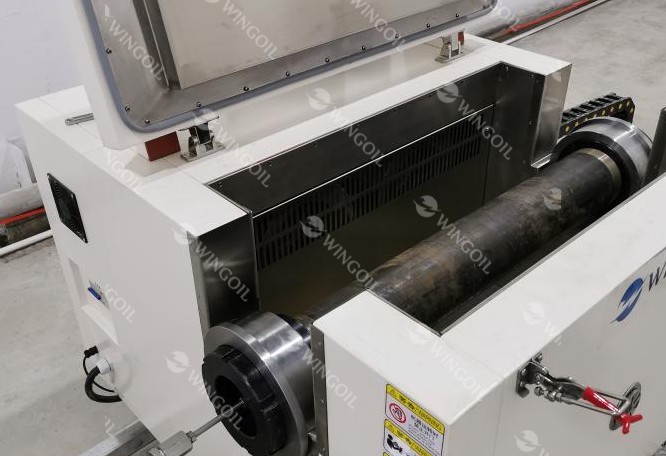
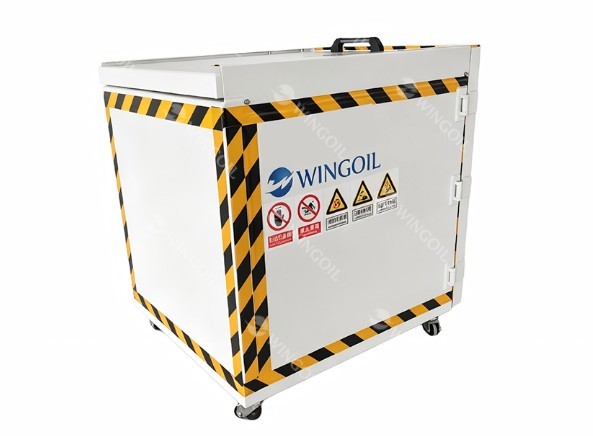
A Pressure Test Chamber is an important safety enclosure used in high-pressure testing systems. It provides physical protection by enclosing or isolating the testing area, helping reduce the safety risks associated with leakage, component rupture, or the sudden release of high-pressure media.
So, how does a Pressure Test Chamber work? What are the common types? And how can businesses choose the right equipment for their testing requirements?
In this article, we will explore the working principles, types, applications, and selection considerations of Pressure Test Chambers to help you plan a safer and more efficient high-pressure testing solution.
What Is a Pressure Test Chamber?
Pressure Test Chamber, also known as pressure testing enclosure or pressure test safety chamber. This type of equipment is used to protect the work piece during industrial pressure testing. It is designed primarily to isolate and protect the work piece.
Components are pressed to higher pressures than they will normally encounter. This checks they can withstand the pressures without leaking, bursting or failing in any way. The specimen could leak, burst or fail in an unexpected way causing high velocity fluid, flying debris or energy from the stored pressure.
The Pressure Test Chamber has a specially designed safety barrier to isolate the specimen from the operator and environment reducing any risk.
Main Functions of a Pressure Test Chamber
The main functions of a Pressure Test Chamber include:
Physical Protection: Encloses the test specimen within a protective structure, helping reduce the risk of injury caused by component rupture or flying debris during testing.
Operator Safety: Provides additional protection for operators, particularly in high-pressure gas testing applications.
Controlled Testing Environment: Creates a relatively isolated testing space for different types of pressure testing procedures.
Remote Monitoring Support: Works with remote control, pressure monitoring, and video surveillance systems to reduce the need for personnel to approach the testing area directly.
It should be noted that a Pressure Test Chamber will generally not provide the actual test pressures. It forms part of a pressure testing system which also includes high pressure pumps, gas boosters, control systems and pressure monitoring equipment.
Pressure Test Chamber vs. Pressure Test Pump vs. Pressure Testing System
These three terms are sometimes confused in industrial equipment procurement, but each refers to a different function.
| Equipment | Main Function |
| Pressure Test Chamber | Contains the test specimen and provides physical protection during testing. |
| Pressure Test Pump | Generates the hydraulic or other pressure required for testing. |
| Pressure Testing System | Integrates pressure generation, control, monitoring, testing, and safety protection functions. |
In an automatic high pressure testing system, the high pressure pump produces the test pressure, whilst the control system will manage and monitor the pressure. The Pressure Test Chamber provides physical protection.
There’s more to consider when buying test equipment. Don’t just focus on the maximum pressure a test pump can produce but also look at how protected the test specimen will be by looking at the chamber, system setup and general safety.
How Does a Pressure Test Chamber Work?
A Pressure Test Chamber will usually be used alongside a high pressure testing pump and pressure control system.
The test piece will be placed within the chamber and attached to the testing system. The high pressure pump will then be used to slowly increase the pressure while pressure sensor will monitor the pressure.
The chamber will then be held at the pre-determined pressure, during this time the test piece will be monitored for any leaks, pressure loss or structural issues.
The pressure can then be released following the set safety procedures. The chamber should only be opened and the workpiece removed after the system has been fully depressurized and its safe condition confirmed.
Throughout the process, the Pressure Test Chamber primarily provides physical isolation, offering additional protection for operators and surrounding equipment.
What Are Pressure Test Chambers Used For?
Pressure Test Chambers are commonly used within industries where there is a requirement to place products & components under pressure, seal integrity and strength.
They can commonly be seen being used to test Oil & Gas Equipment, Manufacturing Components and Aerospace Components under high pressure.
Oil and Gas Equipment Testing
In the oil and gas industry, valves, wellhead equipment, pipeline connections, and other pressure-containing components commonly undergo pressure testing to verify their pressure resistance and sealing performance under specified operating conditions.
In these applications, a Pressure Test Chamber provides additional physical protection for the workpiece, particularly in high-pressure testing environments.
Industrial Valve Testing
Industrial valves must undergo various tests, such as shell strength tests, seat leakage tests, and other performance evaluations, depending on applicable product standards and testing requirements.
A Pressure Test Chamber can be integrated with hydraulic or pneumatic testing systems to provide appropriate safety protection during valve testing.
Pipeline Component Testing
Pipeline fittings, flanges, connectors and other components need to be pressure tested to ensure they are not leaking and/or damaged.
A pressure test system can be combined with a protective chamber to help increase the safety aspect of the testing.
Aviation Sealing Ring Testing
Aerospace-related sealing components generally have strict requirements for sealing performance and product reliability.
For specific types of sealing rings and sealing assemblies, dedicated pressure testing equipment can be used to verify their performance according to the relevant design and testing requirements.
High-Pressure Component Testing
In addition to the above applications, Pressure Test Chambers can also be used for other industrial components that need to be tested at high pressure.
Examples include high pressure fittings, sealing assemblies and other small pressure retaining parts.
The actual test method should be determined by the structure of workpiece, testing medium and applicable technical standards.
How to Choose the Right Pressure Test Chamber?
Choosing the right Pressure Test Chamber is about more than the maximum test pressure. Buyers should also think about the testing medium, the workpiece size, the operating method, and the safety protection requirements.
Before purchasing, you should carefully consider the following factors.
Required Pressure Rating
First, determine the maximum working pressure of the test specimen and the required test pressure. The appropriate equipment pressure rating should then be selected based on the product design parameters and applicable testing standards.
It is also important to verify that the chamber and all associated components, including pumps, pipelines, valves, fittings, and pressure sensors, can withstand the required pressure conditions.
Test Medium
Different testing media require different equipment configurations and safety considerations.
Common testing media include water, hydraulic oil, nitrogen, helium, and compressed air.
Water and hydraulic oil are commonly used in hydraulic pressure testing, while nitrogen and helium may be used in specific gas pressure and leak testing applications.
High-pressure gas testing requires particular attention because compressed gases can store significant energy due to their compressibility, resulting in potentially serious safety risks.
Workpiece Size and Dimensions
The size, diameter, weight and build of your workpiece will dictate the space required inside and installation options.
We recommend providing us with the largest size, weight and connection details you will require prior to purchase.
For testing a range of workpiece sizes we can also consider bespoke supports, fixtures and positioning inside.
Manual or Automatic Operation
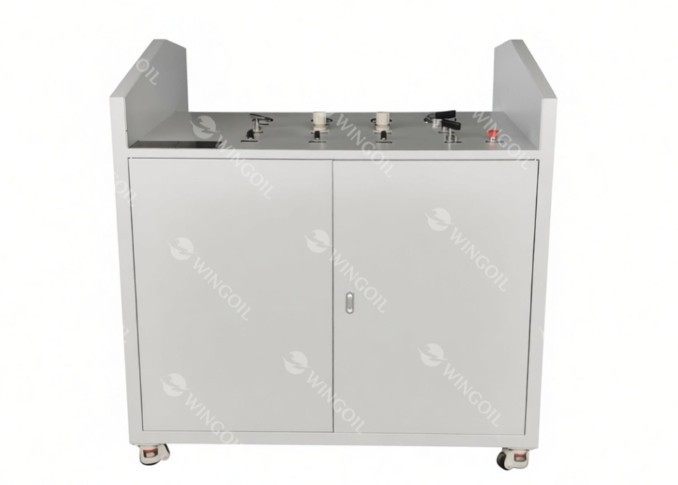
Depending on testing frequency and operational requirements, buyers can choose between manual and automatic pressure testing systems.
Manual systems are suitable for applications with relatively simple testing procedures, while automatic systems are more appropriate for industrial applications requiring automatic pressurization, pressure-holding control, remote operation, and test data recording.
For high-pressure testing, automated control can also reduce the need for operators to approach the testing area directly.
Safety and Monitoring Requirements
Safety protection is one of the most important considerations when selecting a Pressure Test Chamber.
Depending on the test pressure and medium, buyers should evaluate whether the chamber and system include appropriate features such as:
- Protective enclosure structure
- Safety interlocks
- Emergency shutdown functions
- Remote operation
- Video monitoring
- Pressure monitoring and data recording
For high-pressure gas testing, a dedicated risk assessment should also be conducted to determine the necessary protective measures.
Customization Requirements
If particular workpiece dimensions, test pressure or operating requirements cannot be met by standard equipment, a custom Pressure Test Chamber may be a good solution.
Buyers should provide the supplier with information on test pressure, testing medium, workpiece dimensions, control method and safety requirements. This allows the manufacturer to develop a chamber and integrated high pressure test system that better fits the actual application.
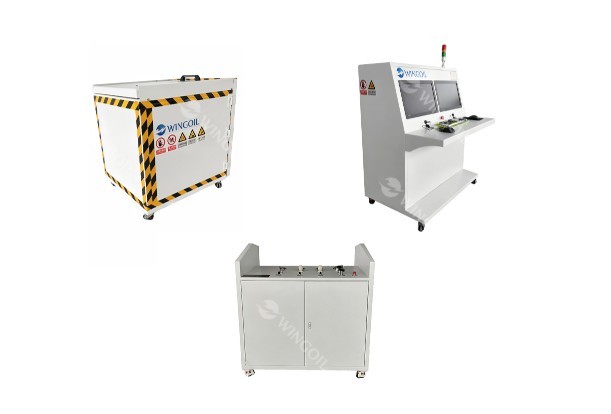
Wingoil Auto HP Testing System with Explosion-Proof Pressure Test Chamber
Wingoil Auto HP Testing System with Explosion-Proof Pressure Test Chamber is an integrated automatic high-pressure testing solution combining pressure boosting, remote control, pressure monitoring, and safety protection.
With a maximum working pressure of 105 MPa (15,000 psi), the system supports multiple testing media, including nitrogen, helium, air, water, and hydraulic oil.
Its integrated protective chamber and remote operation console provide a high-pressure testing solution for industrial valves, pipeline components, aerospace sealing components, and other pressure-related products.
Key Features
High Pressure Capability: Maximum working pressure of 105 MPa (15,000 psi), meeting the requirements of various industrial high-pressure testing applications.
Multiple Test Media: Compatible with nitrogen, helium, air, water, and hydraulic oil for different testing conditions.
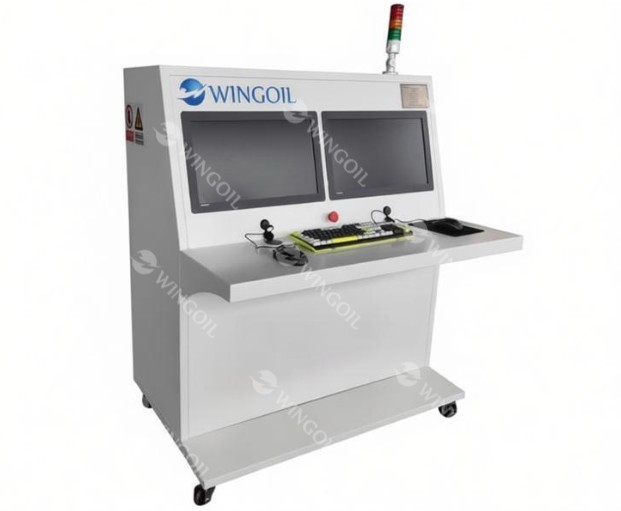
Remote Operation: Equipped with a 21-inch display on the remote control console, supporting remote operation, pressure monitoring, and test data recording while reducing the need for operators to approach the testing area.
Explosion-Proof Pressure Test Chamber: Features a protective chamber with a wall thickness of 62 mm, providing physical isolation and additional safety protection during high-pressure testing.
Integrated Control System: Includes both manual and remote control consoles to support equipment operation and testing process management.
Technical Specifications
| Parameter | Specification |
| Model | WY-105W/N-J2 |
| Maximum Working Pressure | 105 MPa / 15,000 psi |
| Test Media | Nitrogen, Helium, Air, Water, Hydraulic Oil |
| Chamber Wall Thickness | 62 mm |
| Chamber Dimensions | 900L × 5000W × 900H mm |
| Remote Monitor | 21-inch |
| Driving Air Pressure | 1–7 bar |
Note: Final configurations and specifications are subject to the confirmed technical documentation.
Looking for a customized high-pressure testing solution?
Contact Wingoil to discuss your required test pressure, testing media, workpiece dimensions, and safety requirements. Our team can help you identify a suitable pressure testing system for your application.
FAQs About Pressure Test Chambers
Q1: What Is the Purpose of a Pressure Test Chamber?
The main purpose of a Pressure Test Chamber is to contain the workpiece and provide physical isolation and safety protection during industrial pressure testing.
It helps reduce potential risks associated with component rupture, leakage, or connection failure under high-pressure conditions.
Q2: What Is the Difference Between a Hydraulic and Pneumatic Pressure Test Chamber?
The primary difference between hydraulic and pneumatic pressure testing is the media used to create pressure.
Hydraulic pressure testing uses liquid to create pressure (commonly water or hydraulic oil). Pneumatic pressure testing uses gas (commonly Nitrogen, Helium or compressed air).
Because gases are much more compressible, pneumatic pressure testing is generally seen as a higher risk due to increased energy storage and will require more rigorous safety precautions.
Q3: Why Is an Explosion-Proof Pressure Test Chamber Needed?
When carrying out tests with high pressure gas, if the test piece fails or a connection fails there can be a sudden release of a large amount of energy.
This is countered by the use of a specially designed containment vessel which physically protects the operator and reduces risk of damage.
Protection will depend on the design of the vessel and verification data.
Q4: What Is the Maximum Pressure of a Pressure Test Chamber?
There isn’t one standard maximum pressure available for Pressure Test Chambers. This depends on the chamber design, test requirements and test media being used.
An example of this is the Wingoil WY-105W/N-J2 Automatic High Pressure Testing System which can provide a maximum operating pressure of 105MPa (15,000psi).
Q5: Can a Pressure Test Chamber Be Customized?
Yes. Pressure Test Chambers can be tailored to a range of applications dependent on pressure, testing media, size of work piece, control method and safety needs.
It is advisable to give as much detail as possible about the test requirements when ordering so the best chamber structure and system can be chosen.
Related Articles