How to Choose a Hydrostatic Pressure Pipe Testing Equipment?
In industrial manufacturing, oil and gas, hydraulic systems, and fluid transportation, pipelines are required to operate under different pressure conditions for extended periods. To ensure that pipelines and their connecting components can withstand the specified operating pressure and reduce the risk of leakage or structural failure, hydrostatic pressure testing is commonly performed before production release, installation, or commissioning.
Hydrostatic pressure pipe testing equipment is essential for carrying out these tests. It works by filling a pipeline with water and gradually increasing the internal pressure to evaluate its pressure resistance and sealing performance under specified test conditions. For pipeline manufacturers and industrial equipment producers, selecting suitable hydrostatic testing equipment helps improve quality inspection efficiency, verify product performance, and meet project-specific testing requirements.
So, how does hydrostatic pressure pipe testing equipment work? Which industries use it? And what factors should buyers consider when selecting the right equipment?
What Is Hydrostatic Pressure Pipe Testing Equipment?
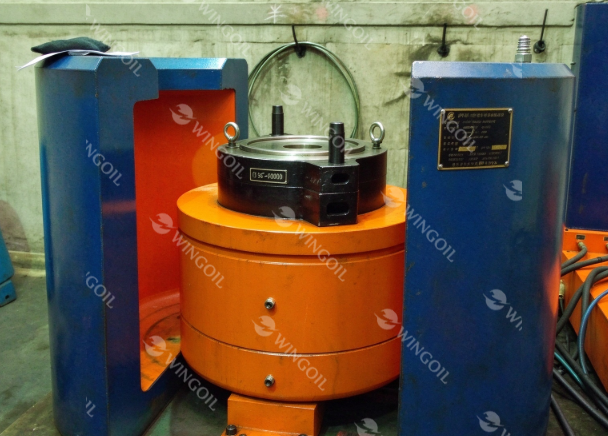
Hydrostatic pressure pipe testing equipment is a type of industrial equipment that uses liquid as the test medium to evaluate the pressure resistance and sealing performance of pipelines, piping components, and related fluid transportation systems.
Unlike pneumatic pressure testing, which uses compressed air or other gases, hydrostatic testing typically uses clean water as the test medium. The equipment uses a water injection pump and a pressure booster pump to fill the pipeline with water and gradually increase its internal pressure until the predetermined test pressure is reached.
During the testing process, operators can monitor pressure changes, inspect the pipeline and its connections for leaks, and record relevant test data to evaluate the pipeline’s performance under the specified test conditions.
A typical hydrostatic pipe testing system consists of the following components:
Water Injection Pump: Supplies water to the pipeline being tested.
Pressure Booster Pump: Gradually increases the internal pipeline pressure to the required test level.
Valves and Piping: Control water flow direction and pressure transmission.
Pressure Monitoring System: Monitors pressure changes throughout the testing process.
Control System: Controls equipment operating parameters and collects and records test data.
Safety Protection System: Reduces potential risks during high-pressure testing through protective structures, remote operation, and other safety features.
These components work together to complete pipeline hydrostatic testing according to the specified test conditions.
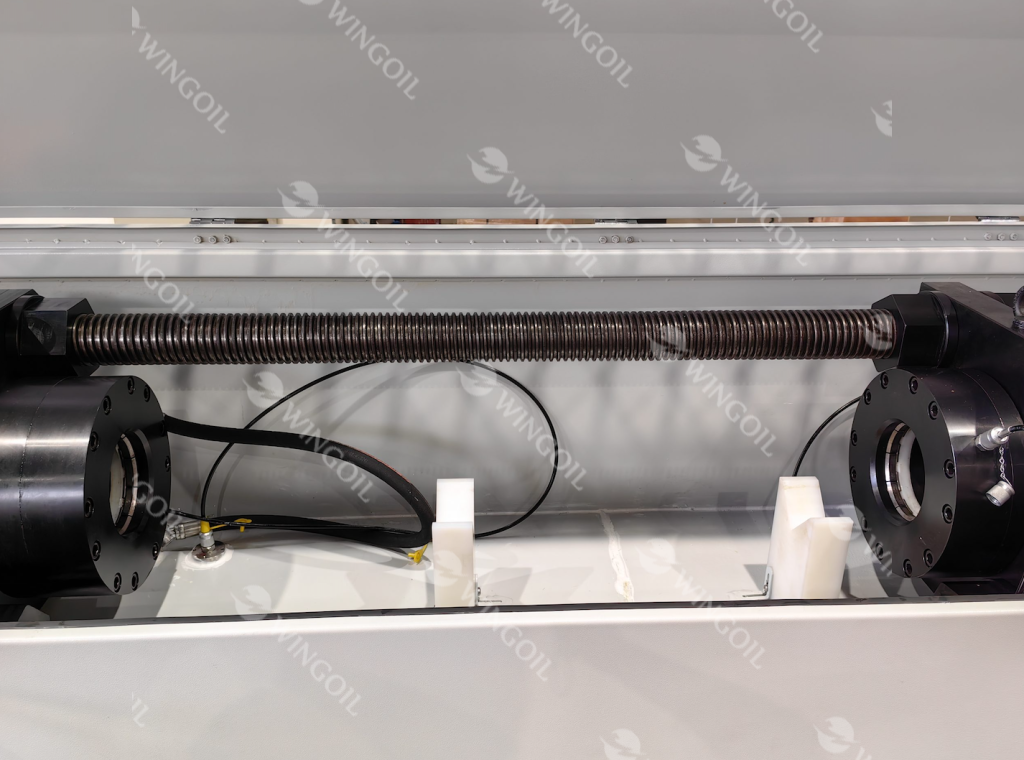
How Does Hydrostatic Pipe Testing Equipment Work?
Hydrostatic pressure testing equipment works by using the pressure transmission properties of water to gradually pressurize the pipeline and monitor its pressure performance under specified testing conditions.
A typical pipeline hydrostatic testing procedure involves the following steps.
Water Filling
First, the pipeline under test is connected to the testing equipment. A water injection pump then supplies clean water into the pipeline.
During the filling process, air inside the pipeline should be removed according to the applicable testing procedure to ensure that the pipeline is properly filled with the test medium. Reducing trapped air helps minimize stored energy risks and improves the reliability of the test results.
Pressure Boosting
After the pipeline has been filled with water, the pressure boosting system is activated to gradually increase the internal pressure.
The pressure booster pump delivers water into the pipeline, causing the internal pressure to rise until it reaches the preset test value. Since different pipelines have different materials, dimensions, design pressures, and testing standards, the test pressure must be configured according to the specific requirements.
Pressure Holding
Once the required test pressure is reached, the pressure is maintained for a specified period according to the applicable testing standards and project requirements.
During this stage, operators monitor pressure changes and inspect the pipeline body, connections, and related components for leakage, deformation, or other abnormalities.
Data Monitoring and Recording
Throughout the testing process, the data acquisition and control system can monitor pressure and other relevant test parameters in real time and record the collected data.
This information helps engineers analyze pressure changes during testing, determine whether the pipeline meets the specified testing requirements, and provide supporting data for subsequent quality evaluations.
Pressure Release and Inspection
After testing is completed, the internal pipeline pressure must be gradually released according to the required safety procedures.
Once the system has been fully depressurized, the pipeline and its connecting components can be inspected. Test records can then be prepared based on the recorded data and inspection results.
It is important to note that the specific test pressure, holding time, allowable pressure variations, and acceptance criteria should be determined according to the pipeline type, design requirements, and applicable standards.
Main Applications of Hydrostatic Pressure Pipe Testing Equipment
Hydrostatic pressure pipe testing equipment is widely used in industrial sectors where pipeline pressure resistance and sealing performance need to be verified. Different applications have different requirements for test pressure, pipeline dimensions, flow rate, and equipment control methods.
Industrial Pipeline Manufacturing
During industrial pipeline manufacturing, pipes need to undergo appropriate quality inspections to verify their performance under specified pressure conditions.
Hydrostatic testing equipment can be used to detect leakage in pipeline bodies and connecting sections and verify whether the products meet relevant product standards and quality requirements.
For pipeline manufacturers, hydrostatic pipe testing equipment is an important option for production quality control and factory inspection.
Hydraulic Pipeline and Hose Testing
Hydraulic systems typically consist of hydraulic pipelines, hoses, fittings, valves, and other pressure-bearing components. These components must withstand the fluid pressure generated during system operation.
Hydraulic pipeline pressure testing equipment can be used to perform hydrostatic tests on related pipelines and components, checking their sealing performance and behavior under specified test pressures.
This equipment is suitable for hydraulic hose manufacturers, pipe fitting producers, and hydraulic equipment manufacturers.
Oil and Gas Industry
In the oil and gas industry, pipelines and related pressure components must meet strict quality and safety requirements.
Hydrostatic testing can be used for pipelines, piping components, and related equipment where the applicable testing conditions permit, helping verify their pressure resistance and sealing performance.
For oil and gas equipment manufacturers and engineering service companies, suitable hydrostatic pressure testing equipment helps complete the pressure verification required by specific projects.
Industrial Equipment Manufacturing
Many types of industrial equipment contain internal fluid transportation lines, pressure pipelines, and related connecting components.
During equipment manufacturing and quality inspection, hydrostatic testing equipment can be used to verify these components under pressure and check whether they meet the relevant design and project requirements.
Key Factors to Consider When Choosing Hydrostatic Pressure Pipe Testing Equipment
Selecting the right hydrostatic pressure pipe testing equipment involves more than simply checking its maximum pressure capacity. Buyers should also consider the pipeline specifications, test medium, testing procedures, and safety requirements.
The following factors are particularly important during the purchasing process.
Maximum Test Pressure
Maximum test pressure is one of the most important parameters when selecting pipeline hydrostatic testing equipment.
Different pipelines have different design pressures and testing requirements. Therefore, buyers need to confirm whether the equipment’s maximum pressure capacity can meet their actual testing needs.
It is also important to distinguish between the rated operating pressure, theoretical maximum pressure, and actual test pressure rather than selecting equipment based on a single pressure specification.
Pressure Control and Stability
Stable pressure control is essential for obtaining reliable test results.
The equipment should be capable of gradually increasing pressure according to the testing requirements and effectively monitoring pressure changes throughout the process.
For testing projects involving multiple pressurization stages and pressure holding periods, buyers should also consider the equipment’s pressure adjustment capabilities and control system configuration.
Pump Configuration
The water injection pump and pressure booster pump are two essential components of hydrostatic testing equipment.
The water injection pump is primarily responsible for filling the pipeline with water, while the pressure booster pump increases the internal pipeline pressure.
During equipment selection, buyers should evaluate the pump configuration based on the required test pressure, pipeline volume, flow rate, and testing cycle to ensure that the system meets actual application requirements.
Data Acquisition and Monitoring
Modern industrial pressure testing equipment is often equipped with data acquisition and monitoring systems.
By monitoring pressure changes in real time and recording test data, engineers can more easily analyze the testing process, evaluate pipeline performance, and maintain quality inspection records.
If a project has specific requirements for test reports and data traceability, buyers should also confirm whether the equipment supports the required data recording and export functions.
Safety Protection and Remote Operation
High-pressure pipeline testing involves certain safety risks, making protective design an important consideration.
When purchasing equipment, buyers should pay attention to the following features:
- Whether a dedicated test protection area is provided.
- Whether remote control operation is supported.
- Whether operators can observe test samples with the protective door closed.
- Whether appropriate pressure monitoring and safety pressure release measures are provided.
Proper safety design helps keep operators away from high-pressure testing areas and reduces potential risks during operation.
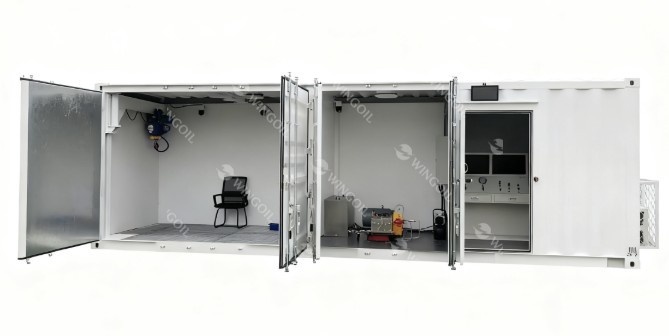
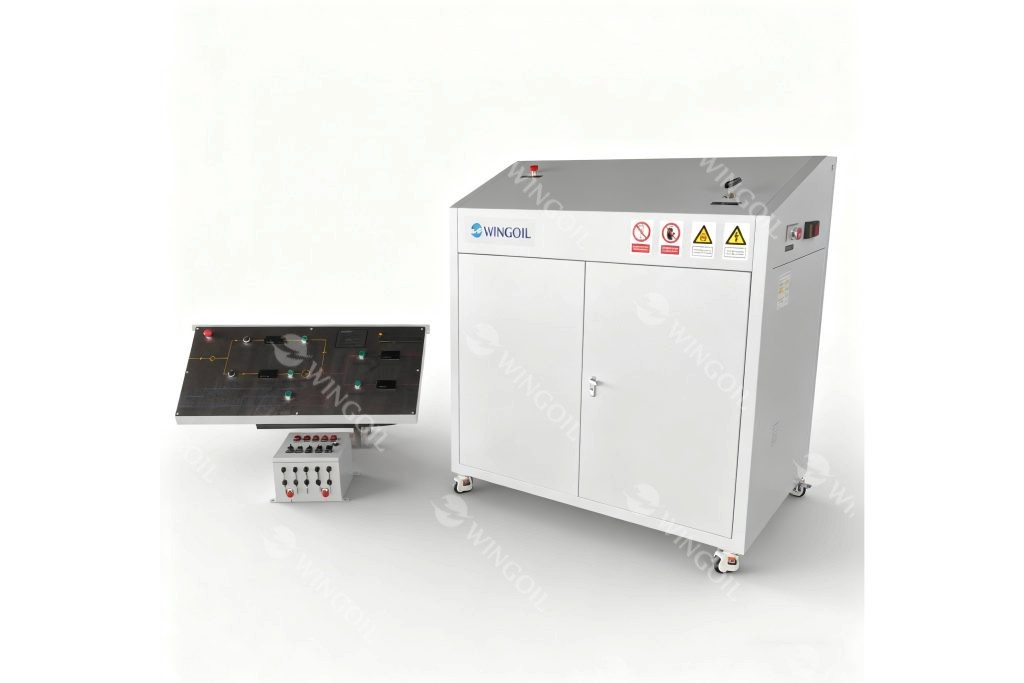
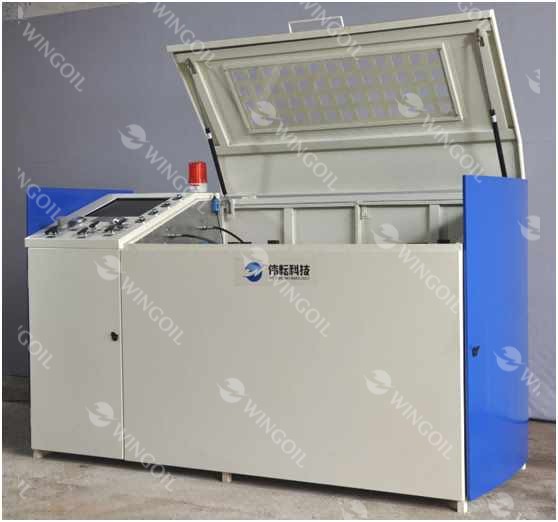
Wingoil 35MPa Hydraulic Pipeline Test Bench
For applications requiring clean-water hydrostatic testing of hydraulic pipelines and related components, Wingoil’s Hydraulic Pipeline Test Bench is a solution worth considering.
Designed specifically for clean-water hydrostatic testing, this equipment uses a hydraulic power unit to drive the pressure booster pump. It has a theoretical maximum operating pressure of 35MPa and is suitable for pipeline pressurization tests that fall within its specified pressure and dimensional ranges.
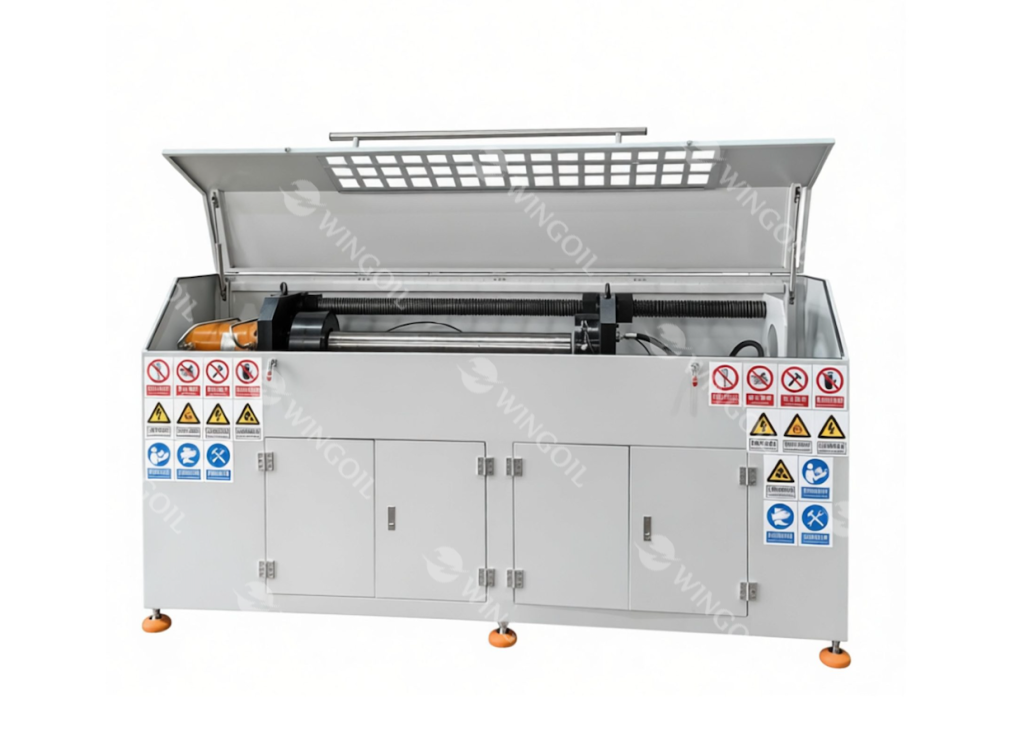
Key Features
35MPa Theoretical Maximum Operating Pressure
The equipment has a theoretical maximum operating pressure of 35MPa, making it suitable for pipeline hydrostatic testing applications with corresponding pressure requirements.
Hydraulic Pressure Boosting System
Powered by a hydraulic power unit, the pressure booster pump provides the pressure intensification required for pipeline hydrostatic testing.
Stainless Steel Components
The pumps, valves, and piping in the equipment are made of stainless steel, helping improve the corrosion resistance of components that come into contact with clean water.
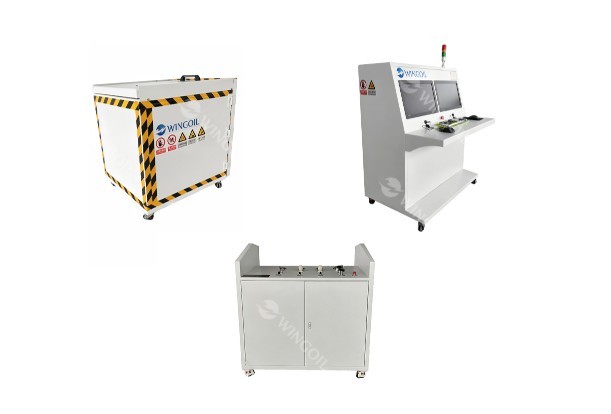
Remote Control Console
The equipment features a remote control console, allowing operators to control the system from a location away from the pressure boosting unit and reducing the need to approach the high-pressure testing area directly.
Transparent Safety Enclosure
The pressure boosting test area is equipped with transparent glass panels. Operators can observe the test samples even when the protective door is closed.
Data Acquisition and Control System
The equipment is equipped with a data acquisition and control system that monitors and controls testing parameters in real time, helping engineers collect data and analyze the performance of the hydraulic system during testing.
For pipeline manufacturers, hydraulic equipment producers, and industrial testing service providers looking for hydrostatic pressure pipe testing equipment, the Wingoil WY-350GJ1 is worth considering. Its configuration can be further discussed according to actual pipeline specifications and testing requirements.
FAQs About Hydrostatic Pressure Pipe Testing Equipment
Q1: What Is Hydrostatic Pressure Testing of Pipes?
Hydrostatic pressure testing is a testing method that uses water as the test medium to apply a specified pressure inside a pipeline. It is primarily used to check the sealing performance and pressure resistance of pipelines and their connecting components, helping verify whether they meet the relevant testing requirements.
Q2: What Liquid Is Used in Hydrostatic Pipe Testing?
Water is the most commonly used test medium in pipeline hydrostatic testing. Clean water is typically selected according to the pipeline material, project requirements, and applicable standards.
For certain specialized applications, factors such as water quality, temperature, and medium compatibility may also need to be considered.
Q3: What Pressure Is Required for Hydrostatic Pipe Testing?
The required hydrostatic test pressure is not fixed. It depends on the pipeline’s design pressure, material, dimensions, operating conditions, and applicable testing standards.
Therefore, before selecting testing equipment, buyers should determine the actual test pressure and ensure that the equipment can meet the relevant requirements.
Q4: How Do I Choose the Right Hydrostatic Pressure Testing Equipment?
When selecting hydrostatic pressure testing equipment, buyers should focus on maximum test pressure, pipeline dimensions, required flow rate, pump configuration, pressure control accuracy, data acquisition capabilities, and safety protection features.
It is also advisable to provide the equipment supplier with detailed information about the test objects and operating conditions to obtain a more suitable equipment configuration.
Conclusion
Hydrostatic pressure pipe testing equipment plays an important role in industrial pipeline manufacturing, hydraulic system production, and oil and gas equipment inspection. Through water filling, pressure boosting, pressure holding, and data monitoring, manufacturers can verify the pressure resistance and sealing performance of pipelines and related components under specified testing conditions.
Choosing suitable equipment requires comprehensive consideration of test pressure, pipeline specifications, pump configuration, data acquisition capabilities, and safety protection features.
Wingoil provides a Hydraulic Pipeline Test Bench featuring a hydraulic-driven pressure boosting system, remote control console, and transparent safety enclosure. It is designed for pipeline hydrostatic testing applications that meet its technical specifications.
Looking for reliable hydrostatic pressure pipe testing equipment? Contact Wingoil to discuss your pipeline testing requirements and request a customized solution.
Related Articles