Safety Relief Valve Test Bench: Guide to Testing Pressure Safety Valves
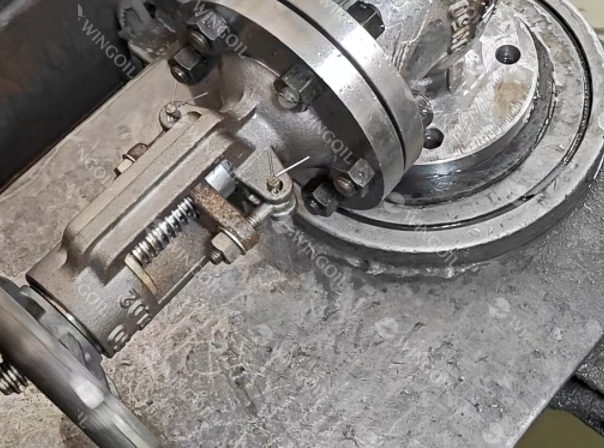
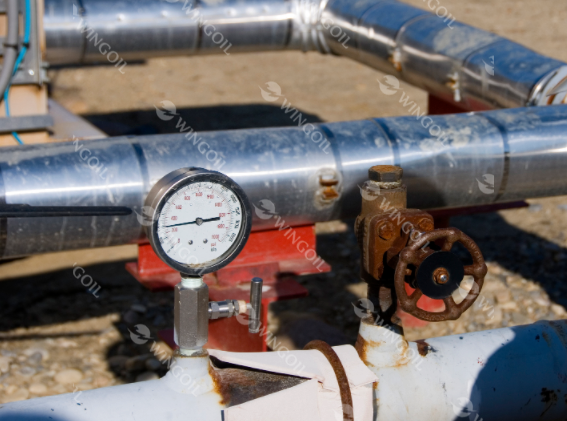
In the petroleum, petrochemical, power generation, natural gas, shipbuilding, and heavy industrial manufacturing sectors, safety relief valves (SRVs) are widely regarded as the “last line of defense” protecting personnel, equipment, and production systems from overpressure disasters. However, if this critical safeguard itself fails, the consequences can be catastrophic.
To ensure that safety relief valves can open precisely at the set pressure, reseat in a timely manner, and maintain tight sealing performance when required, regular high-precision calibration is essential. In this post, we will provide a comprehensive overview of the core functions of a safety relief valve test bench, the international standards it follows, its main types, and key selection guidelines for procurement. It aims to help your facility achieve more efficient and compliant safety management.
What is a Safety Relief Valve Test Bench?
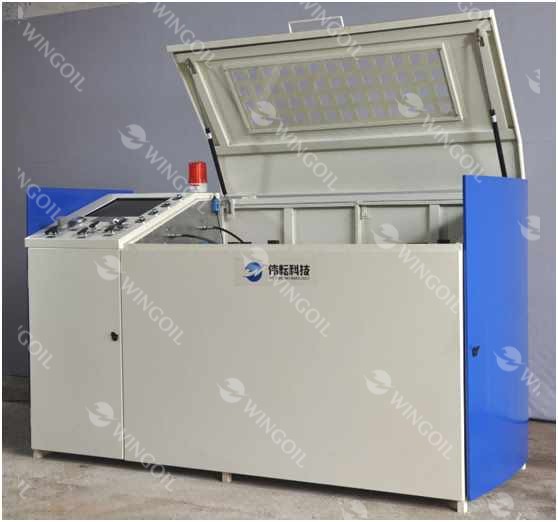
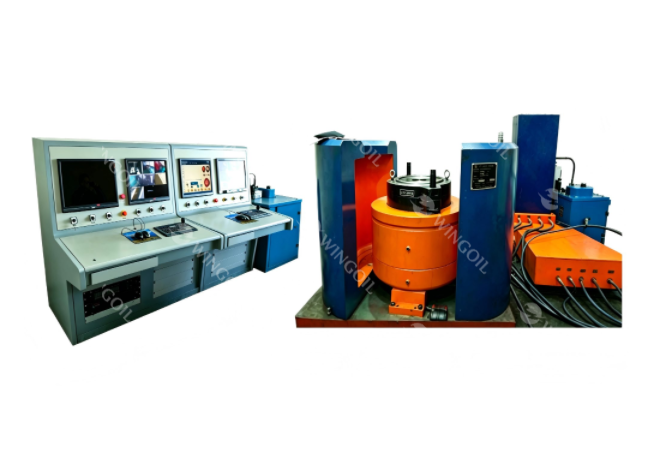
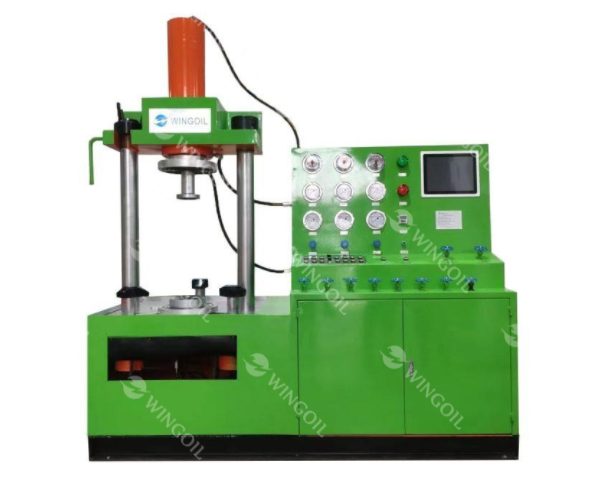
A safety relief valve test bench checks, calibrates, and makes sure safety relief valves work properly. It does this by mimicking real operating pressures. The bench tests stuff like set pressure, reseating pressure, sealing performance, and discharge capacity to ensure everything’s in check.
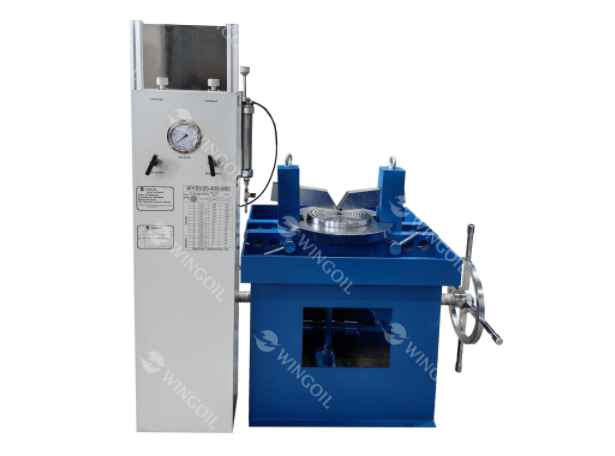
Its main components include:
• Pressure generation system
• Valve clamping device
• Pressure measurement system
• Control system
• Data recording system
When running the test bench, technicians can determine, quite accurately if a safety relief valve meets the design requirements and the industry standards. This is what makes sure it can function properly, during those emergency moments, when it really matters.
In practice, the test items usually include set pressure (Set Pressure) verification, reseating pressure (Reseating Pressure) verification, leak tightness (Leak Tightness) verification, discharge performance verification, pressure holding testing, and then calibration as well as certification testing.
With the ongoing advancement of industrial automation, modern safety relief valve test benches have, in recent years, started to adopt digital control plus automatic data acquisition. This has improved the testing efficiency and accuracy, in a noticeable way.
Why is Safety Relief Valve Testing So Important?
Ensuring personnel and equipment safety
Safety relief valves, SRVs are critical safety protection devices used in pressure vessels, pipeline systems, and industrial equipment, usually described as the “last line of defense” for pressure setups. Once the system pressure goes above the specified set point, the safety valve automatically opens to discharge pressure, this helps keep the equipment from leaking, bending, or even rupturing because of overpressure.
However, if SRVs become worn, stick in place, or show problems like incorrect set pressures, it can become dangerous very quickly. Routine testing and calibration, to confirm they respond when required, is essential for maintaining everyone’s safety throughout the production cycle.
Meeting regulatory and industry standards requirements
In industries such as petrochemical, power generation, natural gas, pharmaceuticals, and food processing, regular inspection and calibration of safety valves are often mandatory requirements. Relevant standards and regulations include:
• ASME (American Society of Mechanical Engineers)
• API (American Petroleum Institute)
• ISO international standards
• PED (Pressure Equipment Directive) certification requirements
Using a professional Safety Relief Valve Test Bench ensures accurate and reliable test results, helping companies comply with regulations and successfully pass quality audits and safety inspections.
Reducing maintenance and operating costs
Through regular testing, potential issues such as leakage, set pressure deviation, and sealing failure can be identified early, allowing maintenance or replacement before failures escalate. Compared to losses caused by equipment downtime, production interruption, or major accidents, preventive testing can significantly reduce maintenance costs and operational risks.
Improving production system reliability
A properly tested and calibrated safety valve can respond accurately to pressure changes at critical moments, ensuring long-term stable operation of production equipment. In continuous production environments, reliable safety valve performance not only reduces unplanned downtime but also improves overall production efficiency and equipment lifespan.
Working Principle of a Safety Relief Valve Test Bench
Safety relief valve testing is typically carried out according to the following steps:
Step 1: Valve installation
The safety relief valve to be tested is installed on the test interface, ensuring that the connection is secure and properly sealed to prevent leakage that could affect test results.
Step 2: Apply test pressure
The pressure boosting system is started to gradually increase the pressure. During the test, the system continuously monitors pressure changes to ensure a smooth and controllable pressure rise.
Step 3: Record set pressure
When the pressure reaches the set value, the safety valve begins to open and discharge the medium. The system automatically records the opening pressure to determine whether the valve meets the specified requirements.
Step 4: Measure reseating pressure
As the pressure gradually decreases, the pressure at which the safety valve closes again is recorded to evaluate its reseating performance.
Step 5: Leakage test
The valve sealing performance is tested under specified pressure conditions to confirm whether there are any leakage or sealing issues.
Step 6: Generate test report
After the test is completed, the system automatically generates a report, including opening pressure, reseating pressure, and leakage results, enabling easy documentation, traceability, and auditing.
Common Types of Safety Relief Valve Test Benches
In industrial pressure system safety testing, different types of Safety Relief Valve Test Benches are used depending on pressure range, application scenarios, and automation requirements. The common types are as follows:
| Type | Features | Application |
| Hydraulic Safety Relief Valve Test Bench | Uses hydraulic power as the driving source. It provides high and stable test pressure with high control accuracy, making it suitable for large-diameter and high-pressure valve testing | Petrochemical industry, power plants, pressure vessel manufacturing, and other high-pressure industrial applications |
| Pneumatic Safety Relief Valve Test Bench | Uses compressed air or inert gas. It is easy to operate, clean, environmentally friendly, and offers fast response, suitable for medium- and low-pressure testing | Medium- and low-pressure valve testing, laboratory testing environments |
| Portable Safety Relief Valve Test Bench | Compact structure and small size, easy to transport. It allows on-site testing without removing the valve | Offshore platforms, pipeline projects, on-site maintenance and servicing |
| Fully Automatic Safety Relief Valve Test Bench | High level of automation with automatic pressure control, data acquisition, and report generation, reducing human error | Batch testing, high-standard quality control, industrial testing centers |
What Industry Standards Are Involved in Safety Relief Valve Testing?
In industrial applications, non-compliant testing is meaningless. No matter if third-party groups like TÜV, or China Special Equipment Inspection Institutes, do it, or if in-house quality control teams handle it, tests for safety relief valves have to follow specific rules. This includes both the procedures themselves and how they’re carried out on test benches, following all required international and national standards:
API 527 (Seat Tightness of Pressure Relief Valves): This is the most widely recognized global standard for safety valve seat tightness testing. It defines strict numerical requirements for allowable bubble leakage rates, test duration, and test pressure during leakage testing.
ASME Section VIII (Boiler and Pressure Vessel Code): A code issued by the American Society of Mechanical Engineers governing pressure vessels. It specifies inspection intervals for safety valves and allowable deviations in set pressure.
ISO 4126: An international standard published by the International Organization for Standardization that provides general safety requirements for safety relief devices.
GB/T 12241 / GB/T 12243: Chinese national standards that define detailed requirements for safety valve design, manufacturing, performance testing before market release, and allowable set pressure deviation.
When purchasing a safety relief valve test bench, it is essential to ensure that the supplier’s equipment software or control system can automatically comply with the above standards (for example, automatically calculating the holding time required by API 527).
Which Industries Use a Safety Relief Valve Test Bench?
Safety relief valve test benches are common in industries with pressurized systems. These industries work under harsh conditions, high pressure, high temps, and sometimes complex setups. Because of this, they need super safe equipment. That’s why regular valve testing is crucial for keeping operations steady and meeting safety rules.
Oil and Gas Industry
For oil and natural gas pipelines and tanks, which often work at high pressures, safety relief valves are super important. They check that these valves can release pressure properly if needed. This prevents big problems like leaks or explosions. So, test benches for safety relief valves help keep everyone safe.
Chemical Industry
Chemical production often involves high-pressure reactors and corrosive media, placing very high demands on the reliability of safety valves. Testing verifies the performance of valves under extreme operating conditions, ensuring continuous and safe production processes.
Power Generation Industry
In boiler systems, steam pipelines, and power generation equipment, safety valves are essential protection devices against overpressure. Regular testing using a test bench helps ensure stable system operation and prevents equipment damage or shutdown caused by abnormal pressure.
Pharmaceutical Industry
Pharmaceutical manufacturing requires high levels of cleanliness and process stability, with strictly controlled pressure systems. Safety relief valve test benches are used to verify valve performance on related equipment, ensuring compliance with strict industry regulations and quality standards.
Shipbuilding and Offshore Engineering
Marine power systems and offshore platforms work in a tricky environment, so safety valves need to be extremely reliable. Testing makes sure that pressure can be released quickly when sea conditions change or when there are system abnormalities, keeping day to day operations safe.
Pressure Vessel Manufacturing Industry
Before pressure vessels leave the plant, safety relief valves have to be checked and calibrated in detail to meet the design requirements and the certification demands. A safety relief valve test bench, becomes one of the key tools in the quality inspection workflow.
How to Choose the Right Safety Relief Valve Test Bench?
When choosing a safety relief valve test bench, a company should look at their application scenarios, the relevant industry standards, and also the future development needs in a fairly complete manner. Different kinds of equipment vary by pressure band, functional arrangement, and the degree of automation. A careful selection process can improve the testing efficiency a lot, and it can lower long term operating expenses too.
Maximum test pressure
First, it is important to think about the maximum test pressure range that the equipment can provide, because that sets the whole limit. The pressure capacity of the test bench should cover the specifications of the safety valves that are currently in use, and at the same time leave enough margin so it can handle future higher pressure applications and avoid repeated investment.
Valve size range
Different companies may deal with safety valves of various sizes. Therefore, the test bench should have strong compatibility. When selecting equipment, it is necessary to confirm whether it supports multiple valve sizes and types to ensure flexibility and broad applicability.
Test media
The choice of test medium directly affects the equipment’s scope of application and safety. Common media include air, nitrogen, water, and hydraulic oil. Different media are suitable for different testing requirements—for example, gas media are more suitable for low-pressure and clean testing, while hydraulic media are used for high-pressure applications.
Level of automation
Highly automated test benches typically feature functions such as automatic pressurization, automatic opening pressure detection, and automated process control. These capabilities not only improve testing efficiency but also reduce human operation errors, making test results more stable and reliable.
Data management capability
Modern test equipment increasingly emphasizes data management functions, including data storage, historical record retrieval, test report export, and cloud-based data management. These features help companies achieve quality traceability, equipment management, and long-term data analysis.
Wingoil Safety Relief Valve Test Bench
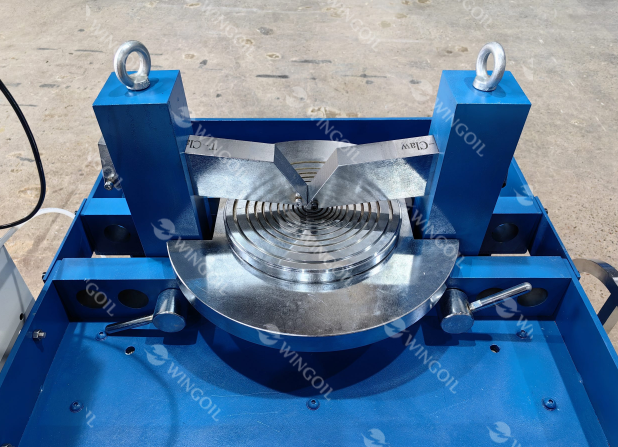
Wingoil Safety Relief Valve Test Bench is a manual testing device used for the testing and calibration of safety relief valves (SRV/PRV/PSV). It is widely applied in the petroleum, chemical, power generation, and pressure equipment manufacturing industries. The system uses nitrogen or compressed air as the test medium and adopts a manual clamping and step-by-step pressurization method to evaluate the valve’s set pressure, reseating performance, and sealing integrity, ensuring reliable operation under actual working conditions.
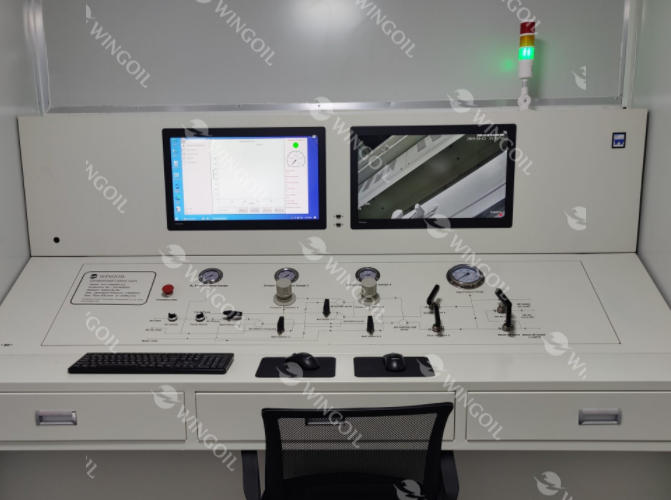
The equipment is equipped with a manual control console and a high-precision pressure monitoring system, enabling stable and controllable pressure adjustment. It is suitable for testing safety valves of various specifications.
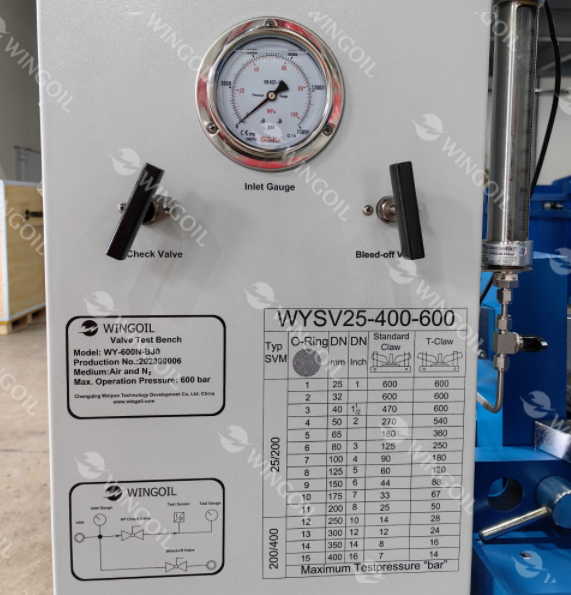
Why Choose the Wingoil Safety Relief Valve Test Bench
Wingoil Safety Relief Valve Test Bench features a simple structure, reliable operation, and strong applicability, making it suitable for both industrial field use and laboratory testing requirements.
Its main advantages include:
• Manual control design with intuitive operation and low maintenance cost
• Compatible with multiple valve sizes, offering a wide application range
• Capable of withstanding high-pressure testing environments (up to 140 MPa)
• Gas pressurization method that is safe, stable, and clean
• Compact structure, suitable for workshop and on-site use
• Clear and intuitive test results for easy recording and analysis
This equipment provides a cost-effective and practical solution for safety valve testing, making it suitable for users who require both testing stability and cost control.
Conclusion
Safety is never a trivial matter. Every precise calibration is a commitment to protecting lives. Investing in a high-quality safety relief valve test bench is essential for ensuring the long-term safe operation of industrial facilities.
Whether you are looking to upgrade existing testing equipment or establish a new standardized valve calibration center, Wingoil can provide strong technical support. With extensive expertise in industrial high-pressure control systems, we deliver customized calibration solutions that combine high precision and exceptional safety performance.
Welcome to contact Wingoil!
Related Articles