Downhole Safety Valve Testing Equipment: How It Ensures Oilfield Safety
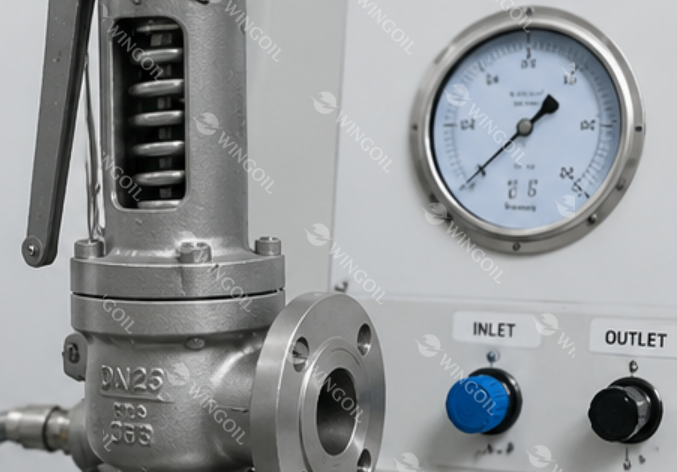
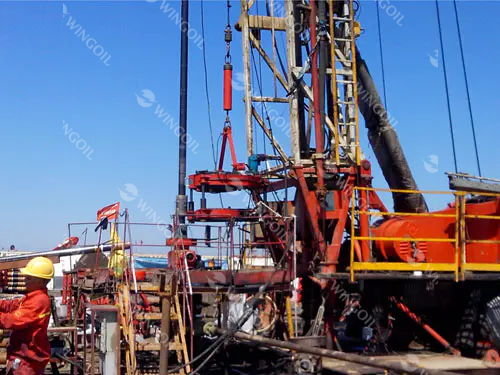
During oil and gas well production, the Downhole Safety Valve plays a critical role in maintaining wellbore safety. In the event of abnormal pressure or an emergency, the safety valve must close promptly to isolate the wellbore. Its sealing performance, opening and closing performance, and pressure response directly affect overall production safety.
However, long-term exposure to high pressure, high temperatures, and complex fluids can cause potential problems such as seal failure and valve sticking. These issues may be difficult to identify through routine inspections alone.
Therefore, professional downhole safety valve testing equipment is essential. By performing pressure, sealing, and opening/closing performance tests, potential problems can be identified before the valve is run downhole, providing reliable test data for safe and dependable operation.
Why Does a Downhole Safety Valve Need Professional Testing?
Downhole safety valves are installed inside the wellbore and operate in conditions that are significantly different from those of conventional surface valves. Because they remain exposed to complex downhole environments for extended periods, their performance may change over time due to operating conditions and service life.
Long-Term High-Pressure Exposure Can Affect Valve Performance
Downhole safety valves must withstand their rated operating pressure as well as pressure fluctuations during operation. Over time, repeated pressure cycles may affect the valve body, sealing components, and actuation mechanism.
If the performance of critical components changes, the valve’s sealing and opening/closing capabilities may also be affected.
Complex Fluids Can Cause Corrosion and Wear
Oil and gas wells may contain complex fluids, and some operating conditions may involve corrosive media or solid particles. These factors can contribute to seal wear, internal component corrosion, and sticking of moving parts.
For this reason, testing the key performance characteristics of a downhole safety valve before returning it to service is particularly important.
Visual Inspection Cannot Fully Determine Internal Performance
This is an often-overlooked aspect of downhole safety valve testing. A valve may appear to be in good condition externally while its internal performance has already deteriorated.
For example, there may be no visible damage to the valve body, while its sealing performance has changed. Similarly, the actuator may appear to operate normally, while its actual pressure response no longer meets the design requirements.
Professional performance testing therefore provides an important supplement to visual inspection.
What Performance Tests Are Performed on Downhole Safety Valves?
Downhole safety valve testing is not simply a matter of performing a single pressure test. Depending on the valve design, specifications, and applicable requirements, different performance characteristics may need to be verified.
Common downhole safety valve performance tests include the following.
1. Sealing Performance Testing
Sealing performance is one of the most important aspects of downhole safety valve testing.
During the test, pressure is applied to the safety valve under specified testing conditions. The pressure change and sealing condition are then monitored over a specified period to determine whether abnormal leakage is present.
Downhole safety valve sealing performance testing can help identify issues such as aging seals, component wear, or improper assembly.
2. Opening and Closing Performance Testing
A downhole safety valve must not only be able to close properly but also open and close according to its design requirements.
During testing, attention is paid to whether the valve operates smoothly and whether the actuator shows signs of sticking, delayed response, or abnormal movement.
Even when static sealing performance is acceptable, poor opening or closing performance may affect the valve’s reliability under actual operating conditions.
3. Pressure Response Testing
Pressure response is another important indicator of downhole safety valve performance.
By applying specified test pressures, the testing system can monitor the valve’s response under different pressure conditions and compare the test results with the specified design parameters.
This type of testing can help identify abnormal pressure response and parameter deviations before they become operational problems.
4. Pressure Resistance Testing
Depending on the specific valve and testing requirements, pressure resistance testing may also be performed.
By applying the specified test pressure under controlled conditions, the integrity of the valve body and other pressure-containing components can be evaluated.
5. Leakage Testing
For safety valves requiring sealing verification, appropriate test media and testing methods can be used to evaluate leakage.
The specific leakage testing method should be selected according to the safety valve type, applicable testing standards, and actual application requirements.
How Does Downhole Safety Valve Testing Equipment Work?
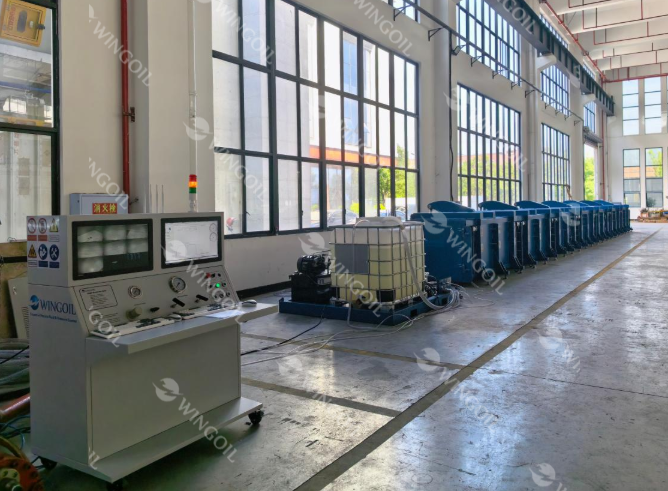
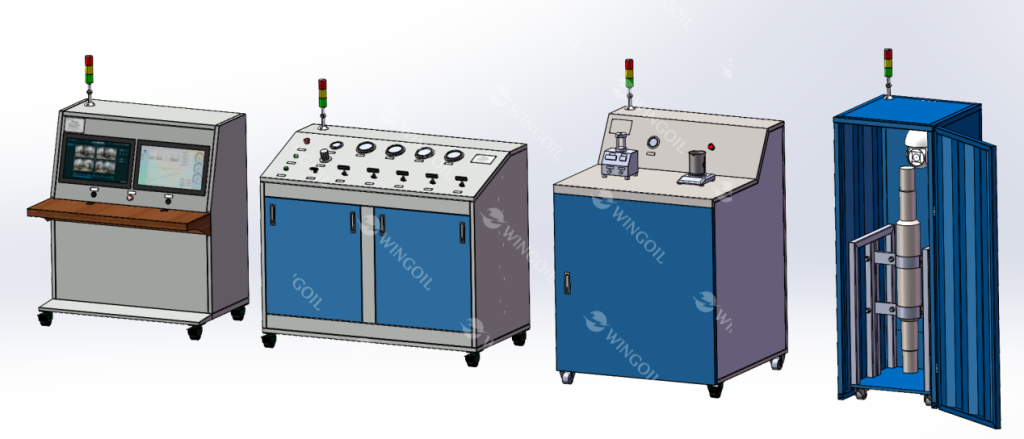
Professional downhole safety valve testing equipment typically integrates several functions, including pressure generation, pressure control, pressure stabilization, data acquisition, and test result evaluation.
A typical testing process can be summarized as:
Safety Valve Installation → Test Line Connection → Test Parameter Setup → Pressure Loading → Pressure Stabilization → Data Acquisition → Performance Evaluation → Test Report
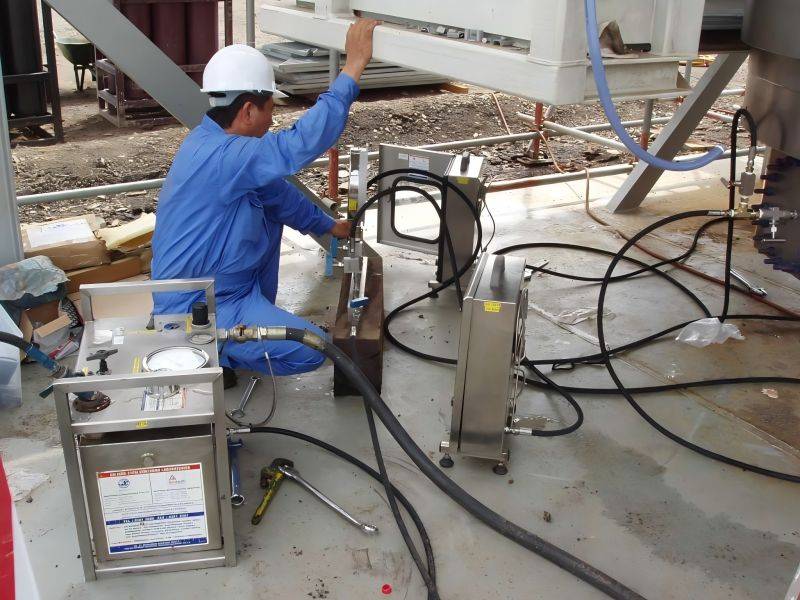
First, the downhole safety valve is properly installed on the testing equipment, and the test lines are connected according to the equipment configuration.
Next, the required test parameters are configured according to the specifications of the valve and the applicable testing requirements.
During the testing stage, the equipment applies pressure according to the preset procedure. Once the target pressure is reached, the system enters the pressure-holding stage and continuously monitors relevant parameters.
After testing is completed, the collected test data is analyzed to determine whether the safety valve meets the specified testing requirements.
Compared with simple manual testing, this type of standardized testing process is more suitable for repeatable testing operations and can also help reduce errors during manual operation and data recording.
Where Can Downhole Safety Valve Testing Equipment Be Used?
Professional downhole safety valve testing equipment is not limited to factory inspection. It can also support repair, maintenance, troubleshooting, and other stages throughout the safety valve lifecycle.
Factory Testing
Downhole safety valve manufacturers can perform pressure, sealing, and other performance tests before delivery to identify potential issues and verify that the product meets the applicable technical requirements.
Post-Repair Performance Testing
After a safety valve has been disassembled, repaired, or fitted with replacement sealing components, testing equipment can be used to verify its performance and sealing condition before it is returned to service.
Oil and Gas Field Maintenance
Oil and gas field operators and equipment management teams can conduct periodic performance tests on downhole safety valves.
Test data can help evaluate equipment condition and provide a reference for future maintenance or replacement decisions.
Troubleshooting
When a safety valve experiences abnormal opening or closing, reduced sealing performance, or an abnormal pressure response, professional testing equipment can be used for targeted testing and troubleshooting.
Testing Laboratories and Technical Service Companies
Oil and gas equipment testing laboratories, downhole tool manufacturers, and technical service companies can use professional testing equipment to perform standardized and repeatable safety valve performance tests, improving testing efficiency and data management.
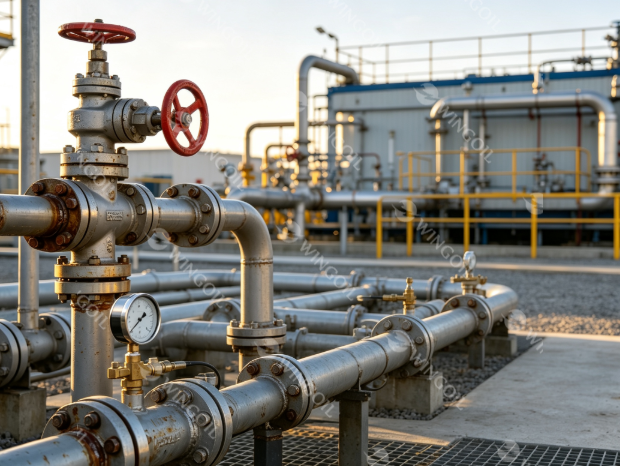
Wingoil Explosion-Proof Pressure Testbay Box: An Integrated Solution for Downhole Safety Valve Testing
To address the requirements associated with pressure control, sealing performance testing, opening and closing verification, and test data management, Wingoil has developed integrated testing solutions based on its experience in downhole equipment and pressure testing.
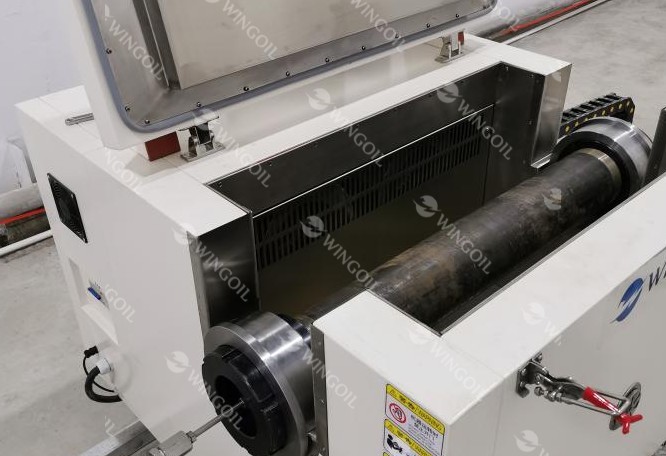
One example is the Explosion-Proof Pressure Testbay Box, which adopts a modular and integrated design to provide a solution that combines high-pressure testing capabilities with enhanced safety protection.
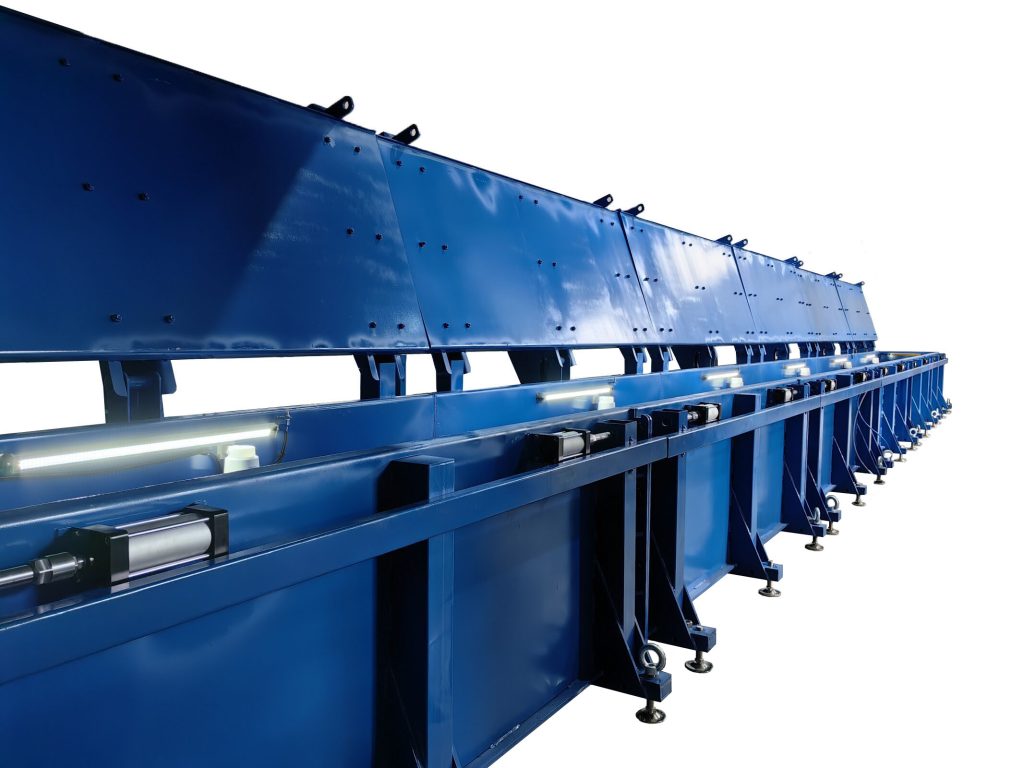
Key features include:
- Supports pressure boosting with clean water and glycol
- Suitable for testing downhole tools, valves, pressure vessels, gas cylinders, and other pressure-containing equipment
- High-strength pressure test enclosure
- 70 mm-thick comprehensive protective wall structure
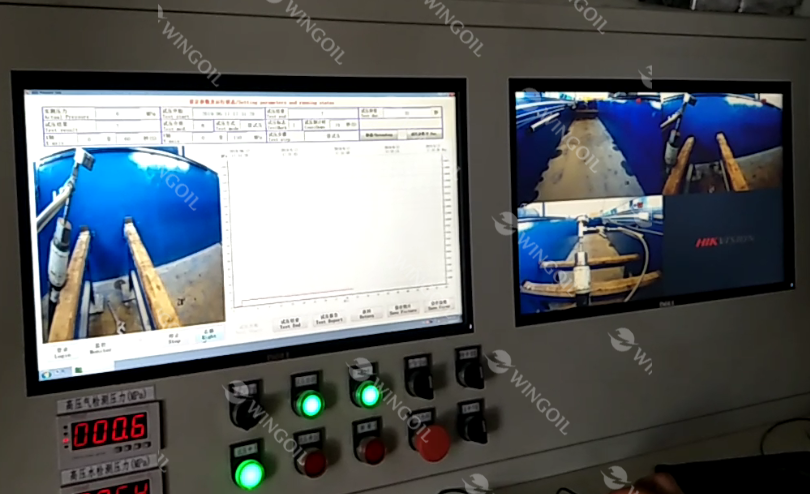
- PTZ remote video monitoring
- Safety interlock and self-locking protection
- Modular test bay design
- Skid-mounted or vehicle-mounted configurations
- Separate compressed air and pressure testing units
- Digital remote control
- Real-time test data display
- Test report generation
- Historical test data management and retrieval
More importantly, the equipment adopts a customized design approach. The system can be configured according to the dimensions of the test object, required test pressure, test medium, testing procedures, and on-site safety requirements.
For oil and gas fields, downhole tool manufacturers, valve manufacturers, and testing service providers that need to establish professional high-pressure testing areas, an explosion-proof pressure testbay box can provide an alternative to conventional pressure testing workshops and test pits.
Conclusion
Testing of downhole safety valves must consider not only the testing outcomes but also the safety involved in the whole process of high-pressure testing.
The Explosion Proof Pressure Testbay Box is a combination of strong safety protection, modular design, safety interlock, remote control, and digital testing system. The Explosion Proof Pressure Testbay Box can be utilized for high-pressure testing of downhole safety valves, downhole tools, valves, pressure vessels, and other pressurized equipment.
On the other hand, the equipment can be customized to the test article, pressure needs, test media, and testing procedures.
If you are looking for reliable downhole safety valve testing equipment, contact Wingoil to explore a customized testing solution designed to support safer, more efficient, and standardized equipment testing in the oil and gas industry.
Related Articles