How to Test a Dissolvable Frac Plug? Complete Testing Guide
A dissolvable frac plug is an important downhole tool used in oil and gas well completion and multi-stage hydraulic fracturing operations. Unlike conventional frac plugs, it can gradually degrade or dissolve under specific downhole conditions, reducing the need for subsequent drilling, milling, and retrieval operations.
However, before actual deployment, it is not enough to verify that the frac plug can simply “dissolve.” Its setting, sealing, pressure resistance, and dissolution performance also need to be tested. So, how to test a dissolvable frac plug? What key performance parameters should be evaluated, and what equipment is required?
As a professional downhole equipment testing manufacturer, we will provide an overview of the complete testing process and the dissolvable frac plug process evaluation test system.
What Should Be Tested on a Dissolvable Frac Plug?
When evaluating a dissolvable frac plug, the testing program should be determined based on the product structure, materials, and target downhole conditions. In general, the key areas include setting and release, pressure sealing, high-temperature and high-pressure performance, and dissolution behavior.
1. Setting and Release Performance
The first step is to verify whether the frac plug can be correctly set and released in a simulated casing environment.
The test can focus on Release Force, Release Stroke, Setting Time, and the final setting condition. Force and displacement data can be used to analyze the working condition of the frac plug and Setting Tool during the setting process.
2. Pressure Sealing Performance
After the frac plug has been set, its pressure sealing capability needs to be verified.
A specified pressure is applied while monitoring pressure changes to determine whether the frac plug can maintain stable sealing under the defined test conditions.
3. High-Temperature and High-Pressure Performance
For downhole applications involving high-temperature and high-pressure conditions, the frac plug should be tested for stability under the target temperature and pressure.
During the test, parameters such as pressure, temperature, pressure-time curve, and test duration can be recorded. The specific test parameters should be determined according to the product design and target well conditions.
4. Dissolution Behavior
Finally, the dissolution behavior of the frac plug should be evaluated under specified temperature and fluid conditions.
Key parameters may include dissolution time, changes in physical condition, and final dissolution result. Different materials and test conditions may produce different dissolution behaviors, so the evaluation should always be based on the specific operating conditions.
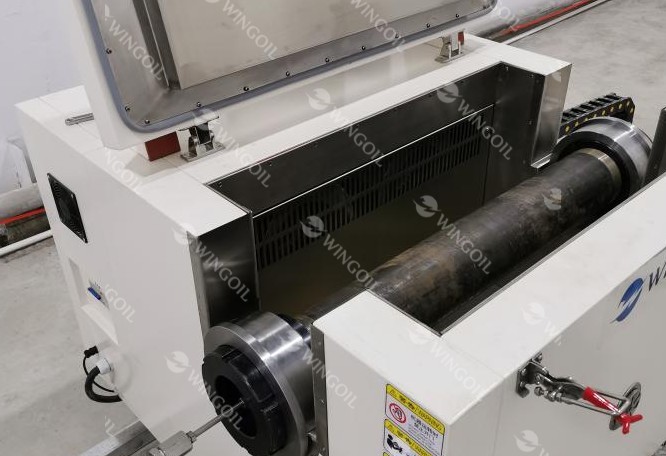
How to Perform a Dissolvable Frac Plug Setting Test?
A dissolvable frac plug setting test is designed to verify whether the frac plug can be correctly set and released and form an effective barrier under simulated downhole conditions.
1. Prepare the Test Environment
Determine the test casing, casing inner diameter, frac plug dimensions, setting tool, test pressure, and test temperature according to the frac plug design.
The test casing should be properly matched with the frac plug to simulate the actual application conditions as closely as possible.
2. Install the Frac Plug and Setting Tool
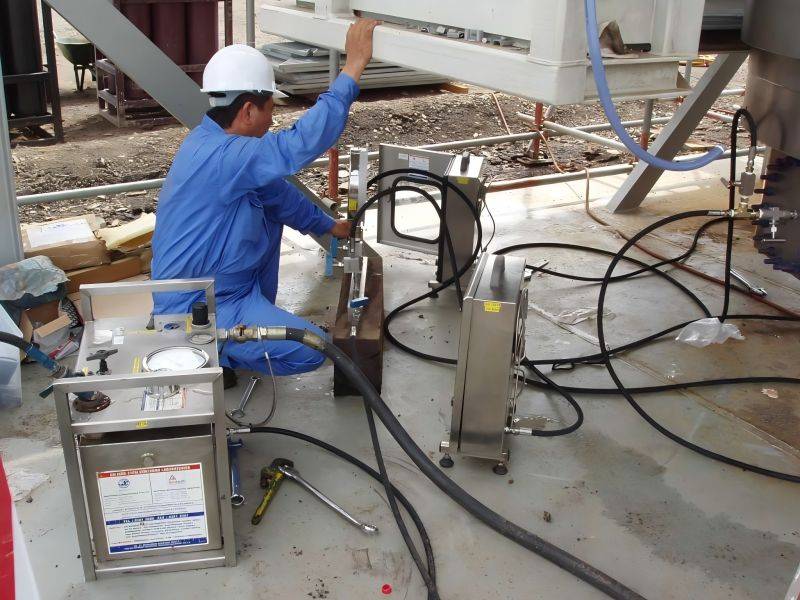
Connect the frac plug to the compatible setting tool and install the assembly inside the test casing.
After confirming that all components are correctly installed, perform the setting test according to the specified procedure.
3. Record Release Force and Release Stroke
During the test, record Release Force, Release Stroke, time, and displacement changes to analyze the operation of the Setting Tool and the setting process of the frac plug.
If the test system supports multi-parameter data acquisition, corresponding test curves can also be generated to provide additional data for product performance evaluation.
How to Perform a Dissolvable Frac Plug Pressure Sealing Test?
After setting, the next step is to verify the pressure sealing performance of the dissolvable frac plug under specified conditions.
1. Establish the Test Pressure
First, determine the test pressure based on the plug design, casing condition, expected differential pressure, and target well conditions.
The test pressure should be established according to the specific product and testing requirements rather than using a fixed pressure value for all applications.
2. Apply Pressure Gradually
Once the target pressure has been determined, increase the pressure gradually while continuously monitoring the pressure response and the condition of the frac plug.
Particular attention should be paid to pressure response, pressure stability, and any signs of leakage or abnormal pressure changes.
3. Hold the Pressure
After reaching the target pressure, hold the pressure for the specified period and use the time-pressure curve to monitor pressure stability.
If a significant pressure drop occurs, further analysis is required to determine whether it is related to sealing failure, leakage, plug movement, or the condition of the test system.
Therefore, a pressure sealing test should not only verify whether the frac plug can reach the target pressure, but also use complete pressure data to evaluate its sealing stability.
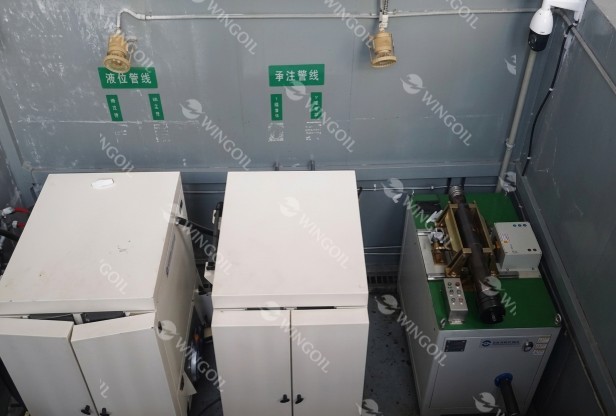
How to Perform a High-Temperature and High-Pressure Test?
For a dissolvable frac plug, high-temperature and high-pressure testing is used to evaluate its performance under simulated downhole temperature and pressure conditions.
The combined effects of Temperature, Pressure, and Fluid Environment should also be considered during the test.
1. Establish the Target Temperature
First, raise the test environment to the target temperature and continuously monitor temperature changes to ensure that the required temperature is reached and maintained within the specified range.
2. Apply the Test Pressure
After reaching the target temperature, gradually apply pressure according to the testing requirements while recording Temperature, Pressure, and Time.
The corresponding Time-Temperature Curve and Time-Pressure Curve can then be generated to analyze the test process.
3. Maintain the Test Conditions
Maintain the target temperature and pressure for the specified period and continuously record the test data to evaluate the sealing condition and stability of the frac plug under high-temperature and high-pressure conditions.
The specific test temperature, pressure, and holding time should be determined according to the product design and actual application conditions. A single test case should not be treated as a universal standard for all Dissolvable Frac Plugs.
How to Test the Dissolution Behavior of a Dissolvable Frac Plug?
One of the key characteristics of a dissolvable frac plug is that its material can dissolve or degrade under specific downhole conditions.
Therefore, after mechanical and sealing performance tests, its dissolution behavior under the target environment should also be evaluated.
1. Establish the Test Environment
First, determine the temperature, test fluid, test duration, and sample information according to the target well conditions and testing requirements.
The initial condition of the sample should also be recorded to provide a baseline for subsequent evaluation.
2. Conduct High-Temperature Dissolution Testing
Place the frac plug or relevant test sample in the specified temperature and fluid environment and observe changes in its condition throughout the test.
Key aspects include Dissolution Behavior, Dissolution Progress, Material Degradation, and the remaining structure, rather than simply determining whether the sample has dissolved.
3. Evaluate the Test Results
After the test, analyze the dissolution results based on temperature, fluid, test duration, and material condition.
Since different frac plugs may use different materials and structural designs, their dissolution behavior can also vary. Therefore, test results should always be compared in the context of the specific test conditions rather than by dissolution time alone.
What Data Should Be Recorded During Dissolvable Frac Plug Testing?
A complete dissolvable frac plug testing program should retain continuous and traceable data for subsequent analysis of the test process and product performance.
Depending on the test procedure, the following data can be recorded.
Release Force: Record changes in Release Force during the setting and release process to analyze the interaction and loading condition between the frac plug and the Setting Tool.
Release Stroke: Record the Release Stroke during the release process and analyze it together with Release Force data to evaluate the setting and release behavior of the frac plug.
Time-Temperature Curve: Record temperature changes over time, particularly during high-temperature testing, to confirm whether the test environment reaches and maintains the target temperature.
Time-Pressure Curve: Record pressure changes over time to analyze pressure application, pressure holding, and pressure stability throughout the test.
Visual Test Data: In addition to sensor data, videos or images can be used to record the test process and assist in observing obvious structural changes, movement, or other abnormal conditions of the frac plug.
What Equipment Is Needed to Test a Dissolvable Frac Plug?
A complete dissolvable frac plug testing program requires an integrated testing system capable of supporting setting, pressure sealing, high-temperature and high-pressure testing, and dissolution testing.
The system should also be able to record key parameters such as pressure, temperature, force, and displacement.
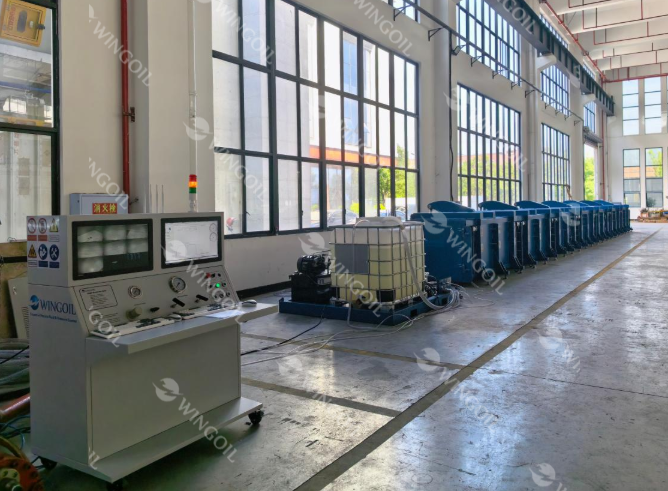
Wingoil Dissolvable Frac Plug Process Evaluation Test System
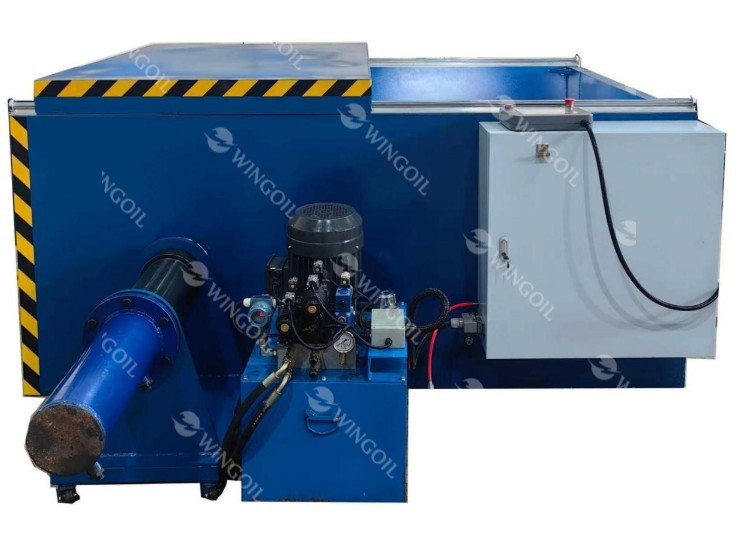
To meet these testing requirements, Wingoil provides the Dissolvable Frac Plug Process Evaluation Test System, which is designed to evaluate the performance, reliability, and dissolution behavior of dissolvable frac plugs and Setting Tools in a controlled laboratory environment.
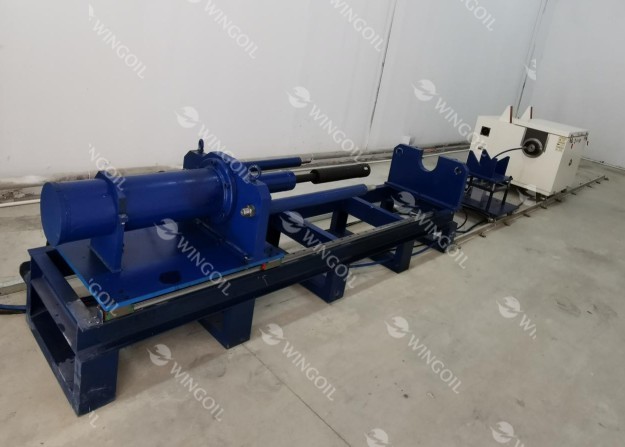
Key Features
Integrated Testing
Supports Setting, High-Pressure Sealing, High-Temperature and High-Pressure Sealing, and High-Temperature Dissolution testing.
Real-Time Data Acquisition
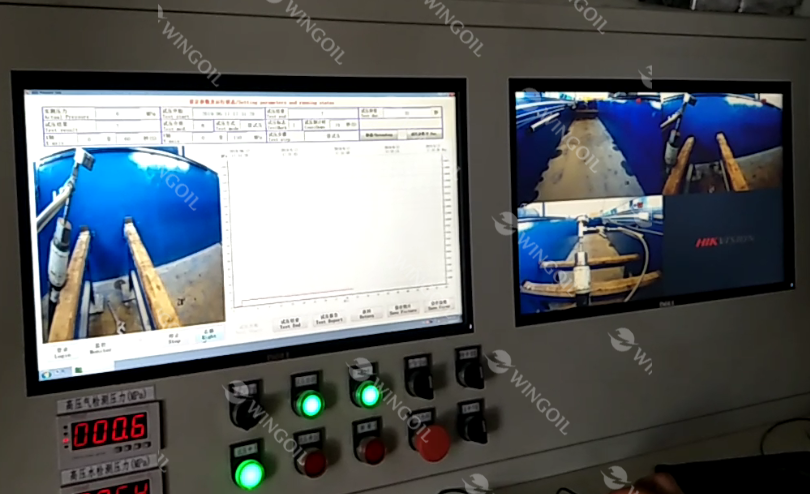
Real-time recording of key test data, including Release Force, Release Stroke, Time-Temperature Curve, and Time-Pressure Curve.
Visual Monitoring
Equipped with fixed and mobile pan-tilt cameras for real-time, multi-angle monitoring of the test components.
High-Temperature and High-Pressure Protection
Uses high-strength steel plates and thermal insulation materials to provide appropriate safety protection for high-temperature and high-pressure testing.
How to Evaluate a Dissolvable Frac Plug Test Result?
After testing, the performance of a dissolvable frac plug should not be evaluated based on a single data point. Instead, different test stages, test conditions, and process data should be considered together.
Setting
First, confirm whether the frac plug has been set and released according to the design requirements.
Release Force and Release Stroke data can be analyzed to evaluate the stability of the setting process.
High-Pressure Sealing
Determine whether the frac plug can maintain effective sealing under the specified pressure conditions.
The Time-Pressure Curve can be used to analyze pressure changes and stability during the pressure-holding stage.
High-Temperature and High-Pressure
Evaluate whether the frac plug remains stable under the specified high-temperature and high-pressure conditions.
Temperature, pressure, and test duration should be considered together when evaluating its performance under the target operating conditions.
Dissolution
Observe the dissolution or degradation process of the frac plug material under the specified temperature and fluid environment.
The key consideration is whether the dissolution behavior meets the expected requirements.
Test Data
Finally, verify that the test data is complete, continuous, and traceable, including pressure, temperature, release force, release displacement, test curves, and video records.
Therefore, a complete test evaluation should consider Test Conditions + Test Process + Real-Time Data + Curves + Visual Records + Final Evaluation, rather than focusing on a single test result.
Why Is Laboratory Testing Important Before Downhole Deployment?
A dissolvable frac plug must ultimately operate under complex downhole temperature, pressure, and fluid conditions.
Therefore, laboratory testing before deployment can help verify product performance and reliability in advance and identify potential issues before field application.
Systematic testing can evaluate key characteristics including Setting Performance, Release Behavior, Pressure Sealing, High-Temperature Performance, and High-Temperature Dissolution Behavior.
The test results can provide data support for product design verification, performance optimization, and quality control, while also providing useful references for subsequent field applications.
For the development of new dissolvable frac plugs, establishing a standardized and repeatable laboratory testing procedure is particularly important. It helps generate comparable test data across different products and test conditions.
Conclusion
The performance testing of a Dissolvable Frac Plug should cover Setting, High-Pressure Sealing, High-Temperature & High-Pressure Sealing, and High-Temperature Dissolution, while recording key parameters such as Release Force, Release Stroke, Temperature, and Pressure.
Wingoil’s Dissolvable Frac Plug Process Evaluation Test System can support the above testing procedures and provide real-time data acquisition, visual monitoring, and high-temperature and high-pressure safety protection.
The system can be customized according to the frac plug dimensions, test temperature, pressure, and specific application requirements.
If you need to test or validate the performance of a dissolvable frac plug, contact Wingoil for a customized testing solution.
Related Articles