How Much Pressure Do You Need for a Hydrostatic Test?
When selecting a hydrostatic test pump or hydrostatic testing equipment, pressure is usually one of the first specifications to consider. However, choosing the right pressure is not as simple as matching the pump’s maximum pressure to the equipment’s normal working pressure.
The required hydrostatic test pressure depends on the equipment being tested, applicable standards or specifications, and the specific test requirements. Once the required pressure is established, the pump must also be evaluated based on factors such as test volume, flow rate, pressure stability, and operating conditions.
How Do You Determine the Required Hydrostatic Test Pressure?
The first step is to identify the pressure specified for the hydrostatic test. This should come from the applicable testing procedure, equipment specification, project requirement, or relevant standard rather than being selected simply according to the pump available.
It is also important to distinguish between working pressure and test pressure. Working pressure refers to the pressure at which equipment is intended to operate during normal service. Hydrostatic test pressure is the pressure applied during a specific test to verify the integrity of the equipment or system. These values may be different.
For example, a pipeline, pressure vessel, or valve may have a specified working pressure, but its required hydrostatic test pressure should be determined according to the applicable requirements for that particular application. Different standards can specify different test conditions, so there is no single test-pressure multiplier that can be applied to every hydrostatic test.
Before selecting a hydrostatic test pump, confirm:
- The required test pressure
- The equipment’s working or design pressure
- The applicable testing standard or specification
- The required test duration and procedure
- The type of equipment being tested
This establishes the pressure target that the testing equipment needs to meet.
For a more detailed explanation of the calculation process and the factors that affect test pressure, see our guide on How to Calculate Hydrostatic Test Pressure.
How Do You Choose a Hydrostatic Test Pump Based on Test Pressure?
Once the required test pressure is known, the next step is selecting a hydrostatic test pump that can reliably achieve it.
A common mistake is to select a pump simply by matching its maximum pressure to the required test pressure. In practice, the complete test setup also needs to be considered. Hoses, valves, fittings, pressure gauges, and other pressure-containing components must be suitable for the intended test conditions.
For example, if a test requires 3,000 psi, the decision should not be based only on finding a pump labeled “3,000 psi.” The actual operating capability of the pump, pressure stability, system configuration, and ratings of the connected components should also be checked.
At the same time, choosing the highest-pressure pump available is not automatically better. Excessively high pressure capability does not compensate for an unsuitable system configuration and may introduce unnecessary equipment cost or compatibility considerations.
Flow rate is another important factor. Pressure determines the pressure level the pump needs to achieve, while flow rate affects how quickly the test system can be filled and brought up to pressure. A small valve and a large pipeline could require the same test pressure but have very different test volumes and pumping requirements.
Therefore, hydrostatic test pump selection should consider pressure, flow rate, and test volume together rather than treating pressure as the only specification.
What Else Should You Consider When Selecting Hydrostatic Testing Equipment?
Pressure and flow rate are only part of the equipment selection process. The testing environment and the way the equipment will be used can also affect the appropriate configuration.
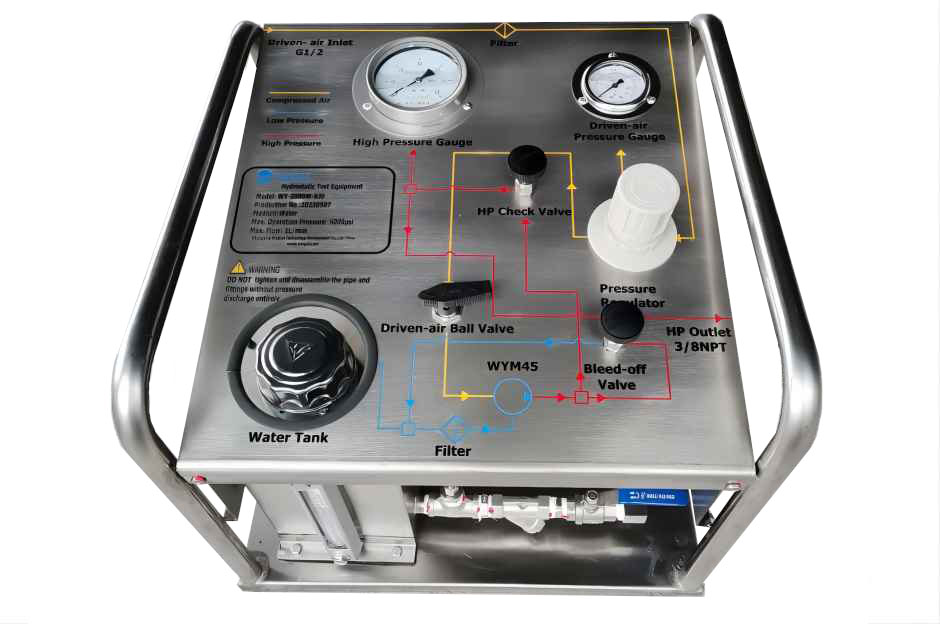
Testing medium is one consideration. Hydrostatic testing uses a liquid test medium, and the specific requirements should be confirmed for the application. Wingoil’s portable hydrostatic test system, for example, is designed primarily for pressure testing with clean water.
Power source can also matter, particularly for field testing. Depending on the application, equipment may be powered electrically or by another suitable source. A system that uses compressed air can be useful where electrical power is unavailable or where the user prefers an air-driven setup.
Portability becomes important when the test equipment needs to be transported between locations. A compact system can reduce the effort required to move and set up the equipment at a pipeline, valve, pressure vessel, or maintenance site.
The complete test setup should also be considered. Pressure gauges, valves, hoses, fittings, and other components need to be compatible with the intended testing conditions. The objective is not simply to find a pump with the required pressure rating, but to configure hydrostatic testing equipment that can perform the test reliably and appropriately.
Wingoil Hydrostatic Test System for Field Testing
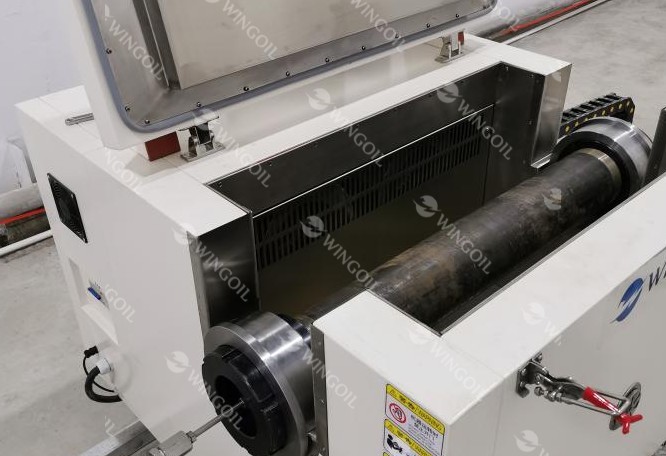
When hydrostatic testing needs to be performed in the field, portability and power source become important factors in equipment selection. Wingoil’s WY-300W-BJ0 Portable Hydrostatic Test System is designed for clean-water pressure testing of pressure vessels, pipelines, and valves. It is driven by low-pressure compressed air and can deliver a theoretical maximum output pressure of 5,000 psi (345 bar), with a maximum flow rate of 1 L/min at 100 psi inlet pressure.
For applications where testing equipment needs to be transported between locations, a portable system can provide a practical alternative to a fixed test setup.
Related Articles