How to Choose Kelly Valve Testing Equipment for Oilfield Applications?
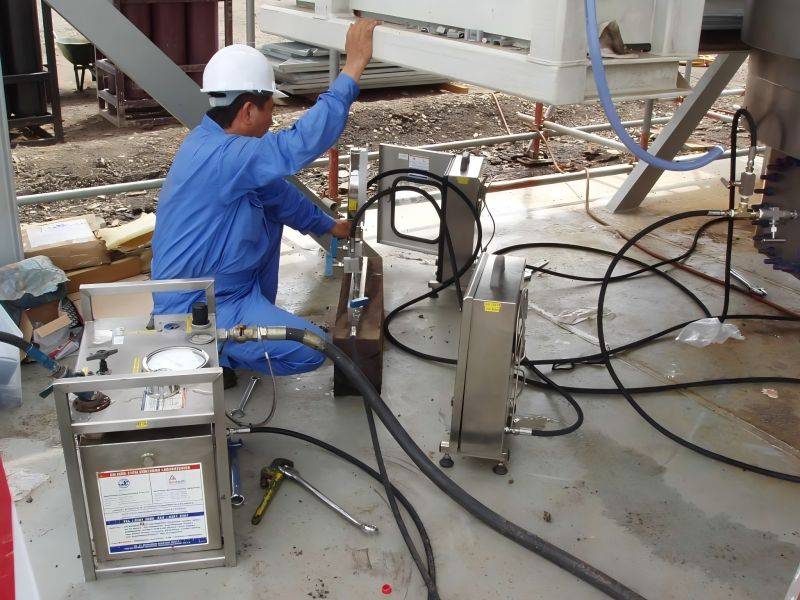
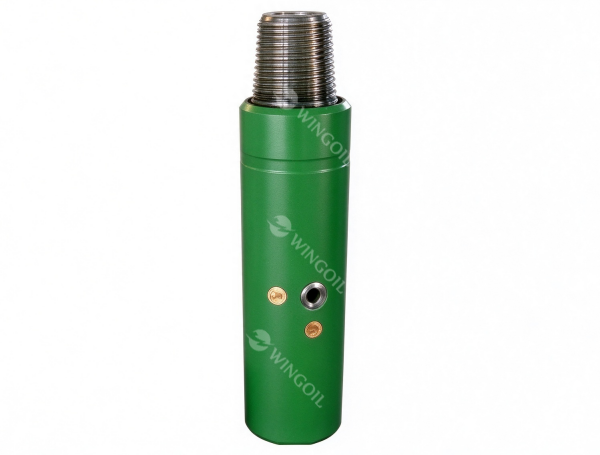
In oil and gas drilling operations, a Kelly Valve is an important valve component used to control fluid flow within the drilling system. Given the high pressures, fluid media, and complex operating conditions involved in oilfield operations, the pressure integrity, sealing performance, and operational reliability of the valve must be properly verified.
For oilfield equipment manufacturers, drilling contractors, equipment maintenance service providers, and quality inspection organizations, selecting the right Kelly Valve Testing Equipment helps verify valve performance in accordance with specified testing procedures, identify potential issues, and provide a basis for factory inspection, post-maintenance verification, and quality management.
So, how do you choose the right testing equipment for a Kelly Valve? This article outlines the key factors to consider during equipment selection and introduces a high-temperature and high-pressure test rig designed for relevant downhole tool testing applications.
Why Should Kelly Valves Be Tested Before Oilfield Operations?
The Kelly Valves are widely used in drilling rigs and should have the necessary fluid control and seal characteristics according to given working parameters. In case the valve has problems with seals, has some defects in the assembly process, or has some other flaws that affect the integrity of the valve, it might lead to the leak of fluids, additional servicing, or even disruption of operations on the field.
Thus, the testing of the valve is important both prior to its use in operation, after servicing, and during the quality control program.
1. Verify Pressure Integrity and Sealing Performance
Pressurized integrity and sealing properties are major factors to be considered in testing Kelly Valves. Based on the specific type of valve and the relevant testing methods, pressure tests may be conducted to examine the pressurized integrity of the valve body and other components that are pressurized, while sealing tests will help detect any leakage at the required sealing points.
The test pressure, medium, holding time, and acceptance criteria will have to be decided upon following the guidelines from the valve manufacturer and relevant standards. All valves cannot be tested under the same parameters.
2. Identify Potential Defects Before Deployment
The state of sealing devices, assembly of the device, and other important components may influence the performance of the valve. Testing may assist in detecting any possible issues prior to using the equipment in the field and arrange additional examination and, where needed, repairs or replacement.
From the viewpoint of valve manufacturers and maintenance services, this will also help in conducting the quality examination.
3. Support Operational Reliability
Equipment maintenance in oil fields is generally associated with significant time, effort, and planning. In case there is some problem with the valve when being used, all relevant operations have to be stopped until the reason is found out.
Proper testing of valves at certain intervals will assist equipment maintenance managers to determine how well the valves perform and whether they can be considered appropriate for operation at all. Nevertheless, the test results have to be compared with other documentation.
4. Support Quality Control and Maintenance
Kelly Valve testing can be performed for various purposes, including factory inspection, post-maintenance verification, and scheduled inspections. For equipment manufacturers, third-party inspection organizations, and oilfield maintenance service providers, standardized testing procedures and traceable records support quality control and ongoing maintenance management.
Defining the testing objectives is also important because different objectives may require different test media, pressure conditions, fixtures, and acceptance criteria.
Understand Your Kelly Valve Testing Requirements
Before choosing Kelly Valve Testing Equipment, it is important to consider the technical requirements of the valve and the goals of the test process. However, the maximum pressure or maximum temperature of the equipment cannot alone help make a selection. Other factors include valve size, connections, fixture design, and more.
Purchasing teams should pay particular attention to the following factors:
- Valve type and model: Identify the Kelly Valve model, design type, and manufacturer’s requirements.
- Valve dimensions: Confirm the overall dimensions, bore size, and installation space required.
- Connection requirements: Ensure that the connection type, connection dimensions, and fixture requirements are understood.
- Testing objectives: Identify if pressure testing, sealing tests, or any other performance testing procedure is needed.
- Operating and test conditions: Recognize the difference between the valve’s rated operating conditions and testing conditions.
- Applicable procedures: Make sure that the manufacturer’s requirements, standards, and acceptance requirements of the customer are understood.
Check the Required Test Pressure and Temperature
Test pressure and temperature are among the most important parameters to verify when selecting oilfield valve testing equipment.
Test Pressure
The design pressures for the different Kelly Valves are unique from one valve to another. The same applies to the goals of the testing process and the criteria for the successful completion of the test. As such, the test pressure required is dependent on the specifications of the particular valve being tested.
When selecting equipment, verify the following:
- Whether the rated test pressure meets the actual testing requirements.
- Whether the pressure control and monitoring capabilities comply with the applicable testing procedure.
- Whether the test circuit, connectors, fixtures, and sealing components are suitable for the required pressure.
- Whether appropriate overpressure protection is available to meet risk control requirements.
The maximum pressure rating of the testing equipment does not mean that every valve can be safely tested at that pressure. The final test conditions must be determined by the valve’s technical requirements and the approved testing procedure.
Test Temperature
In case of conducting tests on the Kelly Valve at specific temperatures, further analysis should be conducted for the evaluation of the temperature range, heating ability, temperature control, and temperature uniformity of the equipment used.
Moreover, the test medium, sealants, connections, and fixtures should all be compatible with the required temperature range. In case of high-temperature testing not being required in an application, there is no need to complicate the test by increasing the specifications of the equipment.
For tests involving both high pressure and high temperature, particular attention should be paid to whether the overall equipment configuration can meet the requirements, rather than evaluating each parameter in isolation.
Evaluate Fixtures and Connection Compatibility
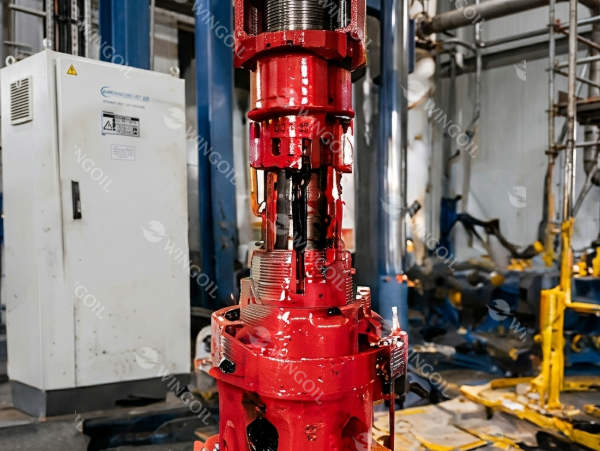
Fixtures play a vital role in determining the effective use of Kelly Valve Testing Equipment.
Even though the equipment satisfies the pressure and temperature requirements, the presence of incompatible fixtures could hamper efficiency during installation, testing, and results accuracy.
Make sure to verify the following before buying the equipment:
Fixture compatibility: Can the fixtures accommodate the dimensions and installation requirements of the target Kelly Valve?
Connection design: Are the test connections compatible with the valve’s connection type?
Sealing arrangement: Is the fixture sealing design suitable for the specified test medium and pressure conditions?
Installation and removal: Can the valve be installed, removed, and replaced efficiently?
Future requirements: If multiple valve models need to be tested, can different products be accommodated by changing the fixtures?
For manufacturers and maintenance organizations handling multiple valve models and sizes, modular fixtures or interchangeable clamping systems may improve equipment utilization. However, the specific design must be determined according to the actual valve specifications and testing procedures.
Consider Test Media and Testing Procedures
The test medium and testing procedure also influence equipment configuration. The types of tests that need to be done will determine the type of media, and the equipment to be used will have to satisfy the relevant requirements in relation to the compatibility of the media, seals, and operating conditions.
For instance, before determining whether liquid or gas will be the test medium, it is necessary to determine the relevant test procedure, valve manufacturer’s specifications, and safety regulations related to the test facility or laboratory. The ability of the equipment to accommodate a certain medium does not necessarily imply suitability for all Kelly Valve tests.
Before acquiring any equipment, it is necessary to ascertain the following:
- The type of test medium and its compatibility with equipment materials.
- The medium supply, circulation, discharge, or recovery method.
- The testing sequence, pressure variation requirements, and pressure holding time.
- The monitoring methods for pressure, temperature, and other required parameters.
- The format for recording, storing, and reporting test results.
For companies conducting routine quality inspections, clearly defined and repeatable testing procedures help improve the consistency of test records and support subsequent quality traceability.
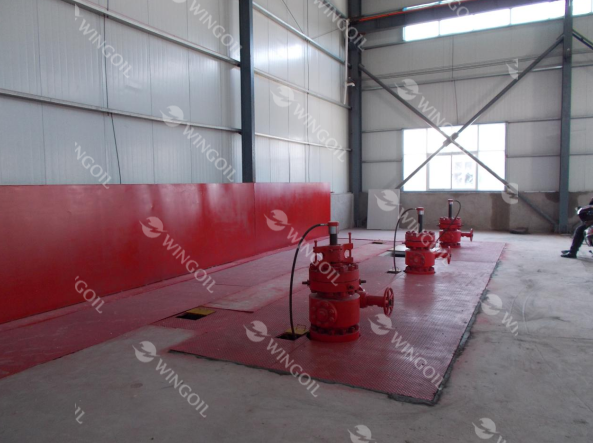
Evaluate Safety Protection and Automated Control
Oilfield valve testing may involve high-pressure media, stored energy, and potential leakage risks. Therefore, safety features and control capabilities should also be included in the equipment selection process.
Safety Protection
It is essential that the company evaluates the protective features of the equipment in view of the risks associated with the testing application process. This can be done through the evaluation of the protective features such as protective barriers, overpressure protection, emergency stops, and protection against risks during testing.
The equipment design must match the pressure, medium, temperature, and conditions under which testing will be conducted. In cases where the test pressure is high, the company must consider all the safety distances, processes, and pressure releases.
Automated Control and Data Acquisition
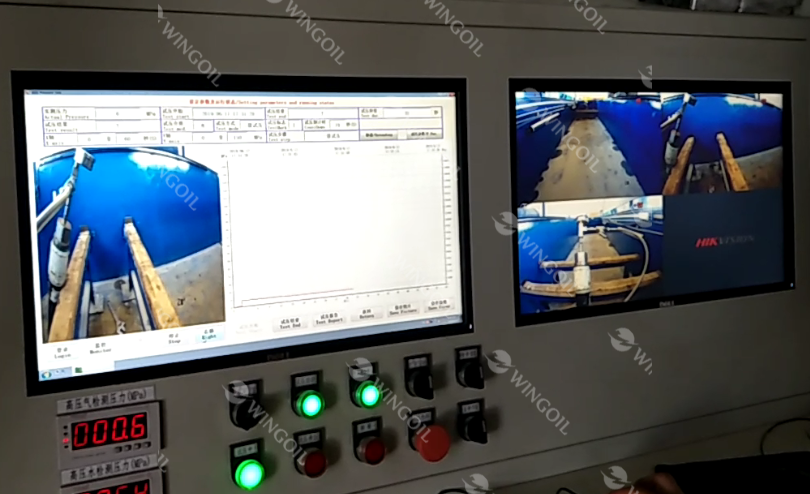
Automated control can help operators execute tests according to predefined procedures and reduce some manual recording tasks. Depending on the equipment configuration, available functions may include:
- Real-time acquisition of pressure, temperature, and other specified parameters.
- Automatic control of the testing process according to preset procedures.
- Display of test curves and key data.
- Automatic generation or export of test reports.
- Storage of test records for subsequent inspection and quality traceability.
When purchasing equipment, confirm whether these functions are included as standard features or require customization to meet the customer’s testing procedures.
Why Choose Wingoil’s High-Temperature and High-Pressure Test Rig?
When it comes to selecting equipment for oilfield equipment manufacturers, test laboratories, and maintenance companies that wish to simulate complicated downhole operational conditions, pressure alone might not be the only factor to consider. Other factors such as temperature control, axial loading, fixture compatibility, and automatic data acquisition might be needed.
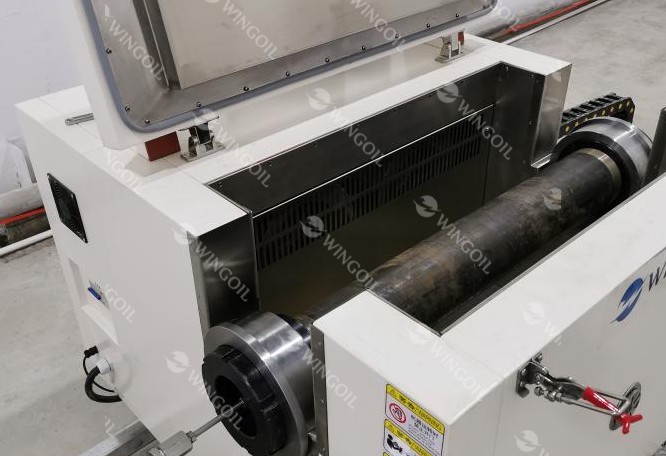
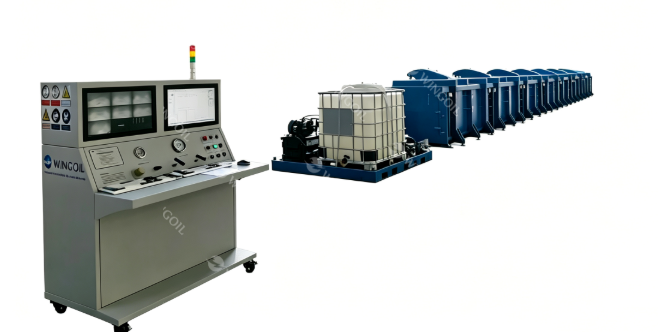
Wingoil’s High-Temperature and High-Pressure Test Rig for Downhole Tools is designed for high-temperature, high-pressure, and combined-condition simulation testing of downhole tools and related components. The equipment can be used for downhole tools and components that are compatible with its configuration and testing capabilities. Its suitability for Kelly Valve testing can also be evaluated according to the specific application requirements.
Key Equipment Capabilities
According to the equipment’s current technical specifications, its main capabilities include:
Maximum test pressure: 140 MPa.
Maximum test temperature: 200°C, with closed-loop temperature control and temperature uniformity within ±2°C.
Axial loading: Tensile and compressive loads ranging from −500 kN to +500 kN, with a test stroke of 1,000 mm.
Effective test wellbore length: 6 m.
Test media: Depending on the equipment configuration, available media may include clean water, drilling mud, heat transfer oil, and nitrogen.
Control system: Control through the PLC with pressure, temperature, load, and displacement data being acquired in real time, along with curve plotting and reporting.
With respect to Kelly Valve application, it would be important to consider the specific test requirements, fixture compatibility, connections, and testing methods that apply before determining if the machine configuration is appropriate.
Conclusion
Selecting appropriate Kelly Valve Testing Equipment needs careful consideration of the following criteria: testing goals; pressure and temperature needed; compatibility with fixtures; test fluid; safety measures; and test data recording capability. Defining all these requirements will help firms select the most appropriate equipment for their valves and testing process.
Oilfield equipment manufacturing firm, drilling contractor, and maintenance services provider need testing equipment that will not only meet all technical requirements but also provide a uniform testing procedure and accurate data recording.
High Temperature & High Pressure Test Rig by Wingoil could be selected for relevant testing purposes, if it meets the technical requirements of your application. If you need Kelly Valve Testing Equipment, don’t hesitate to contact Wingoil.
Related Articles